




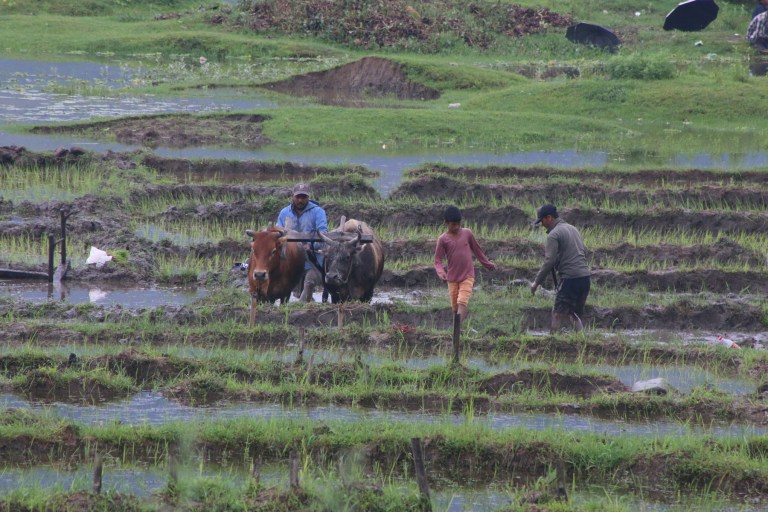
KASKI: Paddy transplantation has gathered pace in Kaski after the monsoon arrived about a week earlier than last year, allowing farmers to begin the planting season on time. Paddy is cultivated across around 26,000 hectares in the district.
According to Ramkrishna Aryal, Agricultural Extension Officer at the District Agriculture Development Office, paddy transplantation has been completed on about 47 percent of the total cultivated area across the district’s four municipalities and Pokhara Metropolitan City. Most of the transplantation has taken place in irrigated fields.
Aryal said transplantation has yet to begin in rain-fed lowland fields due to insufficient rainfall. He added that paddy planting in these areas is expected to begin if the district receives continuous rainfall for the next two to four days.
Most farmers in irrigated areas and major paddy-producing pockets, including Kundahar, Shishuwa, Fewaphant, Biruwa, Sardikhola, Lachok, Hemja, Suikhet Khudi, Bhalam, Buduwa, Satmuhane Deurali, Suraudi, Armala, Arbaphant, Madibesi, Makaikhola and the Begnas lakeside area, have already completed transplantation.
Kaski produces around 85,000 metric tonnes of paddy annually. Aryal said farmers are increasingly adopting improved rice varieties because of their higher yields.
According to District Agriculture Development Office chief Sudip Khatiwada, improved varieties including Unnat Mansuli, Khumal, Ramdhan and Sabitri have become more popular among farmers.
The office has been providing subsidies for improved paddy seeds, allocating Rs 800,000 for the programme this year. It has also distributed foundation seeds, agricultural tools and equipment, and continues to recognize outstanding farmers annually.
Jeevan Subedi, a farmer from Kaskikot in Pokhara-24, said he was pleased that paddy transplantation had started on time this year and expressed hope for higher production.
However, he said agricultural cooperatives should more closely monitor the sale of chemical fertilizers to prevent black marketing and overpricing. He added that the growing use of tractors instead of oxen has enabled farmers to prepare and transplant larger areas of land in a single day.
The District Agriculture Development Office expects paddy production to increase this year, provided the monsoon remains favourable and crops are not affected by natural disasters or disease.





Comment