




KATHMANDU: A probe report made public by the National Human Rights Commission of Nepal has raised serious questions over the role of the Nepali Army during the violent incidents that took place on September 8 and 9, 2025 concluding that state security structures remained largely ineffective as unrest spiraled out of control.
The report, released on Wednesday, criticized the army’s delayed mobilization, alleged inaction, and lack of cooperation during the investigation process.
According to the commission, the then Chief District Officer of Kathmandu had sought assistance from the army after demonstrations on September 8, 2025 turned violent and moved beyond the control of security personnel. However, the report states that the army was not effectively mobilized in practice.
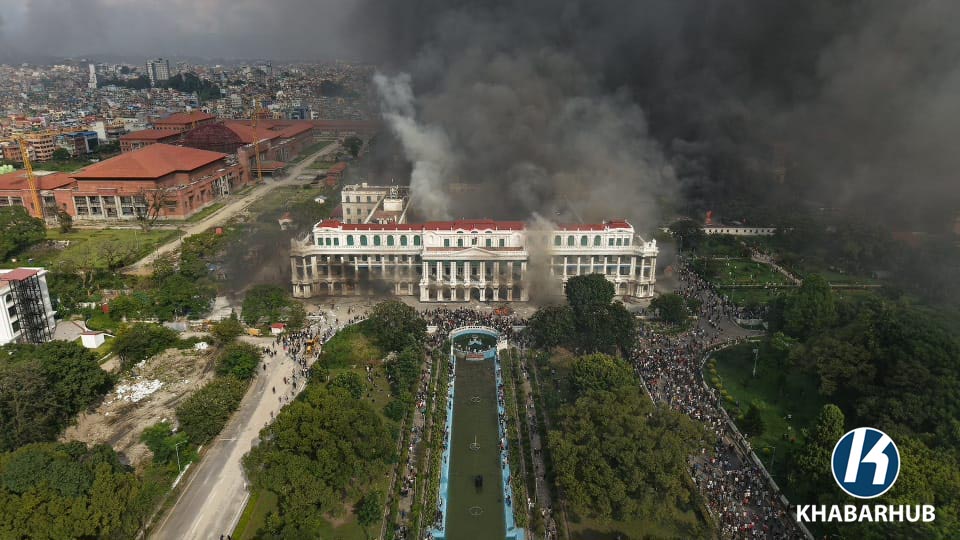
The commission noted that on September 9, 2025, protesters carried out arson and vandalism targeting the Federal Parliament Building, Singha Durbar, the Presidential Residence, the Supreme Court, government offices, private businesses, and residences of political leaders, while security agencies largely remained “mere spectators.”
The report concluded that the situation created “a complete absence of the state’s presence” during the peak of the violence.
It further stated that widespread public debate had emerged over the belief that “the nation would not have suffered such massive damage had the Nepali Army stepped out of the barracks in time.”
The investigation committee had summoned the Chief of Army Staff and other senior military officials for statements. However, the commission said it did not receive the level of cooperation it had expected from the army.
According to the report, the army initially declined to provide statements or written responses during the early phase of the investigation.
In a later written clarification submitted through sealed correspondence, the army argued that it could only be mobilized in accordance with constitutional and legal provisions. It claimed that the government had not made any formal decision regarding deployment during the incidents.
The commission, however, pointed to what it described as a contradiction in the army’s explanation. While the army maintained that no deployment occurred due to the absence of a government decision throughout the day on September 8 and 9, 2025, the report noted that troops were eventually mobilized after 10 pm on September 9, 2025.
“If there was no government decision, on what basis was the army mobilized after 10 pm?” the commission questioned in the report.
The report also stated that army personnel already stationed for the security of Singha Durbar and the Presidential Residence failed to make even minimal efforts to protect those structures, describing the incident as a serious security failure.
The commission concluded that the country experienced a complete breakdown of law and order on September 9, 2025, with all state security mechanisms becoming ineffective until 10 pm that evening.
It stated that citizens’ constitutional rights, including the right to life, property, free movement, profession, and business, were severely affected during the unrest.
The report further blamed the government led by former Prime Minister K. P. Sharma Oli for failing to make timely decisions, saying delayed action and poor coordination among security agencies allowed the violence to escalate further.



Comment