




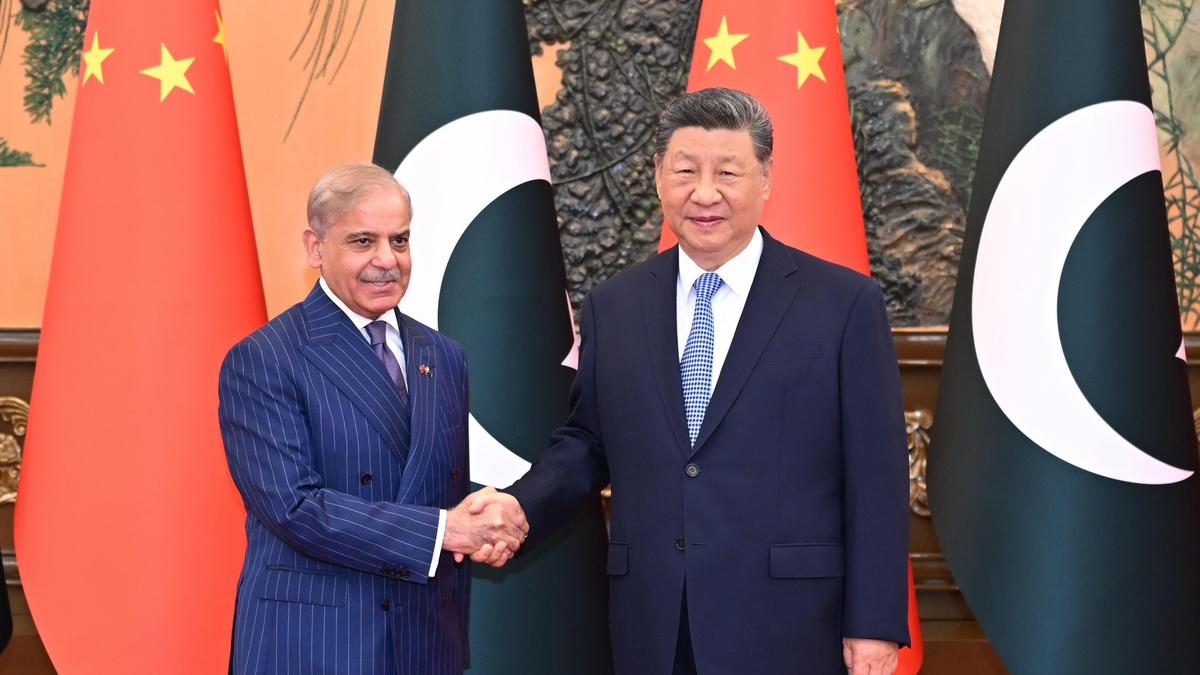
Countries, like individuals, often extend support to their friends in times of need. However, when such assistance has the potential to affect others, it is important to consider its wider implications. Military cooperation, in particular, requires careful consideration, as it can have consequences beyond bilateral relations. This is especially relevant in the case of China’s military assistance to Pakistan, which has raised concerns about regional security, nuclear proliferation, arms transfers and the possible strengthening of militant networks.
Reports of China’s involvement in the India-Pakistan conflict of May 2025 have added a new dimension to these concerns. Some accounts suggest that the conflict may have provided an opportunity to assess the performance of Chinese-made weapons and military technologies under actual combat conditions. If so, this raises questions about the broader implications of supplying advanced military equipment to a country engaged in a longstanding and sensitive regional rivalry. Given the potential for escalation, Beijing could have placed greater emphasis on encouraging dialogue and de-escalation between the two South Asian neighbours.
Both India and Pakistan possess nuclear weapons and share a sensitive border along which they have fought four major wars. In such circumstances, any increase in military capabilities or tensions between the two countries carries the risk of serious consequences. As a major global power, China has an important role to play in promoting regional stability. Its international commitments to peace and security would be strengthened by efforts to prevent conflicts and encourage diplomatic solutions. Great-power status is measured not only by economic and military strength but also by the ability to exercise restraint and contribute to international stability.
China may view India’s growing economic and military capabilities as an emerging strategic challenge. However, strengthening Pakistan’s military capacity as a means of maintaining the regional balance could have unintended consequences. Pakistan’s record has raised international concerns over its alleged links to militant groups, the proliferation of sensitive nuclear and missile technologies, and the movement of weapons across borders. There have also been concerns about the transfer of arms to militant groups in Afghanistan and the involvement of individuals from Pakistan in international terrorist activities.
China’s historical assistance to Pakistan’s nuclear programme is another important aspect of this debate. Reports and historical accounts have pointed to China’s transfer of nuclear-related technology and materials to Pakistan during the 1980s, including nuclear weapon design information, enriched uranium and uranium hexafluoride (UF6). These developments contributed to concerns about the spread of sensitive nuclear technology beyond national borders.
Subsequently, Pakistan became the centre of an international clandestine network associated with nuclear scientist A.Q. Khan, which supplied sensitive nuclear technology and equipment to countries including Iran, Libya and North Korea. Although China’s direct involvement in this proliferation network has not been established, its earlier nuclear assistance to Pakistan remains an important part of the wider discussion about the international consequences of nuclear technology transfers. The episode highlights the need for major powers to exercise greater caution and responsibility when sharing sensitive technologies.
China’s role in supplying weapons to Pakistan during the Soviet-Afghan war also deserves consideration. The weapons were reportedly handled and distributed through Pakistan’s Inter-Services Intelligence (ISI), which played a central role in supporting Afghan militant groups during the conflict. The movement of weapons through these networks contributed to wider concerns about arms diversion and the availability of military equipment to non-state armed groups.
China remains one of Pakistan’s principal military suppliers. However, questions continue to arise over the monitoring and end-use of weapons supplied to the country. Concerns have also been raised about the possible diversion of military equipment and its accessibility to militant groups. Reports of sophisticated equipment, including assault rifles, thermal imaging devices and night-vision technology, reaching non-state actors underline the importance of effective arms monitoring and accountability. Such developments could complicate international efforts to regulate arms transfers and prevent their misuse.
Pakistan’s relationship with militant organisations has also been a longstanding source of international concern. India, in particular, has repeatedly raised concerns about the activities of Pakistan-based groups such as Lashkar-e-Taiba (LeT) and Jaish-e-Mohammed (JeM), both of which have been linked to major terrorist attacks. Their alleged connections with wider extremist networks have further complicated regional security.
China has, on several occasions, opposed or delayed international efforts to impose sanctions on individuals associated with these organisations through the United Nations. Beijing has often justified its positions on procedural or evidentiary grounds. Nevertheless, such decisions have attracted criticism, particularly from India, which views them as obstacles to international counterterrorism cooperation. A more constructive approach could help strengthen collective efforts to address the threat posed by militant organisations.
China is well aware of the security challenges associated with Pakistan’s history of nuclear proliferation, arms transfers and allegations of links with militant groups. As a major global power and an important partner of Pakistan, Beijing has both the opportunity and responsibility to encourage greater accountability. It should ensure that its military and technological assistance does not contribute, directly or indirectly, to activities that undermine regional and international security.
Military partnerships are a legitimate part of international relations. However, they also carry responsibilities, particularly when they involve countries with longstanding regional tensions and complex security challenges. China can demonstrate its commitment to global peace and stability by ensuring greater transparency in arms transfers, strengthening safeguards against weapons diversion and encouraging dialogue between India and Pakistan. Ultimately, responsible international leadership requires not only protecting strategic interests but also taking meaningful steps to prevent tensions from developing into wider conflicts.





Comment