




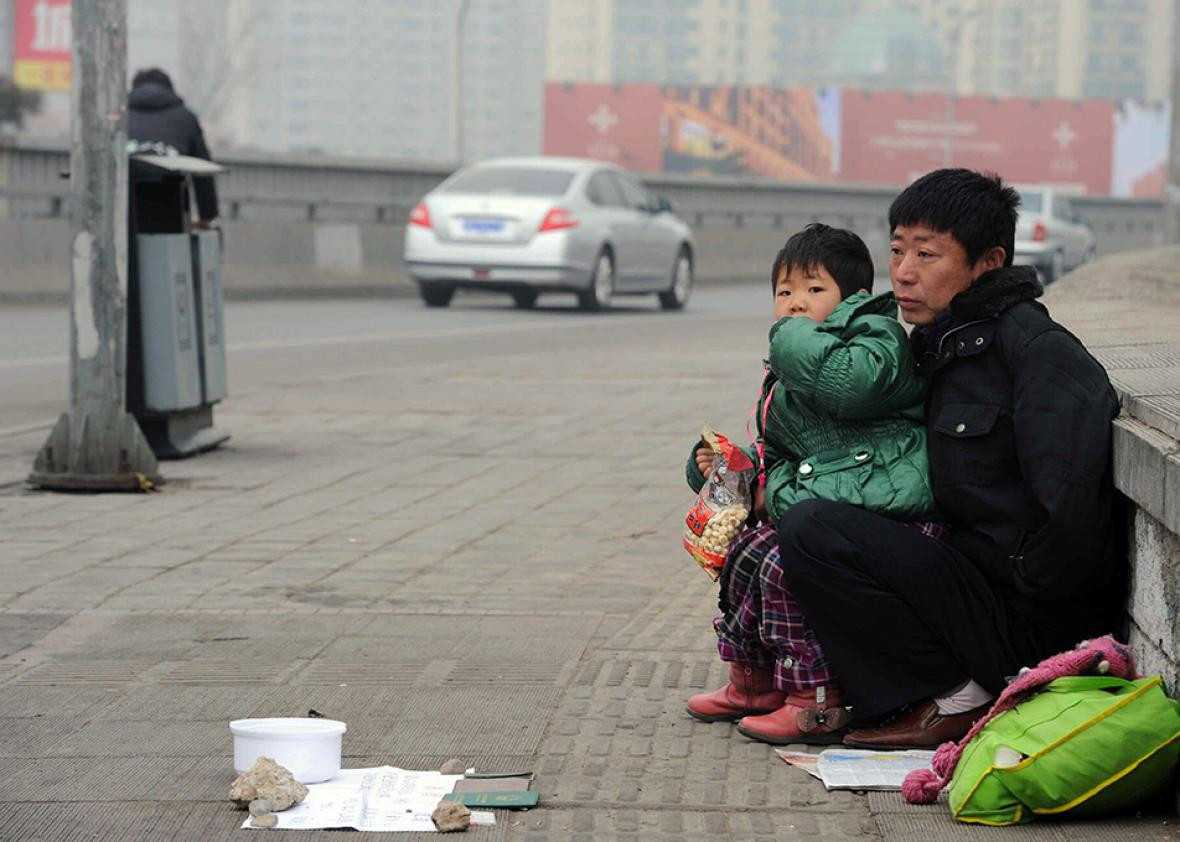
Shenzhen, once hailed as the “window of reform and opening up,” now presents a heart-breaking paradox. Beneath its glittering skyline, thousands of young people queue daily at Communist Party service centres for free Wi‑Fi, food, and water. Others sleep under bridges, in subway stations, or on park benches. The narrator of this account, after five days of fruitless job hunting, contemplates sleeping in a park a stark symbol of how China’s economic miracle has abandoned its citizens.
The numbers are staggering. A deleted survey by the National Bureau of Statistics revealed that by August 2025, 47.5 million Chinese citizens were homeless, a fivefold increase from 2020. This figure, cited by The Hill, exposes the rot beneath China’s economic façade. The methodology was unusually rigorous, making it impossible for the regime to dismiss. Yet the government’s silence is deafening.
Homelessness in China today is defined by four traits: large‑scale, youthful, urbanized, and non‑begging. Over 61% of the homeless are under 33, mapping directly onto the catastrophic youth unemployment crisis. Factories have stopped hiring, private enterprises have shrunk, and foreign capital has fled. The result: millions of graduates, delivery drivers, and laid‑off white‑collar workers sleeping in stations and underpasses. Meanwhile, 25% of the homeless are elderly, abandoned by a system that offers no pensions or family support.
The collapse of China’s job market has become one of the most visible and devastating realities of its slowing economy. Factories across Guangdong, once the backbone of China’s manufacturing boom, now report empty order books. With production lines stalled, workers are forced into short‑term, unstable gigs that barely cover daily survival. In Guangzhou, food delivery drivers and migrant workers have taken to sleeping under bridges, not out of choice but necessity, saving what little money they can by avoiding rent. Viral videos circulating on Chinese social media show railway stations transformed into makeshift dormitories, with unemployed youth lying on floors in chaotic, unhygienic conditions. These images have sparked heated debates online, exposing the scale of despair that official statistics often conceal.
The human stories are equally harrowing. A blogger recounts meeting a young man under a bridge who had resorted to selling his phone just to afford food, confessing he had “no other choice.” Such encounters illustrate the depth of desperation gripping China’s urban centres.
Three distinct categories of homeless citizens dominate this crisis. First are the jobless workers graduates, laid‑off staff, and gig workers unable to afford rent. Second are the debt‑ridden citizens, burdened with mortgages, car loans, and online loans, whose lives collapse once income stops. Finally, the elderly and unsupported, abandoned by family and welfare systems, represent a forgotten generation. Together, they embody a tragic portrait of a society where economic decline and government inaction have left millions without shelter, dignity, or hope.
The government’s response has been cosmetic at best. Communist Party “mass service centres” are touted as solutions but often stand deserted, with staff absent or strict rules barring entry. One man suffering from sunstroke was denied water at a centre despite slogans proclaiming “The greatest power is unity.” Another facility was so empty that visitors found no staff, no security, and no services. These centres merely relocate the homeless, treating them as eyesores rather than citizens in need.
Meanwhile, the CCP accelerates artificial intelligence development, replacing grassroots jobs with machines. Authorities celebrate these “political achievements” while ignoring the human cost. Couples born in the 1990s lose businesses and homes, forced into food delivery and ride‑hailing. A wedding planning company of seven years collapses overnight, leaving its owners destitute. China’s economic data may boast of growth, but it excludes spending on human rights, social security, and welfare.
Terminology reflects the regime’s denial. In April 2026, legislators proposed renaming “homeless beggars” as “displaced persons.” This linguistic sleight of hand does nothing to address the crisis. Instead, it highlights the overwhelming scale of recession and the CCP’s obsession with image management. For decades, China built skyscrapers, railways, and mega‑projects, yet failed to provide shelter for millions who cannot afford rent.
The human stories are devastating. Families burdened with mortgages live frugally, scavenging for leftovers at markets. Videos show Gen Z workers proudly collecting rotten vegetables, a surreal symbol of desperation. Raising a child costs millions of yuan, yet parents are unemployed and forced into scavenging. Frugality, once a virtue, now masks despair.
This is not thrift it is survival. The CCP’s refusal to acknowledge the crisis reveals a deeper truth: China’s governance model is unsustainable. The state prioritizes infrastructure and political image over human welfare. As the narrator laments, “Life is like that. While you’re lying in bed worrying, many already have nowhere to live.”
The world must recognize that China’s homelessness epidemic is not a marginal issue but a systemic failure. It reflects an economy shedding workers faster than official statistics admit, a welfare system that catches no one, and a government more concerned with slogans than solutions. Unless the CCP takes genuine action, millions will continue to live “one day at a time,” abandoned under bridges, in stations, and on the streets of its glittering cities.





Comment