





KATHMANDU: Economic Digest presents a brief yet comprehensive roundup of major business developments in Nepal, delivered in clear and accessible summaries.
Nepal’s economy is facing simultaneous regulatory, infrastructure, weather and market pressures, with several developments highlighting both emerging resilience and persistent vulnerabilities. Nepal Rastra Bank’s revised investment rules mark a significant shift toward more active yet tightly managed institutional investment.
The reduction of the minimum securities holding period to 45 days could provide banks greater flexibility, while requirements for banking/trading-book classification, board-approved investment policies, stop-loss and take-profit limits, mark-to-market valuation, stress testing and conflict-of-interest controls aim to strengthen risk management. The Supreme Court’s full-bench review of overlapping banking and anti-corruption laws further underscores the need for clarity in financial accountability.
Meanwhile, extreme weather is imposing immediate economic costs. Highway closures and flight disruptions are restricting passenger and freight movement, while reduced vegetable supplies at Kalimati have sharply increased prices. Border-route damage is also threatening trade connectivity, prompting Nepal to seek Chinese assistance for reconstruction.
At the same time, the 40-MW Rahughat Hydroelectric Project’s grid connection represents progress in expanding domestic power generation, while the Madhya Modi project’s reopening demonstrates the importance of negotiated solutions to local disputes. The Dhaulagiri expedition shows how weather risks can disrupt tourism revenue.
Overall, the developments point to an economy balancing regulatory modernization and infrastructure expansion against climate-related disruptions and logistical constraints.
Gold falls to Rs. 298,600 and silver to Rs. 4,620
The prices of gold and silver declined in the domestic market on Friday, September 25. According to the Federation of Nepal Gold and Silver Dealers’ Association, the price of gold fell by Rs. 500 per tola to Rs. 298,600. Gold was traded at Rs. 299,100 per tola on Thursday. The price of silver also dropped by Rs. 30 per tola to Rs. 4,620. It had been priced at Rs. 4,650 per tola on Thursday.
NRB cuts minimum shareholding period for banks to 45 days
Nepal Rastra Bank (NRB) has shortened the minimum holding period for shares and debentures purchased by banks and financial institutions in the secondary market to 45 days. The central bank introduced the new provision through its revised Unified Directive issued Thursday for licensed Class A, B and C banks and financial institutions. Under the revised rules, banks and financial institutions can invest in shares and debentures of publicly listed companies, but must hold the securities for at least 45 days before selling them. The minimum holding period had previously been more than one year before being reduced to six months. The latest revision has further shortened it to 45 days.
NRB directs banks to classify investments into banking and trading books
Nepal Rastra Bank (NRB) has directed banks and financial institutions to classify their investments into banking books and trading books under its revised investment regulations. According to the revised Unified Directive issued Thursday, the classification must be based on the nature, purpose and risks associated with individual investments. Banks and financial institutions must also establish mechanisms to identify, monitor and manage potential conflicts of interest involving subsidiaries, significant shareholders and officials responsible for taking investment-related risks. The new provisions are intended to strengthen investment governance and risk management among Class A, B and C banks and financial institutions licensed by the central bank.
Banks required to submit investment policies to NRB
Nepal Rastra Bank (NRB) has made it mandatory for banks and financial institutions to submit their board-approved investment policies and procedures to the relevant supervision department of the central bank. The requirement is part of the revised Unified Directive issued Thursday for licensed Class A, B and C institutions. Under the new rules, investment policies must cover financial instruments such as shares, debentures, government securities and Nepal Rastra Bank bonds. They must also include measures to limit speculative risks and address potential conflicts of interest. Banks are required to classify investments into banking and trading books and implement risk-management measures, including mark-to-market assessments and stress testing. The revised framework is aimed at making institutional investment more systematic, transparent and risk-based.
NRB requires banks to set take-profit and stop-loss limits
Nepal Rastra Bank (NRB) has introduced additional risk-management requirements for investments by banks and financial institutions, including mandatory take-profit and stop-loss limits. Under the revised directive, banks and financial institutions must incorporate such limits into their investment policies to manage potential losses and investment risks. They must also conduct daily mark-to-market assessments of financial instruments and carry out regular stress tests to assess how investments could perform under adverse conditions. The rules further require institutions to conduct regular internal risk assessments of entities issuing the financial instruments in which they invest. The measures form part of NRB’s broader effort to make institutional investment more systematic and risk-based.
Supreme Court orders full-bench review of dual jurisdiction in bank embezzlement cases
The Supreme Court has ordered that complex criminal appeals involving financial fraud and embezzlement in public banking institutions be referred to a full bench for review. A division bench comprising Acting Chief Justice Sapana Pradhan Malla and Justice Tek Prasad Dhungana issued the order to address conflicting interpretations of the Anti-Corruption Act, 2002, and the Banking Offenses and Punishment Act, 2008. The referral concerns legal questions over the application of the double-jeopardy principle, including whether public officials and other individuals accused of financial misconduct can face prosecution and penalties under both anti-corruption and banking laws without violating protections against repeated prosecution.
Nationwide highway disruptions hit transport, trade and business
Incessant rainfall, floods, landslides, river erosion and snowfall have disrupted major highways across Nepal, affecting the movement of passengers and goods and putting pressure on business and economic activities. Several highway sections have been repeatedly opened and closed as authorities work to clear blockages, while some vehicles are using alternative routes where available. Continued disruptions, however, have affected the normal operation of public and freight transport. Public vehicles traveling to and from Kathmandu have also been suspended following blockages on major highways, affecting workers, traders, passengers and the supply of essential goods. The disruption has slowed the movement of goods between production centers, markets and commercial hubs, creating delays for businesses dependent on regular road transportation. With heavy rainfall forecast across the country through September 27, transport-related disruptions could continue to affect economic activity.
Infrastructure minister and Chinese ambassador discuss reconstruction of trade routes
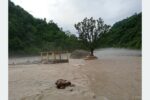
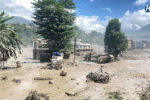
Minister for Infrastructure Development Sunil Lamsal held discussions with Chinese Ambassador Zhang Maoming at Singha Durbar and sought China’s assistance in rebuilding flood-damaged infrastructure along the Rasuwagadhi-Kerung trade route. Lamsal requested Chinese support to restore transport links from Syaprubesi to Rasuwagadhi and ensure the effective operation of the Korala and Tatopani border crossings. He said the government was working to establish temporary access routes following severe flood damage along the Bhote Koshi corridor and stressed the need for cooperation to restore the strategic trade route. Ambassador Zhang said China was ready to support Nepal’s reconstruction efforts and expressed a commitment to provide necessary diplomatic cooperation once the Nepali government submits formal proposals for the projects.
Adverse weather disrupts domestic flights across Nepal
Adverse weather has disrupted domestic air services across Nepal, with continuous rainfall, poor visibility and overcast conditions affecting operations at several airports. Flights have been delayed, rescheduled or canceled at various destinations, while mountain flights have also been suspended because of unfavorable weather. Airlines have warned passengers that schedules could change further depending on weather conditions. The disruptions have resulted in increased passenger congestion at Tribhuvan International Airport as travelers wait for affected domestic flights. Airlines have advised passengers to check updated flight information through their official websites or mobile applications before heading to airports. The disruptions come amid government warnings of heavy rainfall across the country from September 25 to 27, with authorities urging the public to remain alert to weather-related risks and possible travel disruptions.
Beni-Jomsom-Korala road traffic suspended at night
The District Administration Office, Mustang has imposed nighttime traffic restrictions on the Beni-Jomsom-Korala national pride highway until September 27. Under the precautionary measure, vehicular movement along the section between Kavre Bhir and the Korala border crossing will be prohibited daily from 6:00 PM to 6:00 AM. Authorities said the restriction was imposed following severe weather warnings from the National Disaster Risk Reduction and Management Authority and the Department of Hydrology and Meteorology. Continuous heavy rainfall and snowfall in high-altitude Himalayan areas have increased the risk of flash floods, landslides and river erosion along vulnerable sections of the Kaligandaki corridor. The administration said the restriction was intended to protect travelers and reduce the risks associated with adverse weather conditions.
Mt. Dhaulagiri expedition earns Rs 7.78 million in royalties amid weather disruption
An expedition involving 34 climbers across four teams on Mount Dhaulagiri generated Rs. 7.78 million in royalties during the autumn climbing season, according to Department of Tourism officer Sudha Regmi. However, severe weather warnings issued by the Department of Hydrology and Meteorology and the National Disaster Risk Reduction and Management Authority (NDRRMA) forced the climbers to retreat from base camp to Italy Base Camp on Thursday, September 24, 2026. The expedition was organized through 8K Expeditions, Seven Summit Treks and 14 Peaks Expedition. Tourism entrepreneur Indra Sing Sherchan said some climbers had already returned to Pokhara by helicopter, while expedition operations were temporarily suspended because of heavy rainfall and the associated risks.
40-megawatt Rahughat Hydroelectric Project connected to national grid
Raghuganga Hydropower Limited, a subsidiary of the Nepal Electricity Authority (NEA), has connected the 40-megawatt Rahughat Hydroelectric Project in Raghuganga Rural Municipality to the national transmission grid through the Kaligandaki Corridor 220-kilovolt transmission line. The connection follows the start of electricity generation from the project’s two 20-megawatt units. The project will now undergo a mandatory 15-day trial production period before beginning full commercial operation. NEA Executive Director and Board Chairperson Dirghayu Kumar Shrestha said the project had overcome significant logistical and geological challenges as well as disruptions caused by natural events. The project is expected to generate around 247.9 million units of electricity annually and provide additional power during peak evening demand. It was financed through government investment and concessional loans from India’s Exim Bank.
Transport federation calls for online ticketing during festival season
The Federation of Nepalese National Transport Entrepreneurs (FNNTE) has instructed transport operators to prioritize online advance ticketing and strengthen passenger safety measures during the upcoming festival season. FNNTE General Secretary Deknath Gautam said transport operators would coordinate with the Department of Transport Management, Nepal Police, traffic police, Lhotse Multipurpose and consumer organizations to ensure safer and more organized public transport services. The federation said operators must issue tickets containing complete passenger identification details and prohibited unauthorized ticket counters and staff without proper identification cards or uniforms from selling tickets. Passengers have also been advised to travel only with valid tickets. FNNTE has called for regular road inspections, health checks for long-distance drivers and the deployment of at least two drivers on long-distance vehicles. It also said people under 18 should not be employed in driving or other transport-related jobs.
Madhya Modi hydropower project offices reopen after agreement with locals
The offices of the Madhya Modi Hydropower Project in Deupur, Modi Rural Municipality-2, Parbat, have resumed operations after remaining closed for 28 days following an agreement with local residents. The four-point agreement was reached through mediation by the district administration under the leadership of Chief District Officer Ganga Bahadur Chhetri. Under the agreement, four local residents will receive immediate employment, while streetlights will be installed along the Patichaur-Korungal pedestrian trail by the end of Ashwin. The agreement also calls for the immediate withdrawal of security-related complaints filed against members of the Korungal Community Forest Consumer Group. The reopening follows prolonged disputes over local employment opportunities and infrastructure-related demands.
Vegetable supplies to Kalimati plunge 85% amid rain and road blockages
Vegetable supplies to Kathmandu’s Kalimati Fruits and Vegetable Market have fallen by more than 85 percent following heavy rainfall, landslides and highway blockages across the country. Market records show that only 97,651 kilograms of vegetables and other agricultural produce entered the market today, compared with 657,308 kilograms the previous day. The sharp decline in supplies has pushed up wholesale prices of several vegetables. The price of green coriander rose from Rs. 125 to Rs. 450 per kilogram, while long green chillies increased from Rs. 95 to Rs. 211. Local cauliflower rose from Rs. 97 to Rs. 128 per kilogram. The disruption has been attributed to landslides and road blockages along major routes, including the Prithvi Highway, BP Highway and Kanti Lokpath, following continuous rainfall caused by a low-pressure system in the Bay of Bengal.
Janakpur residents protest eviction notices over Guthi land
Residents of Janakpurdham who have been living for years on Guthi trust land have protested against 15-day eviction notices issued by government authorities. The protesters are demanding that the notices be withdrawn and that long-term residents be provided with legal ownership and housing rights. They warned of general strikes and transportation blockades if their demands are not addressed. The residents said some families have been living in the area since 2008/09 and argued that authorities should pursue administrative regularization rather than eviction. Municipal representatives said the dispute falls under federal jurisdiction and requires coordinated intervention involving the Survey Office, Land Revenue Office and District Administration Office.
Hathway Investment promoters disclose plans to sell 2.89 million shares
Four founding institutional promoters of Hathway Investment Nepal Limited have disclosed plans to sell a combined 2,885,727 shares after the expiry of their mandatory lock-in period on September 18. Promoter Hemraj Dhakal has sought to sell the largest block, comprising 2 million shares valued at approximately Rs. 905.8 million based on Thursday’s closing price of Rs. 452.90 per share on the Nepal Stock Exchange. Other promoters seeking to sell shares include Ambika Sharma Lamichhane with 200,000 shares, Sumit Pradhan with 348,666 shares and Manish Dhakal with 337,061 shares. The disclosures were made in accordance with Securities Board of Nepal requirements that major shareholders notify companies in advance of planned share sales.
Commercial vegetable farming transforms livelihoods in Dailekh
Commercial vegetable farming has improved the livelihoods of households in Pokhra and Chagatra villages of Bhairabi Rural Municipality-3, Dailekh, allowing farmers to cover household expenses, finance their children’s education and repay loans without seeking foreign employment. Farmers including Tara Thapa, Aasharam Thapa and Puja Thapa have been earning income from vegetable production alongside traditional grain farming. Around 90 households are engaged in commercial agriculture with support from the Chagatra Agriculture and Livestock Cooperative, chaired by Motiram Adhikari. The cooperative purchases locally produced vegetables and helps connect farmers with markets in Dailekh and Surkhet. The ‘Increasing Income of Women in Agricultural Value Chains’ project, implemented by Sewak Nepal in collaboration with the International Labour Organization (ILO), has also been supporting farmers with information on market prices and occupational safety.



Comment