




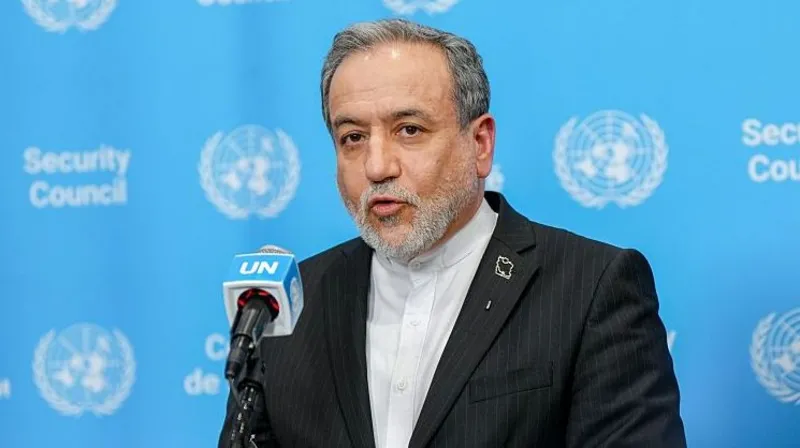
NEW YORK: Iran has offered the United States a deal under which the Strait of Hormuz could be reopened and normal maritime traffic restored within seven days if certain conditions are met, Iranian Foreign Minister Abbas Araghchi has said.
Speaking to reporters at the United Nations in New York, Araghchi said the conditions were already outlined in a memorandum of understanding (MOU) signed by Iran and the US in June.
“The choice now rests with the United States,” Araghchi said, adding that Iran had conveyed the proposal to Washington through Qatar.
A US official told the BBC that positive discussions were underway through mediators, including on nuclear-related issues. The development comes after US President Donald Trump earlier this week threatened to “annihilate the Islamic Republic.”
The US and Israel launched airstrikes against Iran on February 28, prompting Iran to retaliate with attacks on Israel, US bases in the Gulf, and US-aligned Arab Gulf states. Iran also blocked the Strait of Hormuz following the escalation.
Before the conflict, the strategically important waterway carried around 20 percent of the world’s oil and liquefied natural gas supplies. Its closure has triggered sharp fluctuations in global energy prices and increased pressure on the US administration to seek an end to the conflict, particularly ahead of congressional elections in November.
“If the necessary conditions are met, the strait can be reopened and normal maritime passage restored within seven days,” Araghchi told reporters.
He did not disclose the specific steps Iran expects the US to take, but said they were not new and were already included in the June MOU.
“If there is seriousness on the US side to reach a deal and reopen the Strait of Hormuz, everything is now prepared,” he said.
However, a US official told the BBC that Washington was “in a very strong position with control of the Strait of Hormuz” and was therefore “not in a rush.”
The MOU signed by Iran and the US on June 18 was intended to establish a ceasefire and facilitate the partial reopening of the Strait of Hormuz.
The 14-point agreement stated that Iran would not develop a nuclear weapon. It also called for the US, Iran, and their allies to halt military operations on all fronts, while including provisions for an end to a US naval blockade and sanctions relief.
Under the agreement, Iran also committed to making its best efforts to ensure the safe passage of commercial vessels through the strait and to hold talks with Oman on future shipping arrangements. The agreement subsequently collapsed after both sides resumed military strikes.
(Inputs from BBC)




Comment