




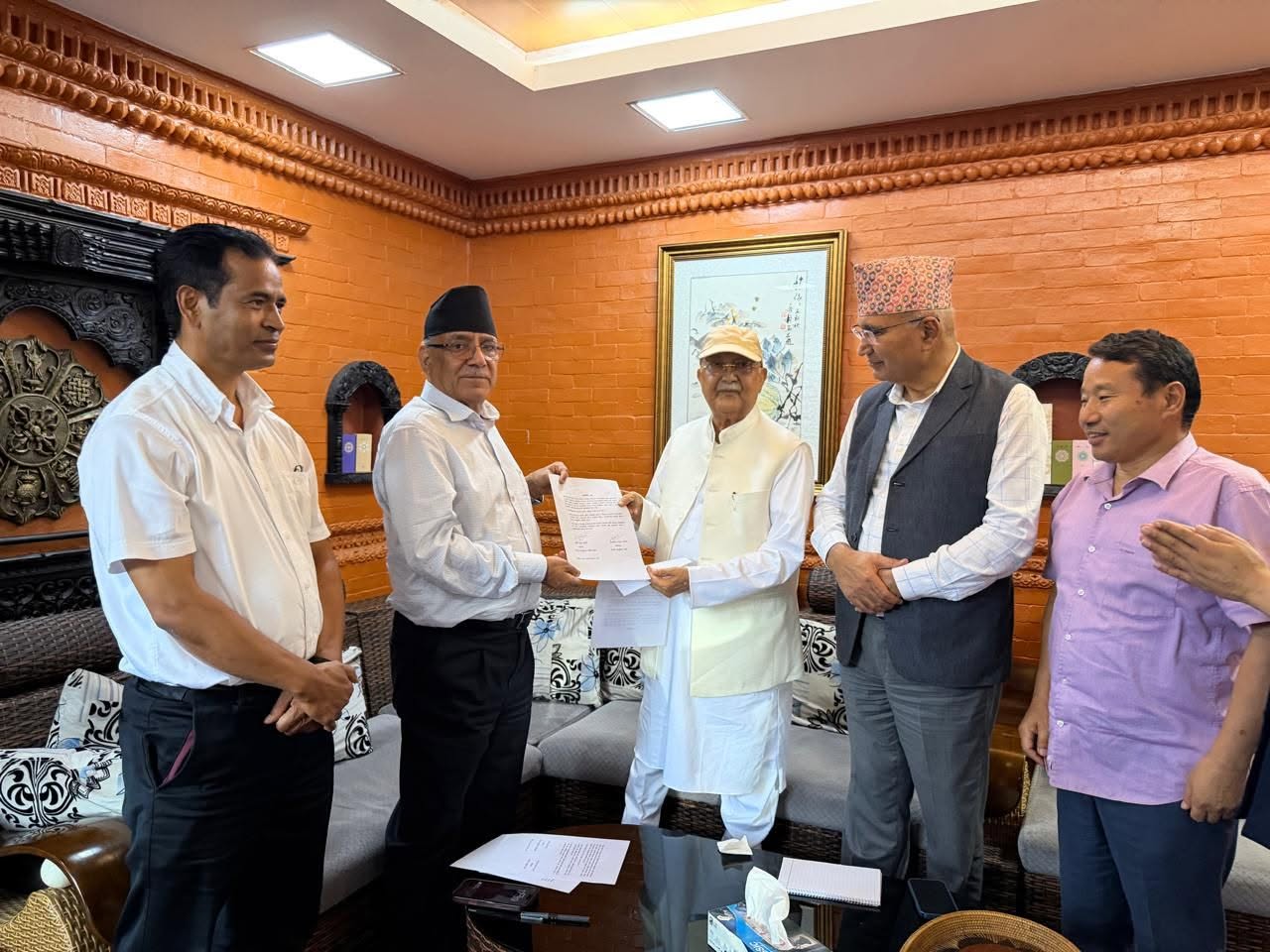
KATHMANDU: The UML-NCP (Nepali Communist Party )provincial government coalition, announced with the aim of ensuring political stability, has struggled to win support from party ranks, with voices of concern emerging from leaders and grassroots cadres alike.
The two parties, which have experienced periods of cooperation, unification and division, signed a new agreement on Saturday between their respective chairpersons, KP Sharma Oli and Pushpa Kamal Dahal ‘Prachanda’, to work together in provincial governments.
However, the agreement has failed to generate enthusiasm among many leaders and cadres from both sides. After details of the provincial cooperation deal, reached following discussions among select leaders of the two parties, were made public on Saturday, several leaders expressed their dissatisfaction through public statements.
NCP leader Narayan Kaji Shrestha described the UML-NCP alliance as a compelled decision. He said that, under the current circumstances, he was not interested in engaging in efforts to form or topple governments, but the party decided to join the provincial governments to prevent the possibility of provincial assemblies being dissolved after the Nepali Congress and UML failed to continue their partnership.
“After a situation emerged where the NCP and UML could not remain in the same government, we were compelled to make a decision to join the government to prevent the dissolution of provincial assemblies. In such circumstances, there was a need to form governments either with the NCP or UML, and the agreement reached yesterday was in line with the party’s policy of cooperating with leftist forces,” Shrestha said.
CPN-UML leader Surya Thapa also described the alliance between the two parties as a necessity rather than a matter of preference. He said the agreement should not be interpreted as a result of desire, enthusiasm or an ideal political choice.
“We will assess the situation as it unfolds. Alliance between parties responsible for forming provincial governments has become necessary. It should not be misunderstood as a matter of choice, satisfaction or perfection,” Thapa said.
Similarly, NCP leader Birendra Basnet questioned the agreement from the perspective of federalism. “Is this federalism or controlled federalism, where everything is decided from the top?” Basnet said.
The CPN-UML and the then CPN (Maoist Centre) had formed a left alliance during the 2017 (2074 BS) House of Representatives elections and later unified to form the Nepal Communist Party (NCP). However, the party split soon after its formation, leading to repeated political instability and the collapse of governments.
The latest alliance agreement between the UML and NCP has also received a mixed response on social media, with many cadres from both parties expressing dissatisfaction. A large number of senior leaders have remained silent on the development.



Comment