




KATHMANDU: Monsoon conditions continue to affect Nepal, with heavy rainfall likely at one or two places in the hilly and mountainous areas of Bagmati, Gandaki and Karnali provinces today.
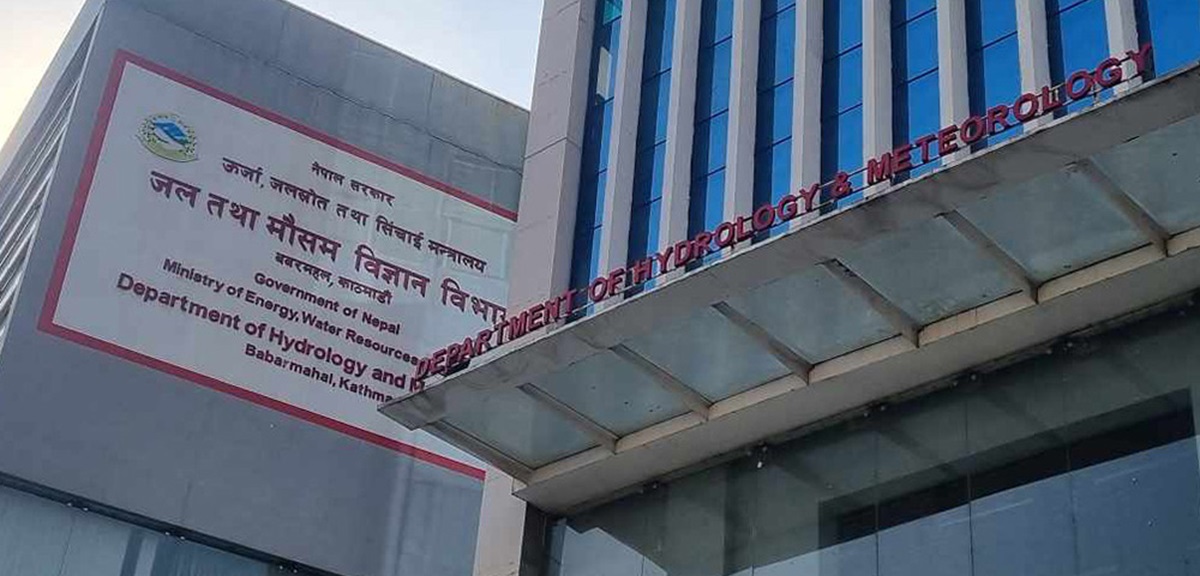
According to the Department of Hydrology and Meteorology, the monsoon trough is currently positioned near its average location. While weather conditions remain mainly fair in the Terai of Koshi Province, the rest of the country is experiencing generally to fully cloudy skies.
Light to moderate rainfall is occurring at some places in Koshi, Bagmati and Karnali provinces, and at one or two places in Gandaki, Lumbini and Sudurpaschim provinces.
This afternoon, skies are expected to remain generally to fully cloudy across the hilly and mountainous regions, while the Terai will see partly to generally cloudy conditions.
Light to moderate rain accompanied by thunder and lightning is likely at some places in the hilly and mountainous areas. Similar weather is forecast for parts of the Terai in Koshi, Madhesh, Bagmati, Gandaki, Lumbini and Sudurpaschim provinces.
The Department has also forecast heavy rainfall at one or two places in the hilly and mountainous areas of Bagmati, Gandaki and Karnali provinces.
Tonight, the weather will remain generally to fully cloudy across the country. Light to moderate rain with thunder and lightning is likely at some places in the hilly and mountainous regions of Koshi, Bagmati and Gandaki provinces, as well as at a few places in Lumbini, Karnali and Sudurpaschim provinces. Moderate rainfall with thunder and lightning is also possible at some places in the Terai.
Heavy rainfall is likely at one or two places in the hilly and mountainous areas of Koshi, Bagmati and Gandaki provinces tonight. Meanwhile, the Department has urged the public to remain alert, warning that heavy rainfall could trigger flash floods, landslides and soil erosion in vulnerable areas.
People have also been advised to take necessary precautions and stay updated with the Department’s latest weather forecasts, as adverse weather conditions may disrupt daily life, agriculture, health services, tourism, mountaineering, and road and air transportation.


Comment