




KATHMANDU: The Shantinagar squatter settlement in Kathmandu no longer looks the way it once did.
Until recently, the area was crowded with tin-roofed shacks, bamboo huts, narrow alleys, and hundreds of struggling families. Today, the settlement stands nearly empty. Broken bamboo poles lie scattered on the ground alongside torn tarpaulins, old clothes, and damaged household utensils — silent remains of homes that once sheltered lives and dreams.
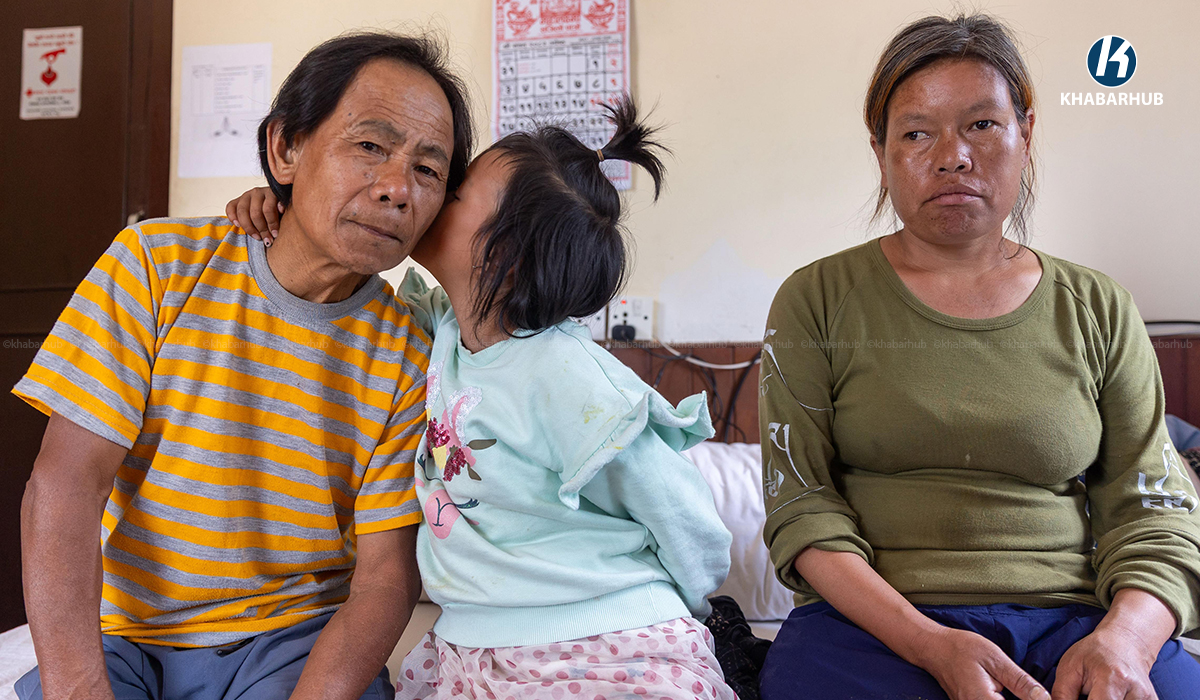
Among those displaced is 64-year-old Lal Bahadur Limbu, who now lives with his family at a squatter holding center in Banepa.
There is exhaustion on his face and pain in his eyes, but his voice still carries determination.
“We may be squatters, but we are human too,” he says quietly.
Lal Bahadur’s life has been marked by hardship and poverty. Originally from Sunsari district in eastern Nepal, he moved to Pokhara around 1990 in search of work. Life in the village had become increasingly difficult, and supporting his family was no longer possible.
In Pokhara, he spent nearly a decade working as a porter, carrying heavy loads in markets and laboring from dawn to dusk. Sometimes, he also painted murals and walls. Art, he says, was another world hidden inside him, though survival always came first.
In 2000, he arrived in Kathmandu.
Like many others, the capital promised opportunity but offered little certainty. He settled in the Shantinagar squatter settlement, building a small bamboo hut with a leaking roof and cramped walls. Despite its fragile condition, that tiny room became his family’s world.
By his side was his wife, Sangeeta Limbu, widely known as Thapa Saru Magar. Though much younger than him, she shared every struggle equally.
Together, they raised two children — daughter Naima Limbu and son Sushil Kumar Limbu.
Sushil, now 19, studies at a college in Baneshwor and recently completed his Grade 12 examinations. Because the settlement lacked a suitable environment for study, he lives separately with relatives. His parents dream of giving him a better future through education.
But the deepest struggle in the family’s life revolves around Naima.
Since birth, Naima had been seriously ill. She could neither walk nor speak. Doctors told the family that a major bone in her body had failed to develop properly. The condition, identified as arthrogryposis, shattered the family emotionally.
Still, Lal Bahadur refused to give up.
Inside their tiny room, he dug a pit in the ground, not for play, but as part of an improvised effort to help his daughter learn balance and movement.
Later, he bought a walker and spent hours every day teaching her how to stand and walk.
The struggle continued for four years.
With the little money he earned carrying loads, he tried to provide nutritious food for his daughter, often sacrificing his own meals. Even after returning home exhausted from work, he would spend evenings helping Naima practice walking.
Then came a moment the family still remembers vividly.
One day, after years of effort, Naima took her first steps on her own. For Lal Bahadur, it was the greatest victory of his life.
Naima still cannot speak, but her eyes, her presence, and the way she stands beside her father tell a story words cannot fully express.
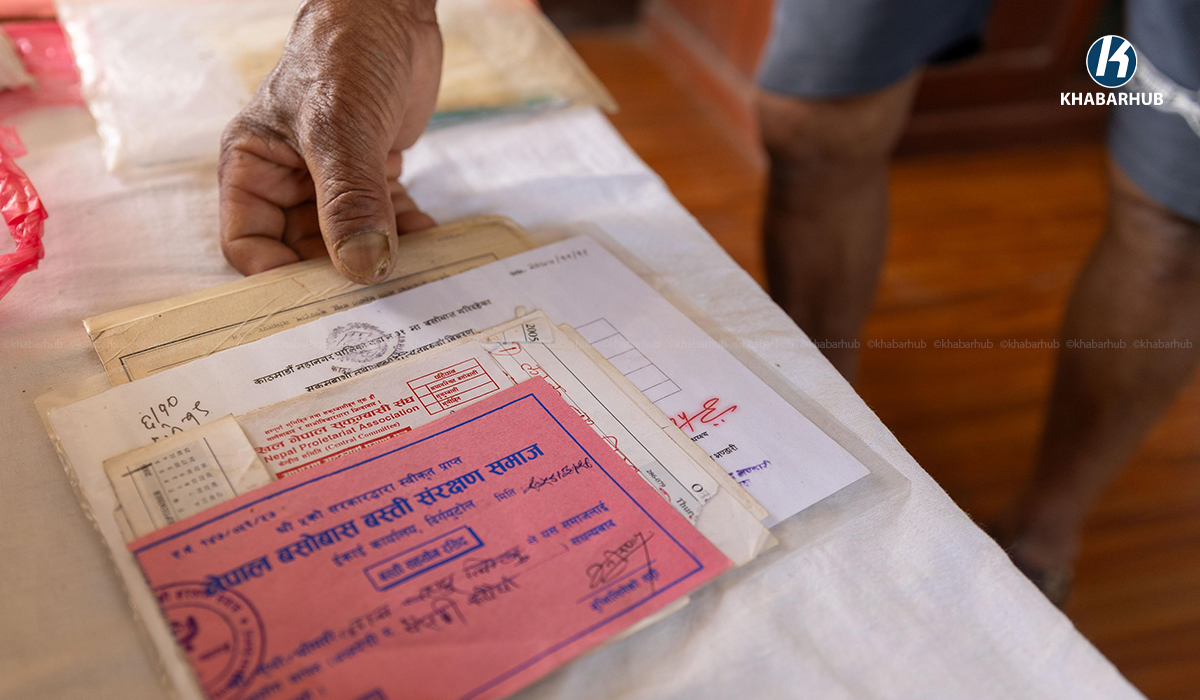
Despite years of hardship, the family never abandoned hope. In 2022, Lal Bahadur completed the necessary documentation process to formalize his residence in Shantinagar. For the first time, he felt life might finally become stable.
But on April 25, bulldozers arrived in the settlement.
Residents cried as they rushed to gather belongings. Children wept. Elderly people shouted in panic. One after another, bamboo homes built through years of struggle collapsed within minutes.
Lal Bahadur stood silently watching the destruction. What hurt him most, he says, was that residents were given only three days’ notice before the eviction.
“If we had been given at least 35 days, we could have cleaned the area ourselves, searched for another place, and moved gradually,” he says, his voice breaking.
“Where could we go in three days? How could we move? My daughter took four years to learn to walk — where could I take her in just three days?”
Today, Lal Bahadur and his family remain without a permanent home. They have no land, no secure shelter, and no certainty about the future.
Yet they continue to endure. Years of hardship have taught them how to stand up each time life knocks them down.
Beside him stands Naima — silent, but carrying within her presence the story of a father’s relentless struggle, a mother’s endurance, and a family that refused to surrender hope even in the face of displacement and poverty.
Standing amid the dust of Shantinagar, Lal Bahadur looks toward the sky once again — perhaps still dreaming of a safe place to finally call home.





Comment