




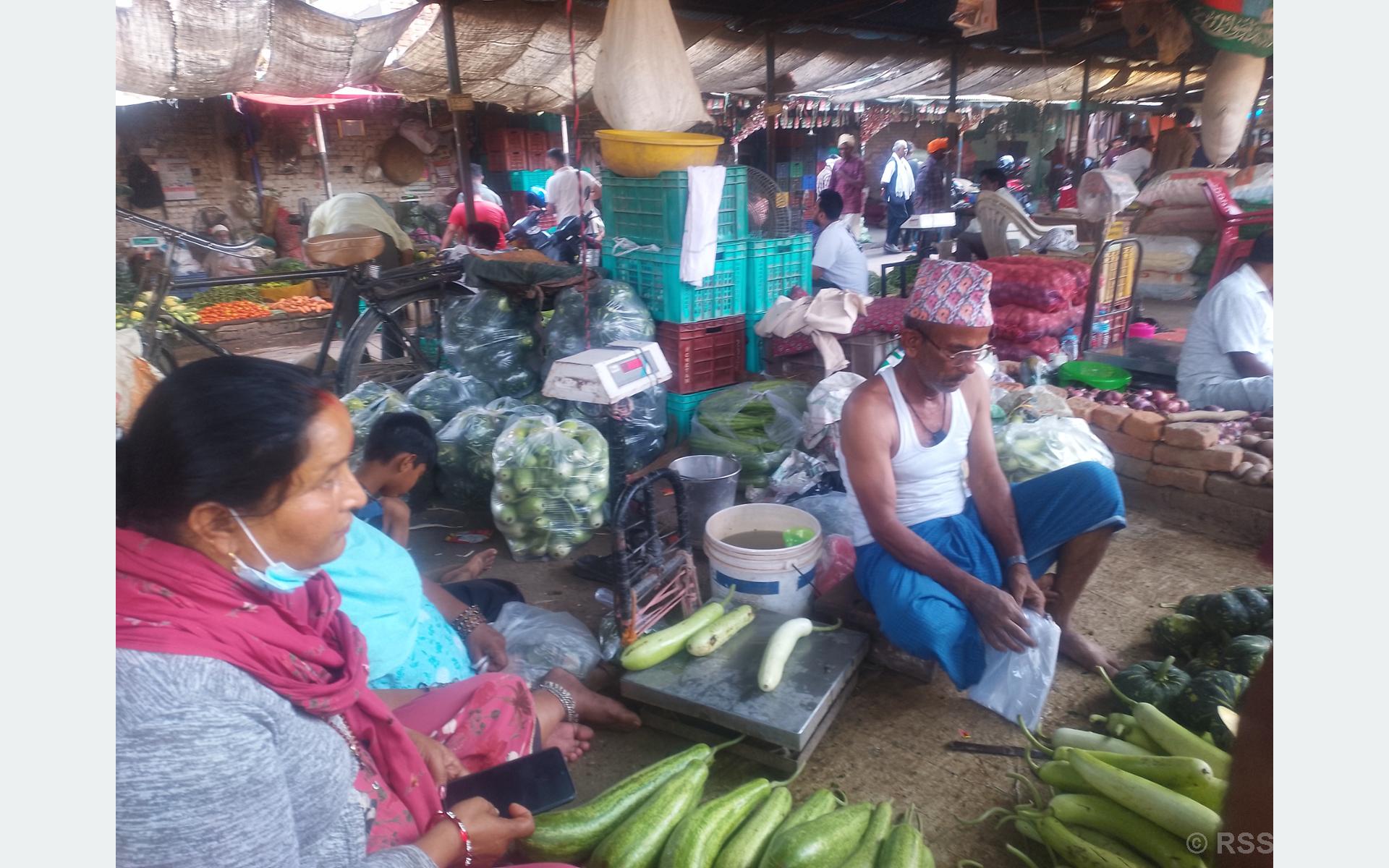
BANKE: Farmers engaged in commercial vegetable farming in Banke are becoming increasingly conscious about pesticide use. In previous years, pesticide residues were frequently detected in green vegetables brought to the Rani Talau Vegetable Market in Nepalgunj.
However, no such residues have been found so far this year. According to Motisara Thapa Chhetri, chairperson of the Agricultural Produce Market Management Committee, stricter monitoring and enforcement have encouraged farmers to be more careful. Vegetables found to contain unsafe levels of pesticides are confiscated during sample testing, which has helped raise awareness among producers.
Vegetables imported from India are first tested at customs by the Department of Food Technology and Quality Control, and are then re-tested at the Rani Talau market. Testing is conducted almost daily, except on public holidays.
Farmers often rely on pesticides, especially for off-season vegetable production. While seasonal vegetables grown during December and January showed minimal pesticide use, concerns remain that chemicals may still be used to control pests.
Currently, locally produced vegetables are dominating the Rani Talau market, as imports from India have become more expensive due to customs procedures.
Gaurav Chaudhary, deputy technical assistant and representative of the Central Agricultural Laboratory in Nepalgunj, explained that pesticide levels tend to be higher when vegetables are harvested and brought to market immediately after spraying.
He said that produce is classified based on residue levels: items with less than 35 percent are given a green label (safe for consumption), those with 35–45 percent receive a yellow label (to be quarantined for four to five days before re-testing), and those exceeding 45 percent are marked with a red label (unsafe for consumption).
Earlier, high pesticide residues were detected in vegetables coming from areas such as Herminia and Babugaun in Banke, as well as from India. However, recent laboratory data shows improvement.
Vegetables and fruits are tested for two major pesticide groups—organophosphates and carbamates. Such testing has been carried out in Nepalgunj.





Comment