




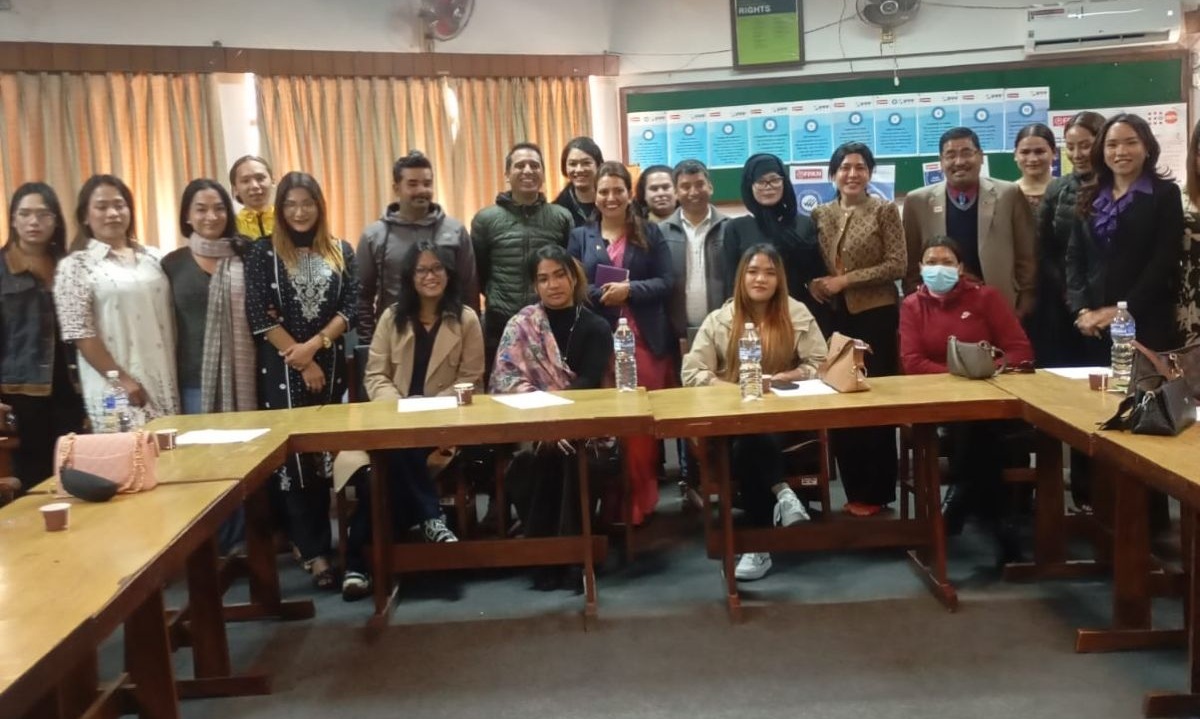
KATHMANDU: Participants at a workshop in Kathmandu have stressed the need for a separate policy, legal framework and targeted programs to address infections and complications following gender-affirming surgeries.
Members of the sexual and gender minority community, particularly those who have undergone or are seeking gender-affirming surgery, have complained that post-surgery infections and related complications are not adequately addressed by health service providers under the Ministry of Health and Population. They have demanded a dedicated policy, law and program to respond to their specific healthcare needs.
The concerns were raised during a program titled “Our Community, Our Responsibility” organized on Wednesday at the central office of the Nepal Family Planning Association in Pulchowk, in collaboration with Blue Diamond Society.
Participants said a separate hormonal clinic within government hospitals is urgently needed. There is currently no exact data on the number of transgender individuals in the country.
“If hormonal clinic services were available in government hospitals, the risks of health problems after gender-affirming surgery could be reduced,” participants said. “Hormonal imbalance can lead to anxiety and, at times, infections. Medicines for hormone balance should be made available free of cost.”
According to the organizers, the workshop aimed to explore ways to address post-surgery complications, infection management and other health challenges faced by individuals who have undergone gender-affirming procedures.
Speaking at the program, Sharmila Dahal, Chief of the Family Planning and Reproductive Health Branch under the Department of Health Services’ Family Welfare Division, said the Safe Motherhood and Reproductive Health Act ensures reproductive health services for all without discrimination.
She noted that while the demand for hormonal services is valid, such services cannot be launched immediately without a clear legal and regulatory framework. “The regulations must specify at which level of hospital or service center these services can be provided,” she said, adding that stronger advocacy from the community is necessary at the policy-making level. She also urged unity within the community, stating that internal divisions make it difficult for the government to act.
Dahal said although hormonal services may not be introduced immediately, further discussions will be held with the Nepal Family Planning Association to explore ways to address post-surgery infections and complications.
Executive Director of the Nepal Family Planning Association, Dr Praveen Shakya, said the health issues of sexual and gender minorities are multi-dimensional, encompassing social, economic, political, cultural and technical aspects. He said clearer policies are needed to effectively operate services such as hormonal clinics.
Blue Diamond Society Chief Manisha Dhakal said individuals often face discrimination when they visit hospitals with post-surgery complications. Participants also shared that many are compelled to travel abroad for treatment, which creates financial burdens.
They stressed that problems arise not from hormone use itself, but from taking hormones without a doctor’s prescription, and urged the government to better understand the issue.
“At times, we feel disconnected from our own reflection,” one participant said. “We are citizens of this country and want to live with dignity like everyone else.”
At the conclusion of the workshop, participants decided to prepare and submit a detailed report highlighting key issues to the Family Welfare Division under the leadership of the Nepal Family Planning Association.




Comment