




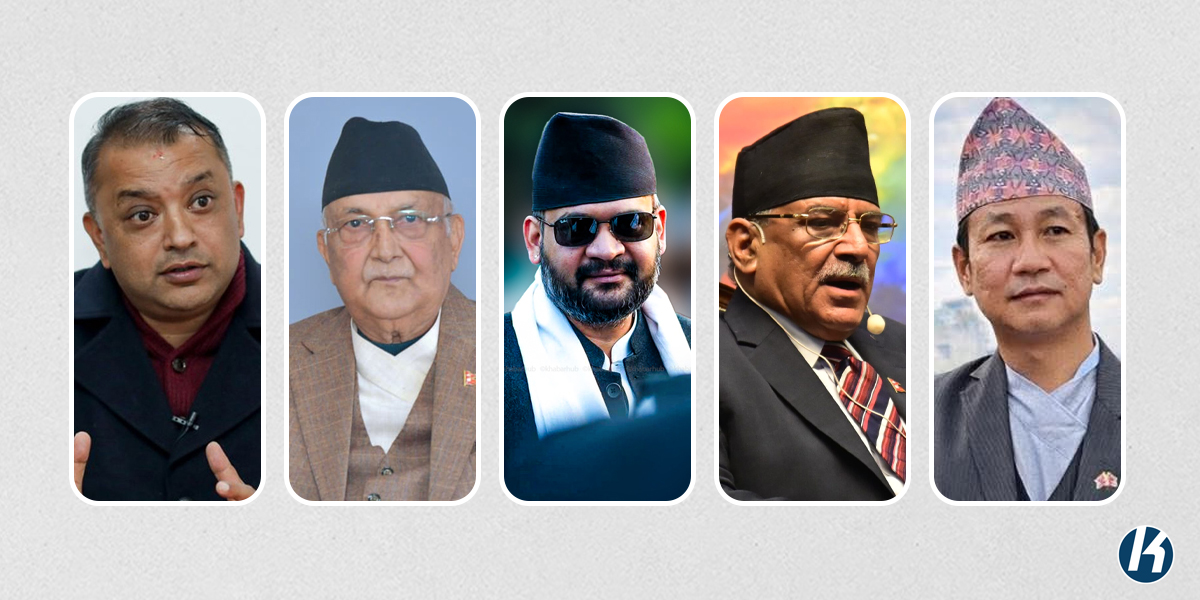
KATHMANDU: With just 38 days remaining for the election scheduled for March 5, political parties are actively campaigning across the country, but none has formally unveiled its election manifesto.
Candidates from major parties, including the Nepali Congress (NC), CPN-UML, Nepali Communist Party (NCP), Rastriya Swatantra Party (RSP) and Rastriya Prajatantra Party (RPP), are already on the ground seeking votes, offering a range of assurances to voters. However, these promises are largely being made without any written policy document outlining concrete plans or commitments.
New parties entering the electoral fray are also reaching out to voters, but they too lack manifestos or written pledges. As a result, the campaign atmosphere is being driven more by rhetoric and personal appeals than by policy clarity.
From Rautahat-4, Aam Janata Party candidate Rishi Dhamala has been seeking votes through emotional outreach, sometimes laughing, sometimes crying, while pledging to settle permanently in the district. Yet, like many others, he has not presented any written commitment or detailed program to voters.
Similarly, former Kathmandu Metropolitan City Mayor and senior RSP leader Balen Shah, projected by his party as a future prime ministerial candidate, has been touring districts in Koshi Province to energize the campaign. Despite his active presence, Shah is campaigning without a party manifesto, relying instead on the slogan, “We have watched the old for 35 years, now it’s time to give someone new a chance.”
Shah has been appealing to voters to make RSP the largest political force and position him as prime minister after the election. His campaign, however, remains largely slogan-driven, with no official document detailing policy priorities or governance plans.
Candidates from older parties are also sticking to traditional campaign styles, cutting sugarcane, carrying loads, or pledging to build houses for voters, to woo the electorate. But without manifestos in hand, these promises remain informal and unverifiable.
Political analyst Shyam Shrestha says the absence of manifestos has created widespread skepticism among voters, especially as even parties advocating for political change appear to be following old campaign practices.
“Parties like RSP, Ujyalo Nepal Party, AJP and Janamat Party argue that the country failed to transform under parties that ruled for 30 to 35 years. But when even these ‘new’ parties seek votes without policy, program or commitment, people naturally question how much trust they deserve,” Shrestha told Khabarhub.
He said the beauty of democracy lies in public trust and urged parties to commit only to what they can realistically deliver through their manifestos.
“No policy, no program, no commitment, when all parties seek votes in the same old way, it raises serious doubts about whether voters can trust even those who claim to be new,” Shrestha said.
Congress still finalizing draft
The Nepali Congress, the country’s largest party, has not yet finalized its manifesto. According to party Vice President Pushpa Bhusal, work is ongoing on preliminary drafts.
The party has formed a manifesto drafting committee led by party president Gagan Thapa. Thapa’s secretariat says discussions are underway, but it will still take some time to give the document its final shape.
“We are in the primary draft stage and holding internal discussions before making it public,” Bhusal said. “It is almost complete. Candidates are currently carrying out activities in their own way, but we plan to make the manifesto public within a week.”
Congress General Secretary Pradip Paudel said the party aims to include only those commitments that are realistically achievable within its term.
“The leadership believes the manifesto must be objective and practical,” Paudel said. “Rather than popular but unrealistic promises, we are prioritizing genuine public needs and sentiments.”
UML manifesto yet to reach Oli
The CPN-UML has also not finalized its manifesto. A drafting committee led by party chair KP Sharma Oli has been formed, with senior leaders including Ram Bahadur Thapa ‘Badal’, Bishnu Paudel, Shankar Pokhrel, Ishwar Pokhrel and Pradeep Gyawali.
A committee member said only preliminary drafting has been completed so far.
“We are still at an early stage. It may take another four to five days to submit the draft to the chair,” the member told Khabarhub, adding that Oli has been providing regular guidance.
According to the committee, the initial draft is expected to reach Oli within five to six days.
NCP plans release within a week
The Nepal Communist Party has formed a manifesto drafting committee under Narayankaji Shrestha. Leader Beduram Bhusal said the initial drafting work has been completed and is now in the editing phase.
“We have completed drafting by dividing responsibilities. The remaining task is to integrate and edit the document,” Bhusal said, adding that experts have also reviewed it.
He said the manifesto aims to address public frustration and the country’s current challenges and is likely to be made public within a week.
According to Bhusal, party leaders including Pushpa Kamal Dahal ‘Prachanda’, Madhav Nepal and Jhalanath Khanal will study the document before giving it final approval.
RSP eyes Feb 16
The Rastriya Swatantra Party has indicated it will not immediately release its manifesto. A drafting committee led by Vice President Swarnim Wagle has prepared multiple drafts with expert input.
Party Vice President Dol Prasad Aryal said the manifesto will be made public before February 16, keeping election regulations in mind.
“The drafting is almost complete, but we are cautious due to election code of conduct restrictions on campaigning,” Aryal said. “Once released, the manifesto will receive wide publicity, so we are being careful not to disrupt the electoral process.”
Wagle’s secretariat said the team has been working intensively to ensure the manifesto includes only feasible commitments aimed at addressing public frustration.
Election Commission clarifies rules
Election Commission Spokesperson Suman Ghimire clarified that there is no legal restriction on making manifestos public. However, campaigning is restricted before February 16.
“Parties are allowed to prepare and publish manifestos. The restriction applies only to campaigning,” Ghimire said. “There is no law preventing any party from releasing its manifesto.”
As election day approaches, voters continue to hear promises without official policy backing, raising concerns about accountability and informed choice in the democratic process.


Comment