




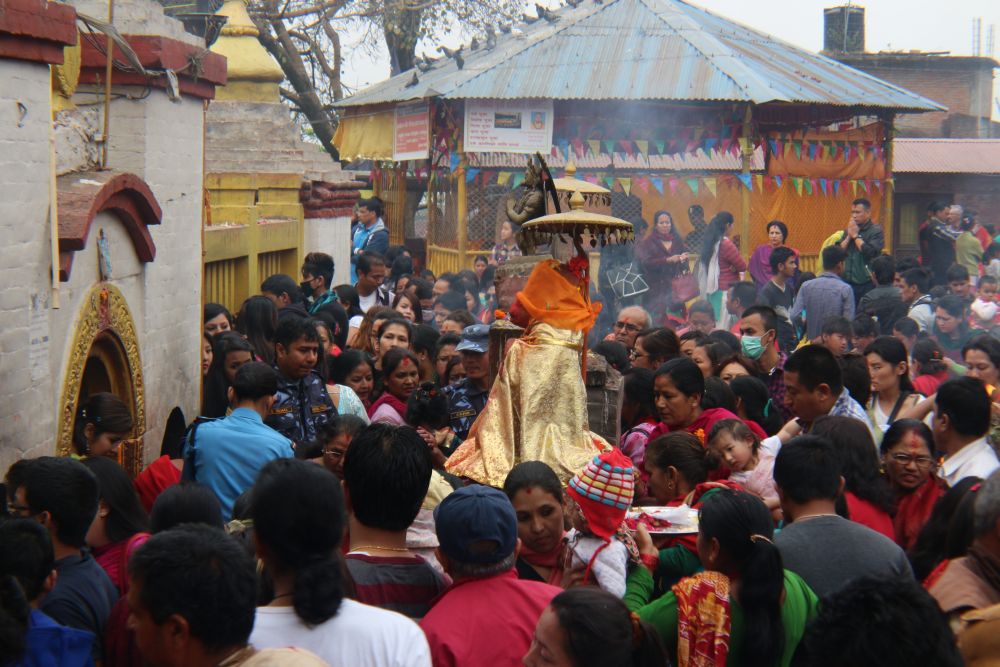
KATHMANDU: Harishayani Ekadashi, one of the most significant festivals in the Hindu calendar, is being observed across Nepal today.
The day marks the beginning of the four-month holy period known as ‘Chaturmas’, during which Lord Vishnu is believed to enter a state of divine sleep (Yoga Nidra) in the cosmic ocean, Kshirsagar.
As part of the tradition, Tulsi (holy basil) saplings that were planted on the occasion of Jestha Shukla Ekadashi about a month ago are ceremonially transplanted into the Tulsi pot (Tulsi Math) at homes.
Since Tulsi is regarded as a sacred manifestation of Lord Vishnu, special worship of the plant begins today and continues until Haribodhini Ekadashi in the month of Kartik.
According to former member of the Nepal Panchanga Nirnayak Development Committee, Prof. Dr. Devmani Bhattarai, Lord Vishnu is believed to remain in divine slumber from Harishayani Ekadashi to Haribodhini Ekadashi, making this four-month period especially sacred for religious observances.
There are 24 Ekadashis in a lunar year. While many devotees observe fasting on every Ekadashi, those unable to do so often fast on the eight Ekadashis that fall during Chaturmas. Others observe fasting only on Harishayani Ekadashi and Haribodhini Ekadashi.
Devotees visit Vishnu and Narayan temples across the country today, including Budhanilkantha and the four Narayan temples in the Kathmandu Valley, to offer prayers. Observers of the fast traditionally avoid grains and rice, consuming fruits and other permitted foods instead.
Tulsi also holds an important place in Ayurveda and traditional medicine. Revered for its medicinal properties, the plant is widely believed to promote health and purify the environment. It is also considered auspicious in Hindu tradition and is commonly planted in household courtyards.
The Chaturmas period concludes on Haribodhini Ekadashi in Kartik, when Lord Vishnu is believed to awaken. On that day, the ceremonial marriage of Tulsi and Lord Damodar (a form of Vishnu) is performed, followed by religious rituals marking the end of the four-month observance.






Comment