




KATHMANDU: Leaders who met top leaders, including Nepal Communist Party (NCP) coordinator Pushpa Kamal Dahal ‘Prachanda’, say the groundwork has largely been completed for cooperation among left parties.
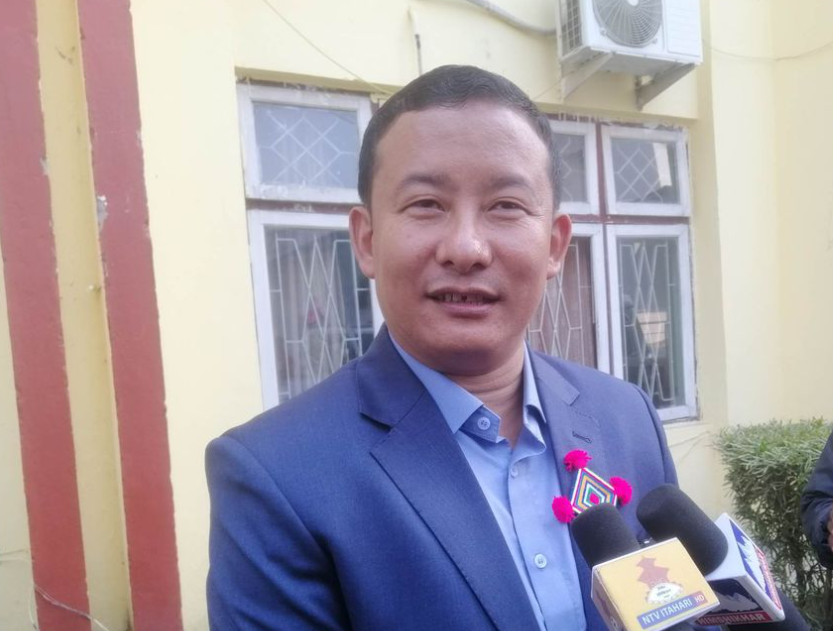
According to CPN Koshi Province Parliamentary Party leader Indra Bahadur Angbo, the left parties have reached a broad understanding to jointly form provincial governments. Discussions are now focused on finalizing the modalities of cooperation.
He said left-led governments are expected to be formed in the provinces within the next few days. However, while agreement has been reached on political cooperation, there has been no decision on party unification.
“For now, cooperation in the provincial governments has been agreed upon. Party unification is not possible at this stage,” Angbo said. “As trust grows through cooperation, the partnership can be expanded ahead of the provincial and local elections.”
Angbo argued that the communist parties have come together not to share power but to safeguard the constitution, democracy and the republican system.
He said NCP leaders Barshaman Pun, Prakash Jwala and Pravesh Hamal are holding discussions on the framework for cooperation, while UML General Secretary Shankar Pokharel, Vice Chairman Ram Bahadur Thapa ‘Badal’ and Secretary Mahesh Basnet are also actively involved.
Below are edited excerpts from Angbo’s interview on left alliance and the formation of provincial governments.
How will the provincial governments move forward now?
A left alliance has become the need of the hour. We had remained in the opposition while the Nepali Congress and the CPN-UML governed together for nearly two and a half years. We were prepared to stay in opposition for the remaining seven months as well.
However, their alliance could not continue because of internal disagreements. That created the situation for us to take responsibility. Initially, there was discussion about including the Congress, but after it made clear it would neither cooperate with the communists nor join what it considered an unprincipled alliance, we moved toward a left alliance.
What was decided during your meeting with Prachanda and other leaders in Kathmandu?
The left parties have agreed in principle to move forward together. The process of forming governments through a left alliance has begun. A verbal understanding has already been reached among the leaders. Discussions are now underway to formalize that understanding in writing.
Is this an agreement on party unification or only cooperation?
Party unification is not possible immediately. At this stage, the focus is on cooperation among the left parties, beginning with the provinces. Modalities are also being prepared for cooperation during the upcoming provincial and local elections. It is not about party unification for now. A final decision on the framework is expected by next week. The party chairman has already conveyed this, and UML leaders are expressing the same view.
Can this be viewed simply as a power-sharing arrangement?
If power had been the only objective, the UML could have continued governing with the Nepali Congress. We are the third and fourth largest forces at the federal level. The country is facing serious challenges, with the constitution and the political system under pressure. In such circumstances, left and democratic forces should work together. Cooperation among the left began after the Congress decided it would not join what it called an unconstitutional alliance.
Did the decision to form left-led provincial governments come from the center?
Yes. The process of cooperation has already begun. Discussions are continuing on government formation in the provinces and the broader framework for cooperation. Both the UML and the NCP have agreed in principle that left cooperation will move ahead.
Has there been any agreement on power-sharing and leadership?
No final decision has been made on leadership, portfolio distribution or the structure of the governments. Leaders are still discussing the modalities. The common understanding is that the left parties will move forward together, while negotiations on the remaining issues continue. Comrade Prachanda has instructed us to prepare for left cooperation.
Will the provinces have autonomy in government formation?
The center should determine the overall policy framework, but the provinces should have the authority to decide issues such as ministerial appointments, political nominations and representation in government. If different models are adopted in different provinces, it could create inconsistencies. Therefore, the center should establish the guiding principles, while the provinces implement them according to those guidelines.
Is there now an understanding among KP Sharma Oli, Prachanda and Madhav Nepal?
There is now a positive understanding on left cooperation. All the leaders are supportive, and the cooperation process will move forward. If trust continues to deepen, the cooperation could eventually pave the way for party unification.
Have you come to Kathmandu to stake a claim for the post of Chief Minister of Koshi Province?
Not just me. Province In-charge Rajendra Kumar Rai, Co-In-charge Sabitra Kafle, Parliamentary Party Coordinator Harka Nembang, Deputy Leader Baburam Gautam and I have all held discussions with the party leadership.
Our discussions focused on the formation of a left-led government. The leadership has, in principle, almost finalized the process of moving forward with a left alliance.
As for the question of leadership, the UML has already presented the provincial budget four times. The government was formed twice under UML leadership on our proposal. Our clear position now is that the NCP should lead the government for the remainder of the term.
It was the NCP that supported the UML in taking leadership earlier. Therefore, we believe it is only fair that the next government be formed under NCP leadership.
What if the leadership decides to let the UML continue leading the government in Koshi?
I don’t think such a decision is likely. The UML has already led the government through four budget cycles. Allowing the NCP to lead for the remaining period of about a year is a reasonable and fair demand. We are confident that the leadership of both parties will consider this seriously. In the end, we will present our position and respect whatever final decision the party leadership makes



Comment