




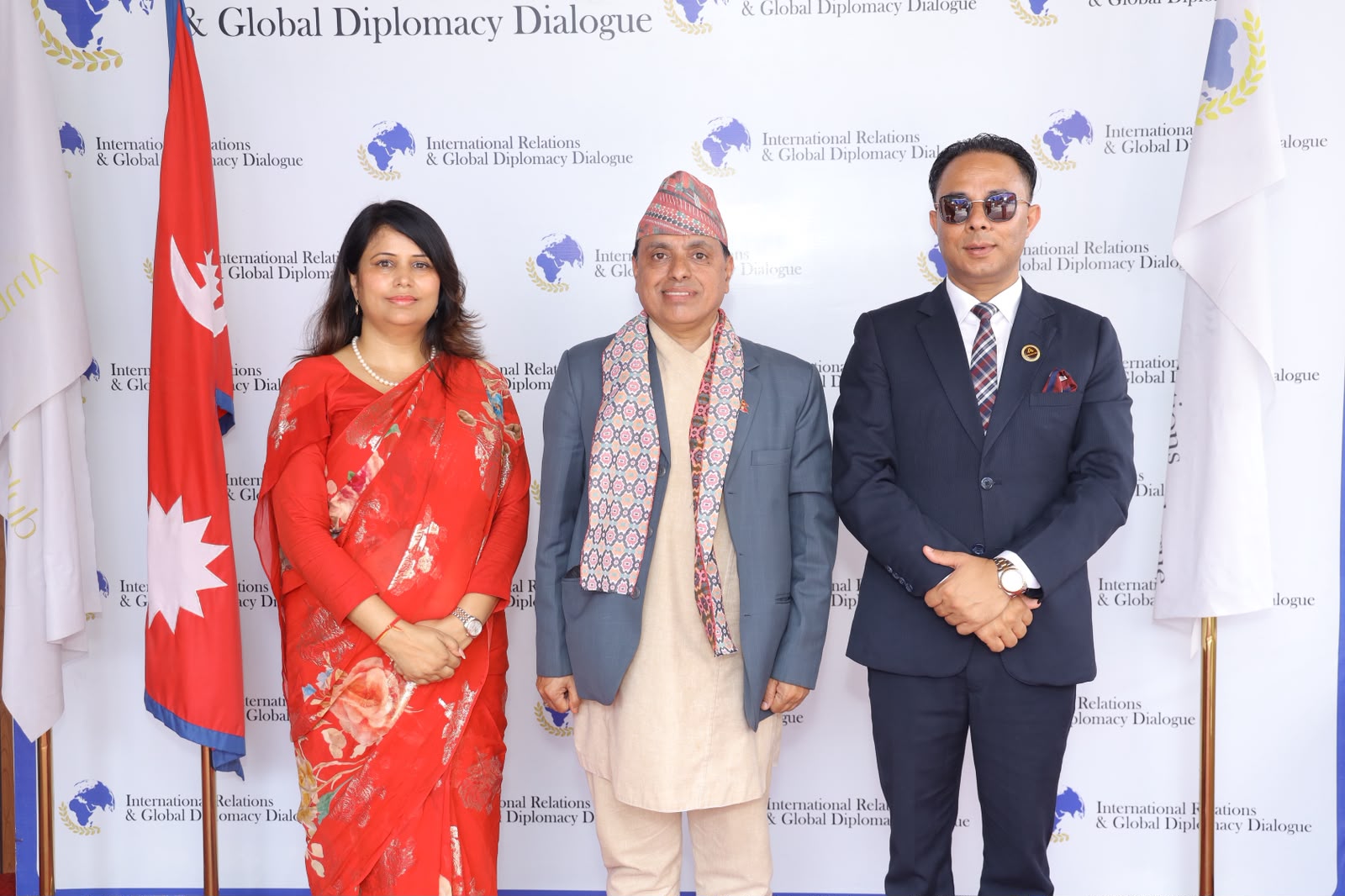
KATHMANDU: The International Relations and Global Diplomacy Dialogue (IRGDD), in collaboration with the Food and Agriculture Organization of the United Nations (FAO) Nepal, convened a high-level National Parliamentarian Policy Dialogue on the importance of intellectual property and geographical indications (GIs) for Nepal at Ambassadors Club Nepal in Bishalnagar, Kathmandu.
The dialogue reaffirmed IRGDD’s commitment to building meaningful bridges among Parliament, the government, producers, the private sector, experts and international partners, with the aim of turning national priorities into constructive dialogue and dialogue into practical policy action.
The programme brought together Members of Parliament, senior parliamentary leaders, government officials, technical experts, development partners, producer organisations, chambers of commerce, academics and private-sector representatives. It provided a broad platform for discussion on how Nepal can better protect, promote and add value to its distinctive products.
The active participation of Members of Parliament from trade, commerce, industry and agriculture-related committees, along with the chairpersons and members of the Public Accounts Committee and Parliamentary Hearing Committee, gave the dialogue significant parliamentary depth and relevance. Their engagement reflected growing parliamentary interest in strengthening Nepal’s intellectual property and GI framework and ensuring that policy and legislative reforms deliver tangible benefits to producers, communities and the wider national economy.
Among the key parliamentary leaders participating were Hon. Bodhanarayan Shrestha, Chairperson of the Parliamentary Hearing Committee, and Hon. Bharat Bahadur Khadka, Chairperson of the Public Accounts Committee, along with Members of Parliament representing trade, commerce, industry and agriculture-related committees.
Senior government representatives included Mr. Narayan Prasad Sharma Duwadi, Secretary, Ministry of Industry, Commerce and Supplies; Dr. Maheshwar Dhakal, Acting Secretary, Ministry of Agriculture, Forestry and Environment; and Mr. Pushkar Sapkota, Secretary, Office of the Prime Minister and Council of Ministers.
Opening the dialogue, Ambassador Dr. Sarmila Parajuli Dhakal, President of IRGDD and former Ambassador of Nepal to Oman and Spain, highlighted the wealth of products and traditions that have the potential to become internationally recognised geographical indications.
She cited Chyangra Pashmina, Allo, Chhurpi, Jumli Marshi Rice, large cardamom, Ilam tea, Mustang and Jumlali apples, Palpali Dhaka, Juju Dhau, Lokta paper, Rudraksha and Himalayan herbs, among others, as examples of Nepal’s distinctive products whose identity, heritage and economic potential deserve stronger protection.
Dr. Dhakal emphasised that Nepal’s challenge is no longer simply to produce exceptional products, but also to protect the stories, places, traditions and communities behind them. She stressed the need to strengthen their legal protection, build market recognition, enhance their commercial value and ensure that the people and communities who sustain these products fairly share in the benefits they generate.
She also underscored IRGDD’s role as a platform and bridge-builder, connecting parliamentarians with experts, the government with producers and the private sector, and Nepal’s national priorities with international knowledge and experience. She called for the dialogue to produce practical, actionable and measurable policy recommendations rather than remain confined to discussion.
Hon. Bodhanarayan Shrestha stressed the importance of safeguarding Nepal’s identity in international markets, noting that “Made in Nepal” should increasingly stand for products whose origin, authenticity, quality and distinctive character are properly protected and recognised.
Hon. Bharat Bahadur Khadka highlighted that geographical indications are far more than a legal or technical instrument. They are closely connected with Nepal’s identity, geography, traditional knowledge, producers’ rights, rural livelihoods and inclusive economic development.
Government representatives emphasised the need for stronger legal and institutional arrangements, effective coordination among relevant agencies, entrepreneurship development, employment generation, export promotion, quality assurance and effective implementation of the GI system.
The dialogue also benefited from the strong engagement of leading business and producer organisations, including the Federation of Nepalese Chambers of Commerce and Industry (FNCCI), Confederation of Nepalese Industries (CNI), Nepal Chamber of Commerce, Federation of Woman Entrepreneurs’ Associations of Nepal (FWEAN), Federation of Handicraft Associations of Nepal (FHAN), Federation of Export Entrepreneurs Nepal (FEEN), Nepal Pashmina Industries Association, Nepal Dairy Association and the National Tea and Coffee Development Board, among others.
Three technical sessions explored the strategic importance of geographical indications, Nepal’s legal and institutional framework, and the link between GIs, economic growth and parliamentary action. The sessions were followed by an open interaction and question-and-answer session, allowing participants to exchange perspectives and identify practical areas for further cooperation.
The dialogue reaffirmed a clear national message: Nepal must move beyond being a producer of distinctive goods and become a country that systematically protects, brands and creates greater value from the origin, heritage and knowledge embedded in those products.
Effective GI protection can help strengthen rural economies, empower producers, preserve traditional knowledge, create employment, promote exports and enhance Nepal’s competitiveness in international markets.
For IRGDD, the dialogue represents another step in its broader commitment to policy dialogue, knowledge exchange, Track 1.5 and Track 2 diplomacy, and building meaningful connections between Nepal’s development priorities and international expertise and partnerships.
IRGDD will continue to provide platforms where institutions, policymakers, experts, businesses, producers and communities can come together to exchange knowledge, build partnerships and develop practical solutions for Nepal’s sustainable and inclusive development.
IRGDD remains committed to turning dialogue into ideas, ideas into policy, and policy into meaningful opportunities for Nepal and its people.





Comment