





KATHMANDU: Economic Digest presents a brief yet comprehensive roundup of major business developments in Nepal, delivered in clear and accessible summaries.
The reports highlight Nepal’s economic and developmental challenges, particularly the need to balance employment, agricultural sustainability, infrastructure development, and disaster resilience. The continued departure of young Nepalis for foreign employment reflects limited domestic job opportunities and low wages. Although remittances support household incomes, sustained labour migration could weaken agricultural productivity and industrial growth.
Meanwhile, Mustang’s buckwheat farming demonstrates the potential of traditional agriculture to strengthen local livelihoods, preserve indigenous food systems, and attract tourism through improved market connectivity. Nepal’s declining tea exports reveal the risks of excessive dependence on a single market, emphasizing the importance of export diversification, reliable quality testing, and stronger institutional support. Infrastructure initiatives, including the reconstruction of four suspension bridges, offer opportunities to improve connectivity and community access.
However, Myagdi’s reconstruction funding shortages expose weaknesses in disaster preparedness and local financial capacity. Overall, sustainable development requires coordinated policies that expand domestic employment, modernize agriculture, diversify exports, strengthen infrastructure, and improve disaster-response financing.
TIA sees continued departure of Nepali youth for foreign employment
Hundreds of young Nepalis continued to leave the country through Tribhuvan International Airport (TIA) in search of overseas employment, higher education, and other international opportunities, even as families across Nepal celebrated the Dashain festival. International departure terminals remained crowded with young job seekers and professionals heading abroad amid limited domestic employment opportunities, low wages, and inadequate economic incentives. Although remittances sent by Nepalis working overseas remain essential to household finances, community observers have raised concerns about the growing departure of the country’s working-age population. They warn that sustained labour migration could undermine agricultural productivity, reduce the industrial workforce, and weaken economic stability in rural communities over the long term.
Mustang farmers begin harvesting traditional buckwheat crops
Farmers throughout Mustang district are harvesting traditional buckwheat cultivated on terraced fields at elevations ranging from 2,000 to 5,000 metres above sea level. The nutritious crop is an important part of the region’s traditional high-altitude farming system, alongside local barley, naked oats, and potatoes. Buckwheat is grown across all five local administrative units, from Thasang-1 in Tukche to settlements near the border around Lo Manthang. It thrives in upland fields and open spaces within apple orchards, tolerates cold conditions, and generally matures in around 100 days. The harvest supplies local households while also serving regional commercial markets. Improved road connectivity has made it easier to transport buckwheat products to other areas. Traditional foods prepared from buckwheat flour, including rotis and other local specialities, have also become popular culinary attractions for domestic and international visitors exploring the Himalayan region.
Nepal’s tea sector seeks stable markets as exports decline
Nepal’s tea industry is facing increasing market uncertainty despite having a strong production base. Exporters are urging improvements in quality testing, diversification of export destinations, and greater government support. Tea exports through the Kakarbhitta border point declined by 14.8 percent to 13,045 metric tons in fiscal year 2025/26, while their total value fell by 15.3 percent to Rs 3.529 billion. India accounts for 86 percent of Nepal’s tea exports, making the industry highly vulnerable to fluctuations in demand and changes in trade procedures. Revised tea-testing requirements introduced by India further complicated exports, forcing 83 tea factories in Ilam and Jhapa to temporarily suspend production in May and June 2026. Although the regulations were subsequently amended, exporters remain concerned about additional costs and delays. Industry stakeholders emphasize the need for dependable testing laboratories, stronger assistance for pesticide-free tea production, and greater access to international markets to ensure fair returns for farmers and sustainable industry growth.
More than 3,500 citizens use free police bus services during Dashain in Kathmandu
A total of 3,585 people used free shuttle bus services provided by Nepal Police and the Armed Police Force across the Kathmandu Valley during the Dashain holidays. The initiative was introduced to make travel easier and more affordable during the major festive period. Official records show that Nepal Police carried 1,406 passengers using three dedicated buses on Maha Nawami and Bijaya Dashami. Meanwhile, the Armed Police Force operated two vehicles and transported 2,179 passengers over several days, with the service concluding on Friday. Passengers welcomed the annual initiative for offering safe and free transportation during the busy festival period. The service also helped protect commuters from excessive fares charged by private public transport operators in the capital region.
Myagdi struggles to secure funds for post-disaster reconstruction
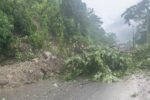
Local governments in Myagdi district are facing serious financial constraints as they attempt to rebuild infrastructure and rehabilitate communities affected by destructive monsoon floods and landslides. The disasters caused significant infrastructure damage and loss of life, increasing the need for urgent reconstruction and relief efforts. Persistent heavy rainfall damaged rural roads, suspension bridges, drinking water pipelines, irrigation canals, and electricity transmission lines, leaving several remote settlements isolated. Municipal representatives say the available disaster management reserves are insufficient to cover even essential repairs and have appealed to federal and provincial governments for additional financial assistance. Community fundraising efforts and contributions through salary deductions have also begun to support recovery work. However, damaged electricity networks and disrupted road access in several remote wards continue to obstruct daily travel, service delivery, and local economic activities.
Electrical short circuit causes fire damage exceeding Rs 15 million in Banke
A fire at Amber Steel in Bakaspur, Janaki Rural Municipality-5, Banke, caused property damage estimated at more than Rs 15 million. The blaze broke out inside the facility’s furnace oil storage tank enclosure at approximately 1:30 a.m., with preliminary reports identifying an electrical short circuit in the industrial wiring as the cause. According to the District Police Office, local police personnel, regional fire engines, and community members responded to the incident. Their coordinated efforts brought the fire under control within about an hour, preventing it from spreading further and causing additional damage to nearby manufacturing units within the steel production complex.
Four suspension bridges to be rebuilt under the Tanahun Hydropower Project
Tanahun Hydropower Limited has signed a contract with a Kathmandu-based joint venture contractor to reconstruct four suspension bridges affected by the reservoir area of the 140-megawatt Tanahun Hydropower Project. The contract is worth Rs 160 million, excluding applicable taxes, and is intended to restore reliable transportation links for communities affected by reservoir submergence. Following consultations with local residents, replacement sites were selected for the bridges at Chulesi, Tunibote, Dhwang, and Tutuwa. Construction materials and equipment have already been transported to the sites to facilitate the work. The project aims to complete the reconstruction of all four bridges before mid-2028, helping restore essential connections between local settlements.




Comment