




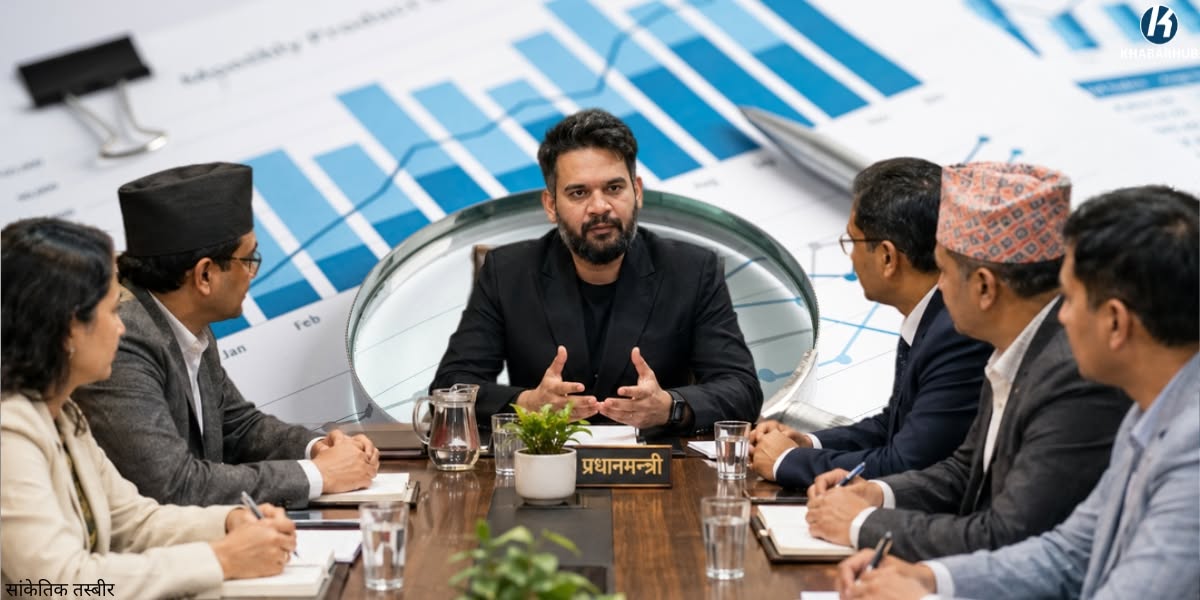
KATHMANDU: Prime Minister Balen Shah has stepped up consultations with business and industry leaders over the past two weeks, a shift from his earlier focus on diplomatic engagements and formal meetings during the first 100 days of his administration.
Since July 8, Shah has met representatives from at least eight sectors, including the Federation of Nepalese Chambers of Commerce and Industry (FNCCI), the Nepal Chamber of Commerce (NCC), the Confederation of Nepalese Industries (CNI), construction entrepreneurs, independent power producers, hotel operators, women entrepreneurs, footwear manufacturers, capital market stakeholders, handicraft businesses and organic producers.
The meetings have centered on improving the investment climate, addressing business concerns and restoring private sector confidence.
Business community welcomes dialogue
Participants in the meetings have largely welcomed the government’s outreach, saying the prime minister listened to their concerns and expressed commitment to addressing key challenges facing their sectors.
The consultations come at a time when several prominent business figures are under investigation in cases involving alleged money laundering and tax evasion, developments that have unsettled the private sector.
Following a meeting with the prime minister, Nepal Chamber of Commerce President Kamlesh Agrawal said Shah had emphasized placing the private sector at the center of economic growth and encouraged business leaders to submit practical recommendations for policy reforms.
“Nepal’s private sector should be in the driving seat of the economy. The Prime Minister assured us that the dialogue would continue and encouraged us to submit point-by-point recommendations, saying they would be viewed positively,” Nepal Chamber of Commerce President Kamlesh Agrawal said after meeting Shah.
Capital market representatives also said discussions focused on reforms needed to strengthen investor confidence and improve coordination among the Ministry of Finance, Nepal Rastra Bank, the Securities Board of Nepal (SEBON) and the Nepal Stock Exchange (NEPSE).
Handicraft entrepreneurs said they discussed proposals including the establishment of a Handicraft Development Board and the formulation of new sectoral policies.
Economists cautiously optimistic
Economist Anal Raj Bhattarai described the government’s renewed engagement with the private sector as a positive development, saying it could help bridge the gap that had emerged between the government and businesses during the administration’s first three months.
He said consultations with individual sectors could provide valuable input for policy reforms and improve the government’s understanding of industry-specific challenges.
“For the past three months, it seemed as though Singha Durbar and the business community were moving in separate directions. The Prime Minister has now begun engaging with stakeholders, which is encouraging. These consultations should continue and expand,” Bhattarai told Khabarhub.
He said sector-specific consultations would help the government collect practical information and make policymaking more effective.
“I believe Nepal’s economy will begin to gain momentum from the third quarter. The government is expected to focus on regulatory reforms over the next few months, and with the Dashain-Tihar season approaching, economic activity should gradually pick up,” he said.
However, observers have noted that Finance Minister Dr. Swarnim Wagle has not participated in the series of meetings, raising questions about how the prime minister’s commitments will be translated into government action.





Comment