




KATHMANDU: Raghunath Mahato, who was deployed at a basic school polling station in Parsa Rural Municipality-4, Jigdawa, Sarlahi, during the House of Representatives elections held on March 5, suddenly fainted.
Mahato, 42, from Rautahat, was taken to the Provincial Hospital in Malangwa by fellow election personnel, but he died during treatment. A postmortem later confirmed that he died of a heart attack.
Similarly, on the night of March 2 in Kanchanpur, police officer Mansingh Rana fainted while cooking. Rana, 35, who was deployed at the Jeevan Shakti Basic Polling Station in Sita Basti, Punarbas Municipality-9, died at Nisargadhi Hospital. It was confirmed that he had long been suffering from high blood pressure and diabetes.
These are just a few examples reported in the media. In recent times, incidents of people dying from heart attacks or suddenly collapsing, even while talking, are being heard almost daily in villages and neighborhoods.
Among the victims are also young people aged 25 to 30. According to doctors, the number of deaths from heart attacks has been rising due to diet, lifestyle, and environmental factors. Senior cardiologist Dr. Kamal Lamsal says that people of all age groups are now at risk, as conditions such as high blood pressure and diabetes are increasingly seen at younger ages.
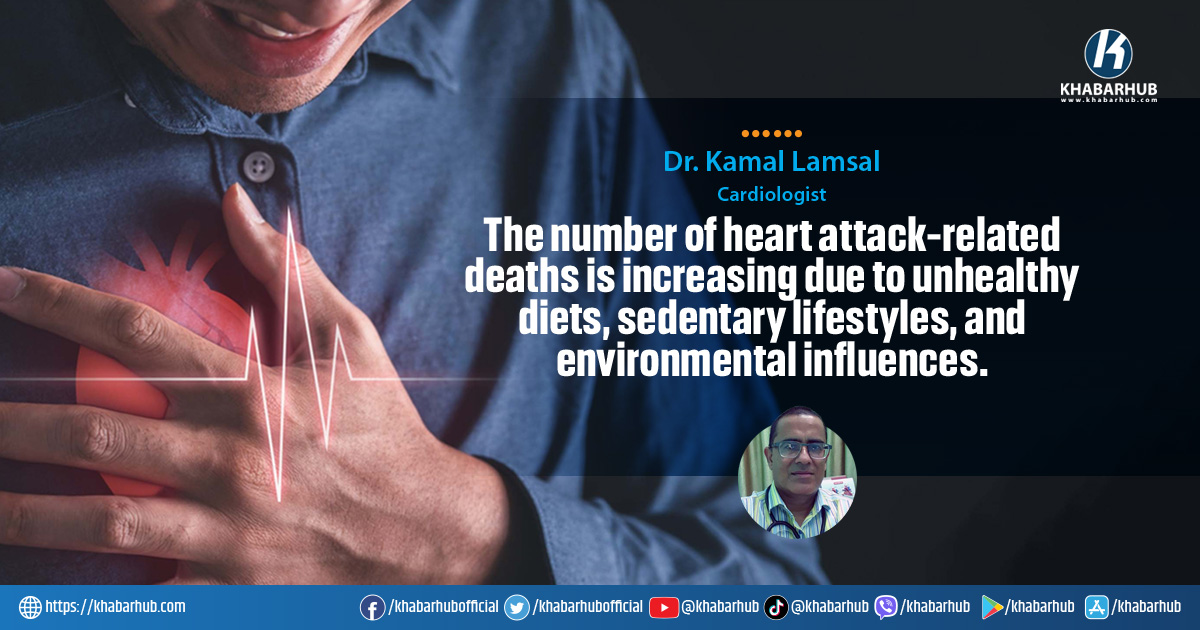
The number of heart attack-related deaths is increasing due to unhealthy diets, sedentary lifestyles, and environmental influences.
According to the World Health Organization, around 25-30 percent of total deaths in Nepal are caused by cardiovascular diseases, with heart attacks being a leading factor.
Reasons for the Rise in Heart Attacks in Nepal
Dr. Lamsal explains that changing lifestyles and unhealthy habits are major contributors to the growing risk of heart disease. Poor diet is a key factor. “The tendency to consume excessive fat, junk food, and high-salt foods negatively affects heart health,” he said.
Physical inactivity is another major reason. A lack of regular exercise and prolonged sitting weaken heart health. Smoking and alcohol consumption also significantly increase the risk of heart attacks by damaging blood vessels and directly affecting the heart.
In addition, people with chronic conditions such as high blood pressure and diabetes are at greater risk. Stressful lifestyles, work pressure, mental strain, and irregular routines further impact heart function, according to Dr. Lamsal.
Bathroom Incidents and Heart Attacks
Recently, several deaths caused by collapsing in bathrooms have also been linked to heart-related issues. However, Dr. Lamsal notes that not all such incidents are due to heart attacks. As people age, the body’s nervous system weakens, which can sometimes cause fainting when standing up suddenly.
He explains that individuals who have long been on medication for high blood pressure and diabetes may experience slight dilation of blood vessels. When a person suddenly stands up from sleep, their blood pressure may drop, leading to fainting.
If someone falls in the bathroom at night, the risk of death increases because help may not arrive in time.
To reduce risk, Dr. Lamsal advises people to move their legs while still in bed, sit for a while after waking, and stand up slowly before walking. Those who have experienced such issues should consult a doctor and take necessary precautions or medication.
He also suggests that men may reduce the risk of falling by urinating while sitting, as it is safer and can help prevent injuries in case of dizziness.
Seven Tips to Prevent Heart Attacks
Adopt a healthy diet: Reduce oily, fatty, and junk food. Eat more green vegetables, fruits, and whole grains. Limit salt and sugar intake.
Exercise regularly: Engage in at least 30 minutes of walking or exercise, five days a week.
Quit smoking and alcohol: Avoid tobacco and limit alcohol consumption, as both increase heart risk.
Manage stress: Practice meditation, yoga, or engage in relaxing activities. Aim for 7–8 hours of sleep daily.
Get regular health checkups: Monitor blood pressure, blood sugar, and cholesterol levels.
Maintain a healthy weight: Follow a balanced diet and exercise regularly to prevent obesity.
Recognize warning signs: Seek immediate medical attention if you experience chest pain, shortness of breath, excessive sweating, or pain in the arms or jaw.





Comment