




KATHMANDU: For decades, several leaders within the Nepali Congress had risen and survived in politics largely on the strength of family legacy, often overshadowing merit-based leadership. Critics have long argued that political heirs continued to secure influence by invoking the struggles of earlier generations, while some relatives of top leaders allegedly leveraged power to enter politics through quotas meant for marginalized groups.
However, in the election following the Gen-Z-led movement, many such legacy-linked candidates have been left out of the race.
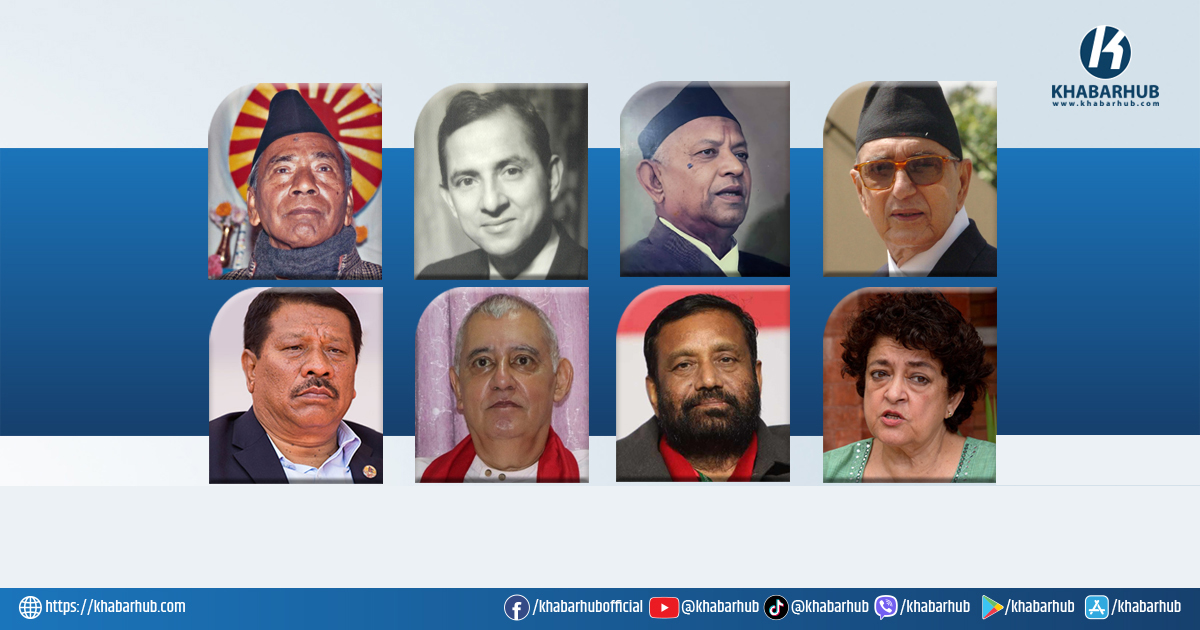
The party witnessed intense internal power struggles around the convention process, culminating in a Special General Convention. Under the leadership of party President Gagan Kumar Thapa, elected through that convention, ticket distribution has marked a clear departure from past practice. Thapa has sidelined most leaders associated with entrenched political lineages. Some of the notable cases are outlined below.
Prakash Man Singh: Son of Ganesh Man Singh
Prakash Man Singh is the son of Ganesh Man Singh, revered as the “Iron Man” of Nepali politics. He began his political career through the Nepal Students’ Union (NSU) in 1973, becoming Kathmandu district NSU president in 1979 and later holding several district-level party positions before entering central politics.
He was elected a central committee member from the party’s 10th General Convention in Pokhara in 1999. Following the party split in 2002, Singh became vice-president of the Nepali Congress (Democratic) led by Sher Bahadur Deuba, retaining the same position after party reunification in 2007. He later served as general secretary and central committee member through subsequent conventions.
Despite losing parliamentary elections in 1991 and 1994, Singh became a National Assembly member in 1996 and served as a minister under both Deuba and Krishna Prasad Bhattarai-led governments. He was later appointed Deputy Prime Minister and Minister for Local Development under Prime Minister Sushil Koirala, and again served as Deputy Prime Minister and Minister for Urban Development in the KP Sharma Oli-led government.
In the 2017 election, Singh was elected deputy leader of the Nepali Congress parliamentary party. His wife, Srijana Singh, contested the 2022 Kathmandu mayoral election but was defeated by independent candidate Balen Shah.
Long seen as a key power broker in ticket distribution in Kathmandu, Prakash Man Singh has this time been completely denied a party ticket.
Shashank Koirala: Son of BP Koirala
Dr Shashank Koirala, the youngest son of BP Koirala, Nepal’s first elected prime minister, was born in 1958 in Patna, India. An ophthalmologist by profession, he has won four parliamentary elections from Nawalparasi (Bardaghat Susta East) Constituency-1.
Koirala has himself stated on multiple occasions that voters supported the party more out of reverence for his father than for his own performance. Critics argue that he rarely engaged with constituents, even during election periods, and remained largely absent from public life after elections.
Now 67, Koirala had projected himself as a contender for party president, including during the 14th General Convention. He was elected general secretary from the 13th General Convention, defeating current party president Gagan Thapa and Arjun Narasingh KC from Ram Chandra Poudel’s panel.
Koirala has openly opposed the current republican constitution and advocated for its reversal. He also faced criticism within the party for not supporting his elder brother Shekhar Koirala during the 14th General Convention, a move that reportedly weakened Shekhar’s campaign and drew accusations of internal family discord.
Sujata Koirala: Daughter of Girija Prasad Koirala
Sujata Koirala, the only daughter of former prime minister Girija Prasad Koirala, was once viewed as the political heir of the influential Koirala family. However, following her father’s death, her political influence steadily declined.
Although Girija Prasad Koirala appointed her as foreign minister during the latter phase of his political career, her tenure failed to leave a lasting impact, critics say. She lost the 2022 House election from Morang-2 despite securing a party ticket and has since stepped back from active electoral politics, citing health reasons.
Sujata is currently involved in social service through the GP Koirala Foundation. With continued rifts among Sujata, Shekhar, and Shashank Koirala, observers say the Koirala family’s political legacy has effectively ended with this generation.
Bimalendra Nidhi: Son of Mahendra Narayan Nidhi
Bimalendra Nidhi is the son of Mahendra Narayan Nidhi, one of the founding leaders of the Nepali Congress. Born in 1955, Nidhi entered politics early, becoming an NSU member at 21 and later holding multiple student and party positions.
He has served as general secretary of the party, held several ministerial portfolios—including home minister, physical infrastructure minister, and deputy prime minister—and even acted as Nepal’s acting prime minister.
Despite his long career, Nidhi, who was often seen as influential in ticket distribution in Madhes under the patronage of Sher Bahadur Deuba, has this time managed to secure only his own ticket, with no broader influence over nominations.
Setback for Arzu Rana Deuba and Manju Khand
Arzu Rana Deuba, born in Kathmandu in 1961, holds a PhD in psychology from Punjab University, Chandigarh. She founded the Safe Motherhood Network in 1996 and later co-founded the NGO ‘Saathi,’ working on women’s health and anti-violence campaigns.
Elected as a central committee member from the 14th General Convention, Rana served three terms in the House of Representatives through proportional representation and later became foreign minister. Despite her credentials, she faced criticism for repeatedly entering Parliament through quotas meant for marginalized communities rather than contesting direct elections. Critics also questioned her understanding of grassroots social realities.
Her repeated nominations were widely seen as facilitated by the long-standing political dominance of her husband, former prime minister Sher Bahadur Deuba. She has also faced allegations—denied by her—of amassing disproportionate wealth through political influence.
Manju Khand, wife of former home minister Bal Krishna Khand, entered Parliament as a proportional representative from the Khas-Arya category in 2022. Though relatively unknown politically, she came under scrutiny after being linked to the fake Bhutanese refugee scam, in which her husband was jailed and later released. Allegations have surfaced that she handled financial transactions connected to the case, claims that remain under investigation.
Political analysts note that the political standing of both Rana and Khand was closely tied to their husbands’ power bases. With those power centers weakened, their political futures now appear uncertain.
As the Nepali Congress heads into the upcoming election under new leadership, the sidelining of legacy-linked figures signals a broader attempt to redefine the party’s internal power structure—one shaped less by lineage and more by the post-Gen-Z demand for accountability and change.




Comment