




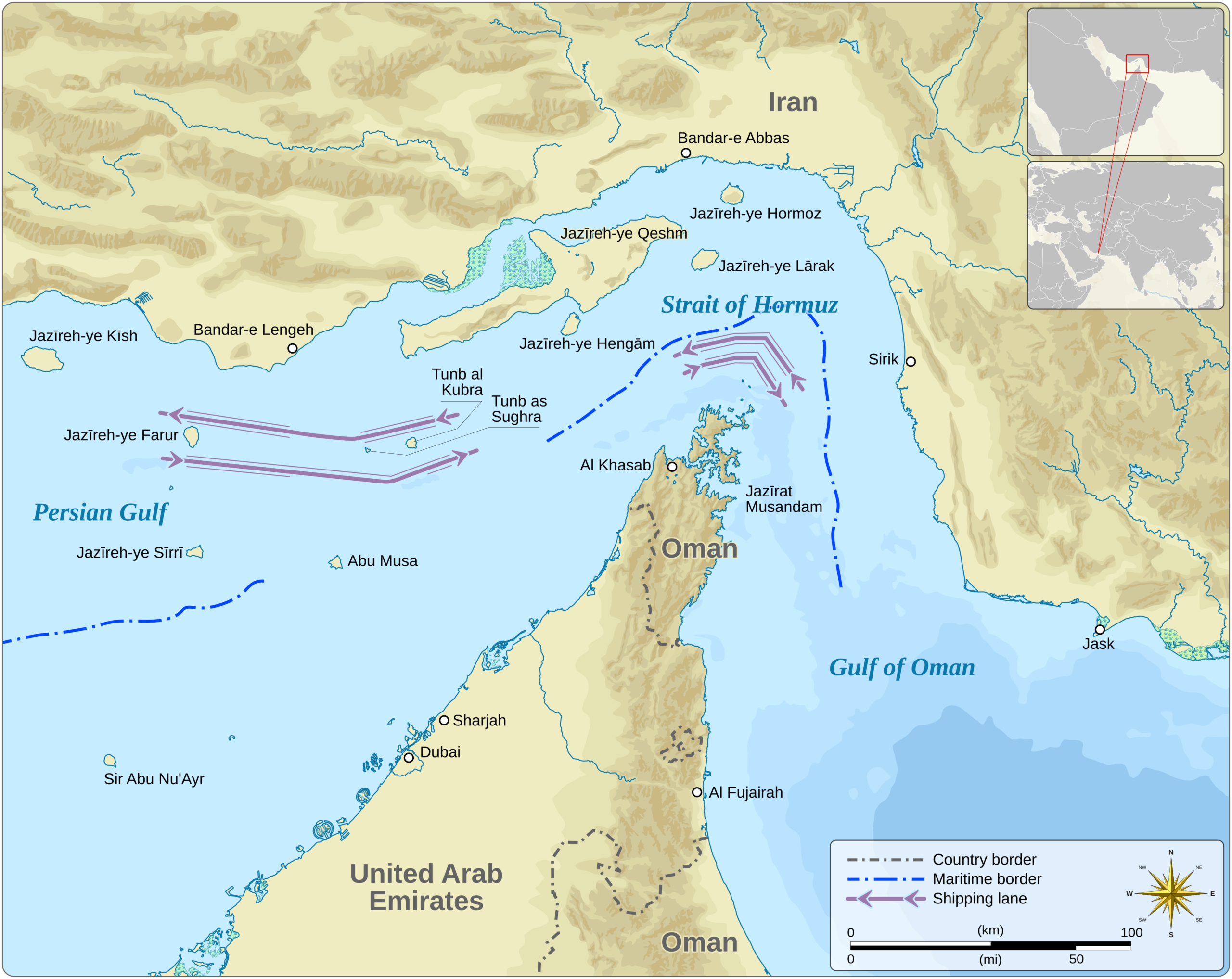
MANILA: U.S. Secretary of State Marco Rubio warned Southeast Asian foreign ministers on Wednesday that allowing Iran to control the Strait of Hormuz would create a dangerous global precedent, threatening the principle of freedom of navigation and international maritime trade.
Speaking at a meeting of the Association of Southeast Asian Nations (ASEAN) in Manila, Rubio said no country should be allowed to control an international waterway, impose transit fees or threaten commercial shipping.
“If we create a precedent where a nation-state can control an international waterway, charge a toll and threaten ships, it will have consequences far beyond the Middle East, including in this region,” Rubio said.
His remarks came as U.S. Central Command said American forces had carried out strikes on military targets in Iran for the 11th consecutive night, saying the operations were aimed at reducing Tehran’s ability to threaten commercial shipping in the Strait of Hormuz.
Rubio accused Iran of seeking authority over shipping through the strategic waterway without any legal basis.
“There is a fundamental principle of freedom of navigation that is being challenged, and that cannot be allowed to happen,” he said.
The comments also come as ASEAN countries continue to face maritime disputes with China in the South China Sea, another key global shipping route.
Rubio arrived in the Philippines on Tuesday, the same day Washington condemned a recent confrontation between Chinese and Philippine vessels in the disputed South China Sea.
On the sidelines of the ASEAN meetings, Rubio is scheduled to hold talks with Chinese Foreign Minister Wang Yi, as well as counterparts from India, Australia and Japan under the Quad framework.
The U.S. secretary of state also said Washington remains open to diplomacy with Iran but questioned Tehran’s commitment to negotiations.
“The United States remains willing to engage in constructive dialogue if commitments are honored,” Rubio said. “If Iran is serious about negotiations, we will be too. If not, we will take the necessary steps to protect our interests and those of our allies.”





Comment