




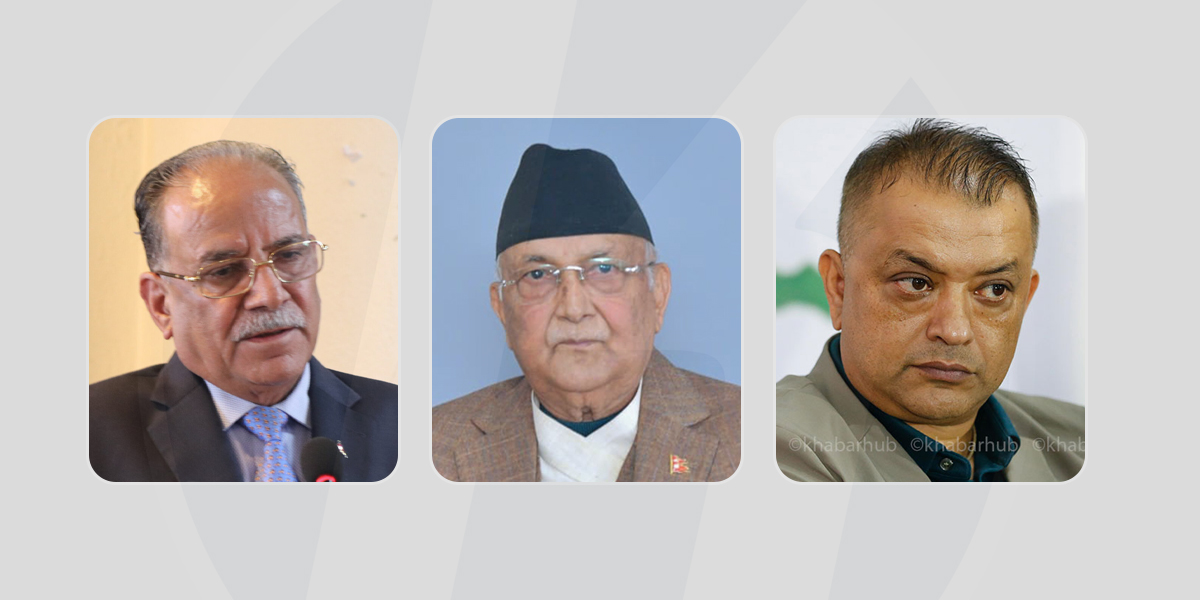
KATHMANDU: Nepal’s major political parties have intensified internal consultations over the future of provincial governments, with uncertainty growing over whether the existing Nepali Congress–CPN-UML alliance will continue or give way to new coalition arrangements.
Although neither the Nepali Congress nor the CPN-UML has formally announced the end of their alliance at the federal level, discussions on forming new provincial governments have gathered momentum in recent weeks. The issue came into sharper focus after disputes over the budget process in Sudurpaschim Province exposed strains within the ruling coalition.
Leaders from both parties say no formal decision has been taken. Nepali Congress General Secretary Guru Ghimire said the party has yet to officially decide on ending cooperation with the UML, while UML Vice Chair Raghuji Pant said discussions on the alliance’s future are still ongoing.
Internal differences within the Nepali Congress have also delayed a unified position. Leaders aligned with former party president Sher Bahadur Deuba are said to favor continuing cooperation with the UML, while another faction has advocated exploring cooperation with the Nepali Communist Party (NCP).
Meanwhile, the UML has been exploring the possibility of reviving a broader left alliance. However, sources within the NCP say opinions remain divided, with some leaders favoring cooperation with the UML while others see greater prospects in working with the Nepali Congress.
Several provincial lawmakers have arrived in Kathmandu in recent days to brief their respective party leadership on the political situation in their provinces. Leaders from Koshi, Bagmati, Gandaki, Madhesh, Karnali and Sudurpaschim provinces are holding consultations with top party officials before any final decision is made.
NCP leader Rajendra Pandey said discussions are taking place from multiple angles but stressed that no agreement has yet been reached.
“There is no basis for reviving a left alliance simply by trusting UML Chair KP Sharma Oli. Nor can we immediately move towards cooperation with the Congress. Any decision must come through clear discussions, agreements and a common framework,” he said.
Pandey also argued that provincial governments should not become devoid of an effective opposition, warning that broad alliances involving all major parties could weaken democratic accountability.
Nepali Congress President Gagan Kumar Thapa has also weighed in, saying smaller parties can form alliances without concern but cautioning against coalitions between major parties in the provinces.
At the same time, informal talks have continued among leaders of the UML, the NCP and the Nepali Congress over possible coalition options.
Attention has also focused on evolving relations between UML Chair KP Sharma Oli and NCP coordinator Pushpa Kamal Dahal. While the two leaders have resumed dialogue, discussions with NCP co-coordinator Madhav Kumar Nepal have yet to take place.
According to political sources, Dahal and Nepal recently agreed to continue talks with both the UML and the Congress before making any final decision on future alliances.
Within the UML, some provincial leaders are reportedly urging the party leadership to pursue broader left unity ahead of future provincial and local elections. However, several NCP leaders remain cautious, arguing that any revival of a left alliance would depend on greater flexibility from Oli.
Political observers say the coming days are likely to determine whether the existing Congress-UML partnership survives or whether Nepal’s provincial political landscape shifts towards a new alignment involving left parties.
At present, the UML leads provincial governments in Koshi, Lumbini and Karnali, while the Nepali Congress heads the governments in Madhesh, Bagmati, Gandaki and Sudurpaschim. Any realignment among the major parties could significantly alter the balance of power across the provinces.



Comment