




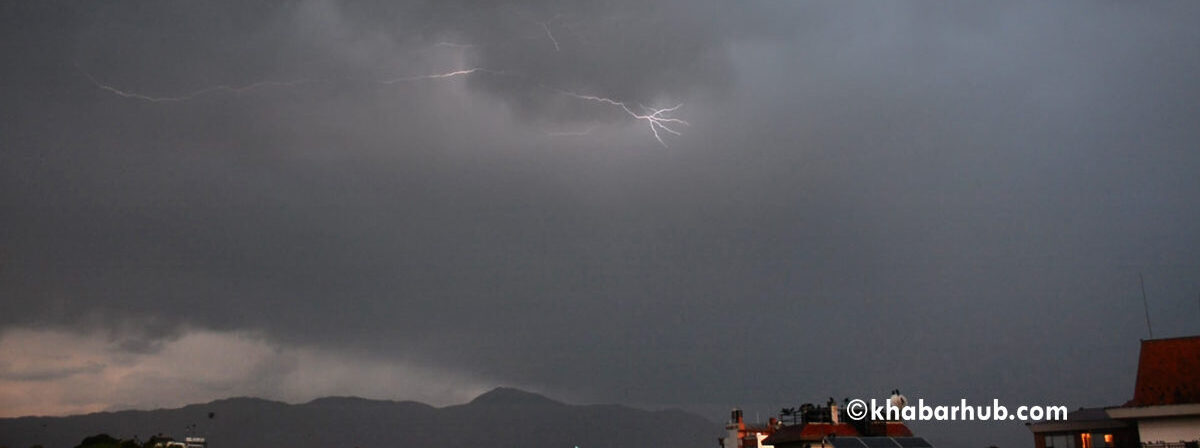
KATHMANDU: This year’s monsoon system has expanded into four additional provinces of Nepal, six days later than the usual onset period, according to the Department of Hydrology and Meteorology.
The monsoon, which first entered Nepal through Koshi Province last Friday, has now spread across Koshi, Madhesh, Bagmati, parts of Gandaki Province, and the eastern region of Lumbini Province, the Meteorological Forecasting Division said.
Meteorologist Sanjeev Adhikari said the system remains relatively weak, and it may take a few more days for the monsoon to cover the entire country.
Typically, the monsoon arrives in Nepal around June 13, but this year its onset was delayed by six days. With its gradual expansion, rainfall has already been recorded in several parts of eastern and central Nepal.
The division has urged the public to stay updated with official weather bulletins over the next few days and take necessary precautions as the system develops.
The department has also forecast below-average rainfall this monsoon season, along with a possible rise in temperatures. Meteorologist Sudarshan Humagai said most parts of the country are likely to receive less rainfall than usual.
He added that areas including southern Karnali, much of Lumbini, eastern Madhesh, and southern Koshi are expected to experience below-average precipitation this year.




Comment