




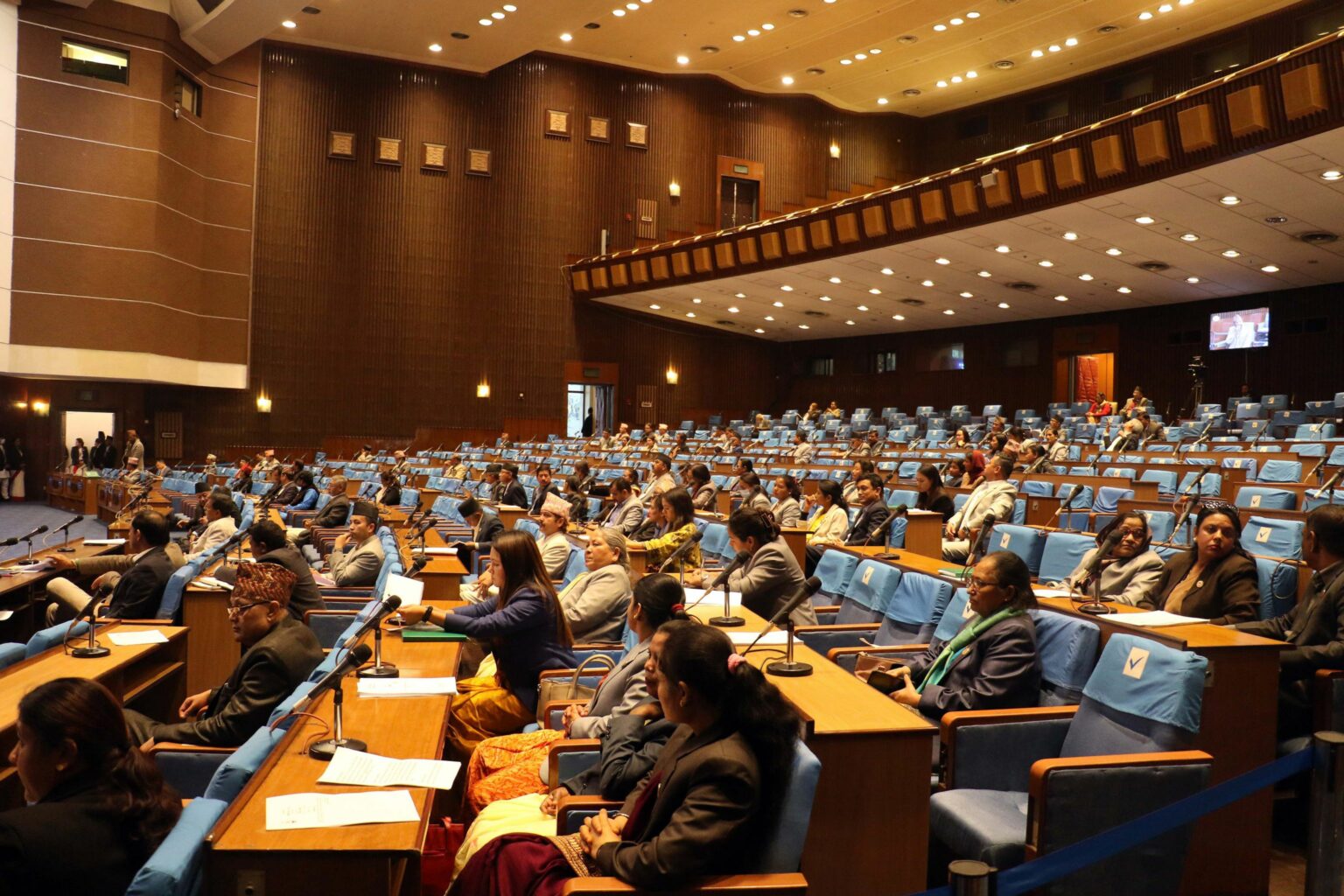
KATHMANDU: As Nepal heads toward the March 5 House of Representatives election, the number of female candidates remains strikingly low, highlighting persistent gender imbalance and tokenism in major parties. Out of 3,486 candidates registered for the 165 direct seats, only 11.35% are women.
Established parties have fielded very few women in direct elections: the Nepali Congress has nominated only 11 women, CPN-UML 10 and the Nepali Communist Party 12. Even newer parties like the Rastriya Swatantra Party (RSP), have followed a similar trend. In some cases, parties with strong male-dominated leadership have restricted women largely to proportional representation lists, leaving direct constituencies overwhelmingly male.
Experts point out that women’s limited candidacy is driven by entrenched patriarchal structures and the perception that election campaigns require financial and organizational resources that women candidates often cannot mobilize. In some cases, female politicians have resisted proportional-only nominations. Nepali Congress leader Sirjana Malla rejected her proportional seat, insisting on contesting directly to assert political credibility.
Data shows incremental progress: women accounted for 9.3% of candidates in the 2022 House elections, meaning the current 11.35% is only a small improvement. Analysts say the numbers reveal that even decades after legal provisions mandating one-third women representation in legislatures, parties continue to give women token positions rather than meaningful candidacies.
The low participation of women in direct elections also affects electoral outcomes. Even where women contest, societal biases, lack of financial support, and male-dominated party structures reduce their chances of winning, reinforcing the cycle of underrepresentation in leadership roles.
Observers argue that unless parties actively empower women to contest directly, the political arena will continue to reflect patriarchal norms, with female leaders confined to secondary roles despite legal frameworks intended to ensure equality.






Comment