




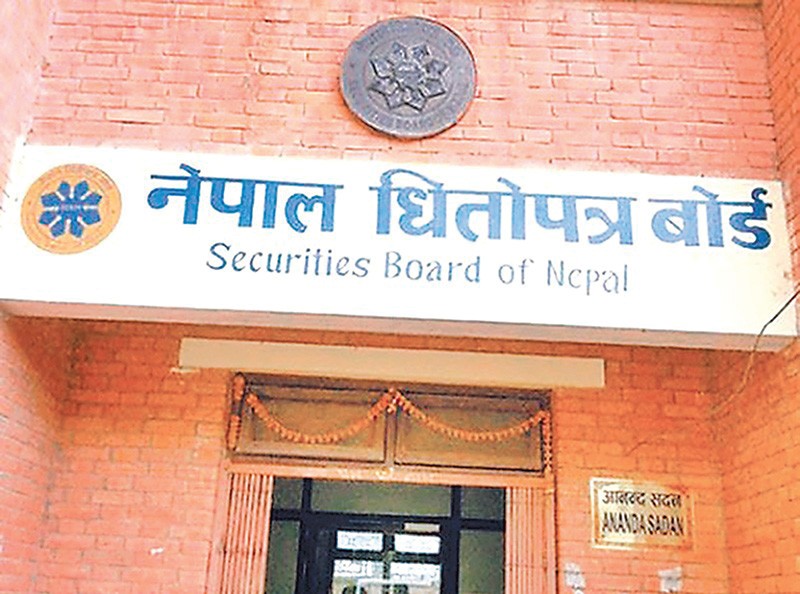
KATHMANDU: The Securities Board of Nepal (SEBON) has proposed allowing more types of organized institutions to issue bonds, potentially broadening Nepal’s corporate bond market beyond banks, financial institutions and insurance companies.
Under the draft Securities Registration and Issuance Regulation, 2026, published on Thursday, organized institutions other than banks and financial institutions, insurance companies and entities established under special laws would be permitted to issue bonds. Such institutions would generally be required to provide security or collateral to protect investors.
However, SEBON has sought stakeholder feedback on whether institutions with strong credit ratings should be permitted to issue unsecured bonds and whether the collateral requirement should apply uniformly to all eligible institutions.
At present, most corporate bonds traded in Nepal’s securities market are issued by banks and financial institutions. Government bonds are also listed, although their secondary-market trading remains limited. Corporate bonds are typically issued for a fixed period at a predetermined interest rate, and their yields have recently remained higher than deposit rates as bank deposit rates have declined.
Meanwhile, the draft also proposes allowing international financial institutions to issue bonds in Nepal, subject to government approval. Issuers would have to disclose details including the purpose of the issue, use of proceeds, financial statements, associated risks and other relevant information.
Funds raised through such issues would be required to be invested in Nepal. The proposed framework also sets requirements for prospectuses, due diligence, issue and sales managers, and trustees.
Similarly, Nepali companies would be allowed to issue bonds denominated in foreign currencies in international capital markets, subject to approval from SEBON and Nepal Rastra Bank.
The draft proposes two methods of bond issuance: public issuance and private placement. Under private placement, an organized institution could offer bonds to up to 50 qualified investors without public advertising or marketing. Communication could be conducted through letters, telephone calls, SMS or electronic means.
Qualified investors would include listed companies, banks and financial institutions, insurance companies, merchant bankers, mutual funds, retirement and welfare funds, the Employees Provident Fund, Citizen Investment Trust and the Social Security Fund.
Securities brokers and dealers, issue and sales managers, investment managers and advisers, market makers, universities, companies with at least Rs 500 million in paid-up capital and distributable reserves, foreign institutions, foreign governments and international institutional investors would also qualify. Individuals investing at least Rs 10 million would likewise be considered qualified investors.






Comment