




KATHMANDU: Out of 275 seats in the House of Representatives (HoR), the Rastriya Swatantra Party (RSP) has secured nearly two-thirds of the seats, holding a dominant position, while the remaining five parties are collectively limited to 93 seats.
The Nepali Congress (NC) has emerged as the main opposition with 38 seats. Other parties include the CPN-UML with 25 seats, the Nepali Communist Party (NCP) with 17, the Shram Sanskriti Party with 7, and the Rastriya Prajatantra Party (RPP) with 5 seats.
Following the election held on March 5, the RSP formed the government under the leadership of senior leader Balen Shah. Since then, Parliament has met six times within nine days. During this period, the House elected its Speaker and Deputy Speaker and formed various parliamentary committees.
Traditionally, newly elected prime ministers deliver an introductory address outlining government priorities in the first parliamentary session. However, Prime Minister Shah did not follow this practice, drawing attention from political observers.
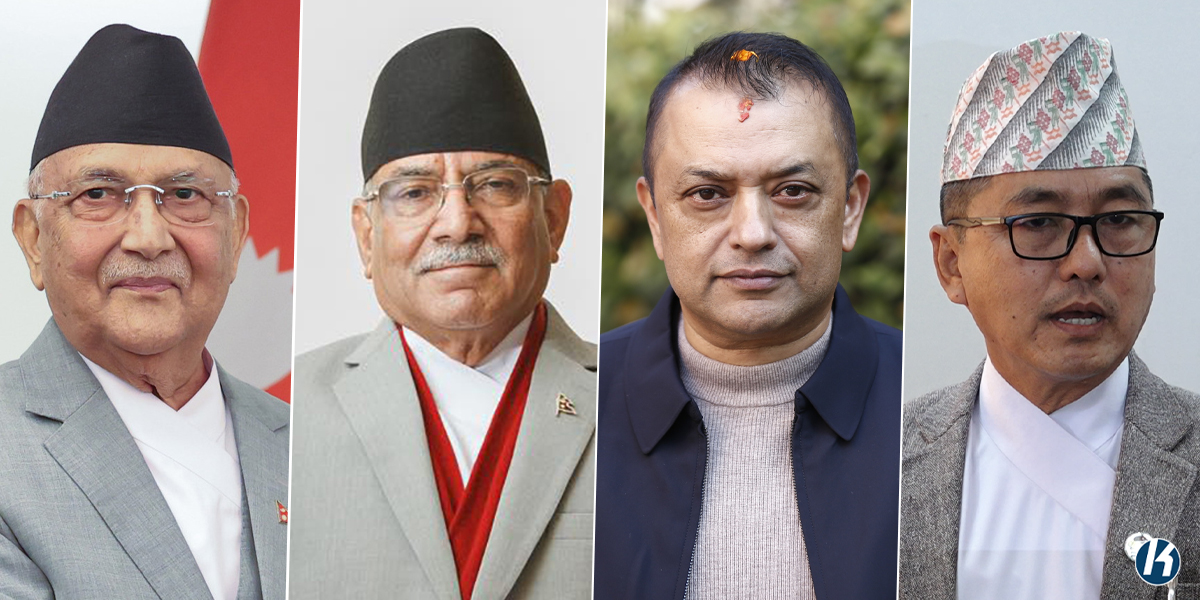
In the House, opposition voices have remained relatively subdued, although CPN-UML lawmakers have strongly protested the arrests of former Prime Minister KP Sharma Oli and former Home Minister Ramesh Lekhak, demanding their release. Analysts say the traditional opposition parties appear unprepared to effectively utilize their parliamentary role following unexpected electoral losses.
The Nepali Congress, which had secured 89 seats in the previous election, was reduced to 38 seats in the latest polls, winning 18 constituencies directly and 20 through proportional representation. The party’s decline has been linked to internal disputes, controversies surrounding the Gen-Z protest of September 8-9, 2025, and leadership conflicts ahead of the election.
The Supreme Court recently resolved a dispute related to the NC party’s special general convention and leadership structure. Following this, factions within the party have emphasized the need for organizational unity under the current leadership. However, the Congress has still not been able to elect a parliamentary party leader, making it the only party in the House without one.
Party spokesperson Devraj Chalise said the Congress is preparing to form a structure to better coordinate between lawmakers and the party to strengthen its parliamentary presence. He added that the party aims to play an effective role in Parliament based on issues rather than numbers, including forming expert-led mechanisms to improve legislative performance.
CPN-UML
The CPN-UML, which has seen its parliamentary strength decline from 79 seats to 25, is currently facing internal turmoil. Even before the Gen-Z protest, disputes had emerged within the party over the status of former President Bidya Bhandari’s party membership. Internal divisions became more visible during the 11th general convention held in December 2025, where competing factions were clearly formed.
According to the report of the Karki Commission formed to study the Gen-Z protest, the UML has entered a deeper crisis following the formation of the new government and increased scrutiny of Chairman KP Sharma Oli. Oli has also faced long-standing criticism of making unilateral decisions within the party. At present, some leaders are pushing for internal debate on leadership transition and succession.
Dissatisfaction has also grown over key leadership decisions, including the selection of Ram Bahadur Thapa “Badal,” who had joined from the then Maoist party, as parliamentary party leader and acting chairman during Oli’s detention, while sidelining younger leader Suhang Nembang. At the same time, discussions on left unity have added further complexity, leaving the party leadership in a difficult position. Oli, who was released following a court order after undergoing treatment, has not yet made a formal public statement.
Nepali Communist Party (NCP)
The Nepali Communist Party (NCP), led by Coordinator Pushpa Kamal Dahal “Prachanda,” has once again revived discussions on left unity. In the March 5 election, the party secured only 8 seats in direct elections, while winning 9 through proportional representation, bringing its total to 17 seats in Parliament.
Despite holding a Central Coordination Committee meeting after the election setback, the party has yet to reach any concrete conclusions regarding the review process. Key issues such as organizational restructuring, leadership sharing, formation of the secretariat, and scheduling of the general convention remain unresolved.
Internal differences have further complicated decision-making, with one faction advocating immediate leadership transition to younger leaders, while another supports a gradual, procedural approach. This divide has left the party’s future direction uncertain.
Before the election, NCP coordinator Prachanda brought together more than a dozen smaller parties and leaders under a unified structure and led the alliance as coordinator. Despite being the third-largest force in the previous Parliament, he managed to form the government.
He is now reported to have revived the agenda of left unity ahead of the upcoming local and provincial elections, with analysts suggesting it is aimed at consolidating political influence. A similar left alliance between the UML and Maoist Centre during the 2074 elections had initially succeeded electorally.
However, that unity collapsed amid disputes over power-sharing, internal balance, and decision-making authority.
Rastriya Prajatantra Party
In the March 5 election, the Rastriya Prajatantra Party (RPP) secured only one directly elected seat, won by Gyanendra Bahadur Shahi. The defeat of party chairman Rajendra Lingden has intensified internal debate over leadership transition and generational change within the party. Historically dominated by former ‘Panchas’, the RPP has repeatedly experienced cycles of division and reunification.
Ahead of the election, the party had attempted to consolidate its position by bringing together leaders including Kamal Thapa. However, the expected electoral gains were not achieved, leading to growing criticism of Lingden’s leadership. The Dhawal Shumsher Rana faction has stepped up pressure, demanding accountability for the poor performance, the announcement of a general convention, and organizational reforms.
Internal disagreements over leadership continuity, scheduling of the general convention, and decision-making processes have further deepened factional divisions. Critics also point to weak youth participation and unclear policy direction as key problems.
While the establishment side argues that the debate reflects normal internal democracy and supports continuity of leadership, rising dissatisfaction has raised concerns that the party could again face fragmentation.
As the opposition remains divided by internal disputes and leadership struggles, questions are being raised about how effectively it can hold the government accountable in Parliament.




Comment