




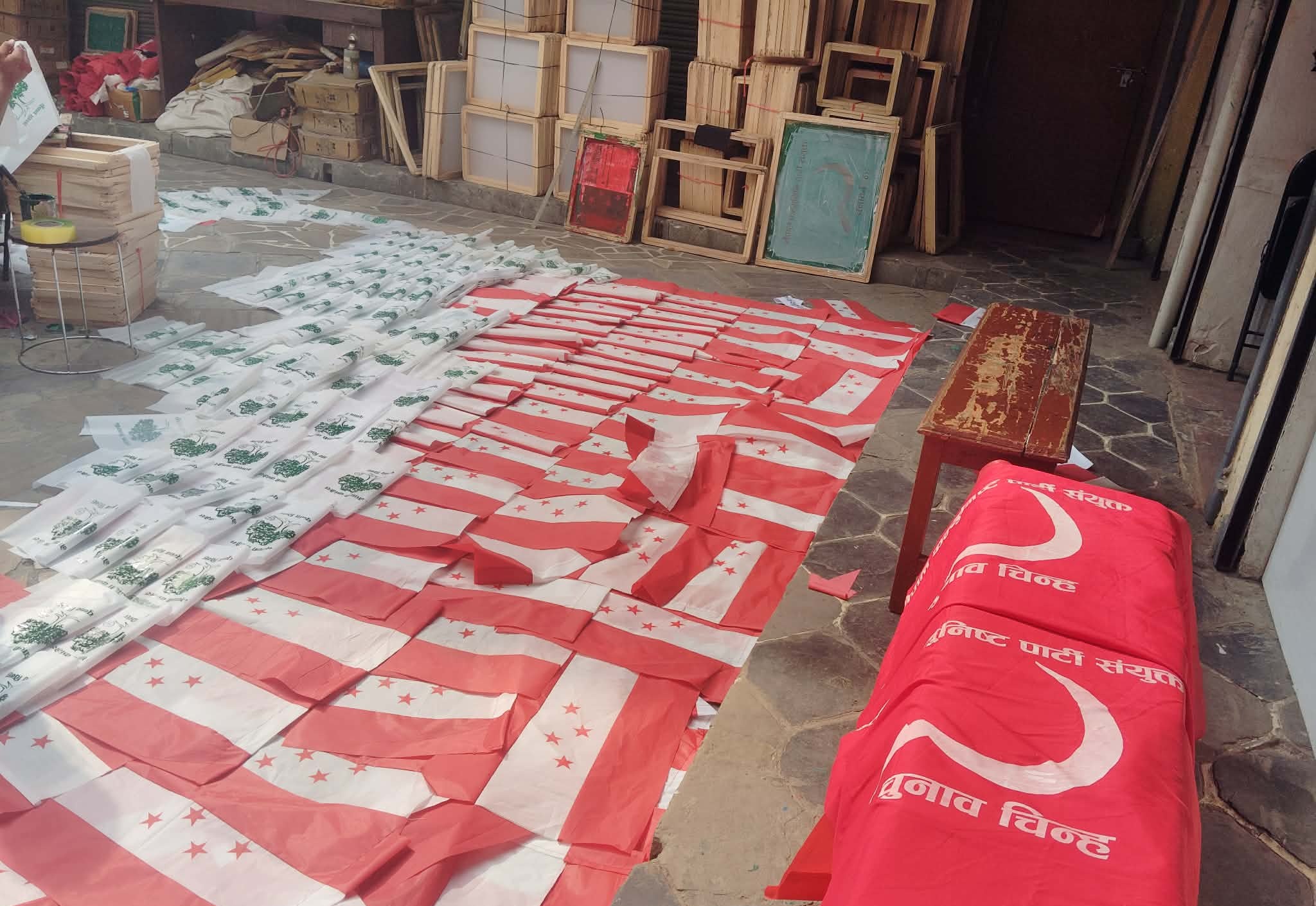
KATHMANDU: With the House of Representatives (HoR) election scheduled for March 5 approaching, candidates are intensifying their campaigns, trying to reach voters and seek support.
Some candidates continue to use traditional methods, performing stunts such as visiting voters’ homes to help with chores like picking vegetables, carrying manure, plowing, or using saws.
However, a significant shift in campaign style has emerged this year. Political parties are increasingly relying on digital media rather than printed materials. Printing businesses report a 90 percent decline in the production of pamphlets, attributing the drop both to the growing use of digital platforms and the Election Commission’s code of conduct.
Social media, online news portals, SMS, and mobile apps now allow candidates to reach thousands of voters quickly through platforms like Facebook, TikTok, and YouTube, reducing the need for printed pamphlets.
Pradeep Kharel, a printer in Bagbazar for the past eight years, told Khabarhub that while he previously earned well printing election materials, orders have dropped sharply.
“Printing is not like before. Earlier, a party would spend Rs 4-5 lakh on pamphlets, banners, and flags. Now, the cost has dropped to Rs 8-10 thousand,” he said. Today, only ballot papers and basic pamphlets with candidate photos are printed to guide voters, significantly reducing business.
However, traditional leaflets and posters are still used in rural areas with limited internet access, where offline campaigning remains effective. With technological advancement, cost management, and environmental concerns, the use of printed election materials appears to be gradually declining.
Previously, distributing pamphlets door-to-door and pasting posters on walls were common practices. Today, political parties cite high costs, time consumption, and environmental concerns as reasons for the decline in printed materials. Digital media offers a cheaper and more efficient alternative.
Jayaram Timilsina, a printing and publishing professional with over two decades of experience, said the trend has been apparent since the 2074 BS and 2079 BS elections. “Printing of election materials has steadily decreased. Now, it accounts for less than 10 percent of what it used to be. About 70 percent of the change is due to the Election Commission’s code of conduct, and 20 percent due to digital campaigns,” he explained.
The Election Commission’s guidelines now limit the use of flags, posters, banners, and promotional items such as hats and T-shirts with party symbols, further encouraging digital campaigning. This shift has not only changed how parties reach voters but also reduced the traditional printing business significantly.
Despite the decrease in printing of pamphlets, banners, and flags, essential materials such as commitment letters, manifestos, and pledges are still being produced. Timilsina noted, “The stock pamphlets, banners, and flags printed for the local-level elections can sustain this campaign. Now, we are selling stock items rather than producing new ones.”
Similarly, printing businessperson Chudamani Sharma said that candidates are adopting a more general campaign style instead of using flashy materials. “Earlier, if a hundred people went out in a procession, ninety would carry flags. They would make 200–800 T-shirts, sometimes even a thousand, which was very costly. The cheapest flags now cost Rs 15–20, while better-quality ones cost Rs 50,” Sharma explained.
He added, “Delivering a single flag to each voter’s door is expensive. Previously, a single candidate could spend more than Rs 4-5 lakh on campaign materials. Now, it has come down to around Rs 10,000. Campaigns have largely shifted to digital media, and printing houses also need to adapt by offering digital formats.”
Experts note that increasing awareness of environmental protection has also discouraged excessive use of paper. After past elections, discarded leaflets in streets and public areas contributed to significant waste.
However, traditional leaflets and posters are still used in rural areas with limited internet access, where offline campaigning remains effective. With technological advancement, cost management, and environmental concerns, the use of printed election materials appears to be gradually declining.






Comment