




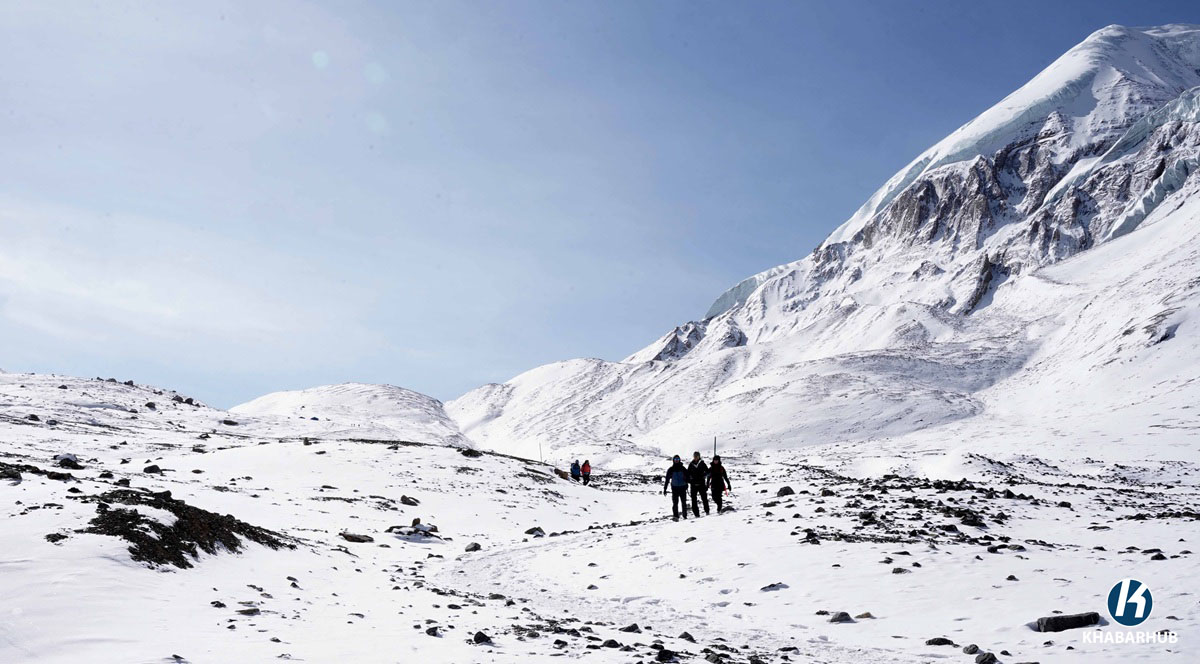
GANDAKI: The government collects millions of rupees annually in entry fees from foreign tourists visiting restricted areas within the Annapurna Conservation Area.
Foreign tourists require special permits to visit Upper Mustang and the Nar Phu area of Manang. According to the Annapurna Conservation Area Project (ACAP), Rs 216.9975 million was collected in entry fees from tourists visiting these restricted areas in the last fiscal year.
Project chief Dr. Rabin Kadariya said 1,855 tourists obtained permits for 10-day visits to Upper Mustang, paying USD 500 each. Another 2,569 tourists visited the area for one day, paying USD 50 per person.
Similarly, 1,338 tourists entered the Nar Phu area of Manang with seven-day permits, paying USD 100 each in entry fees.
Entry permits for restricted areas are issued through immigration offices. Kadariya said the fees collected through these offices are deposited as revenue for the federal government.
Revenue from foreign tourists visiting restricted areas totalled Rs 301.752 million in fiscal year 2081/82 and Rs 238.966 million in fiscal year 2080/81.
The government has designated areas bordering Tibet as restricted zones. Upper Mustang and the Nar Phu area of Manang are among the most popular destinations for tourists visiting these areas, particularly for trekking.
Meanwhile, ACAP collected Rs 677.591 million in revenue last fiscal year from foreign tourists visiting parts of the conservation area outside the restricted zones, Kadariya said.
The project charges an entry fee of Rs 1,000 for tourists from South Asian countries and Rs 3,000, including value-added tax (VAT), for tourists from other countries. Revenue from entry fees has increased alongside a record number of foreign visitors to the conservation area.
In fiscal year 2082/83, a total of 508,476 foreign tourists visited the Annapurna Conservation Area. Of them, 384,145 were from South Asian countries and 124,331 were from other countries.
Indian tourists accounted for the largest share, with 375,797 visitors. The rise in tourist arrivals also pushed entry-fee revenue to its highest level to date.
ACAP collected Rs 464.881 million in tourist entry fees in fiscal year 2081/82, compared with Rs 389.461 million in fiscal year 2080/81.
The project office said revenue from tourist entry fees and other sources is being used to fund conservation activities and promote tourism.





Comment