




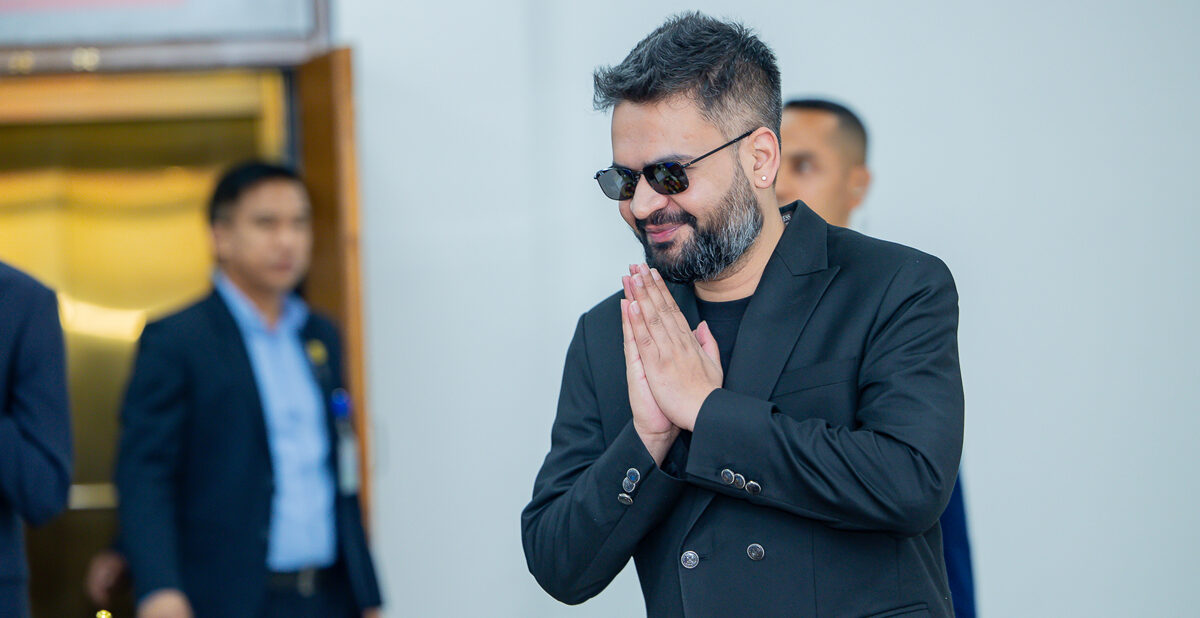
KATHMANDU: Prime Minister (PM) Balendra Shah appears to be making a gradual course correction after four months in office, as mounting questions from his own lawmakers over his engagement with Parliament, the ruling party and his ministers have begun to push him towards a more consultative working style.
Shah, who has faced criticism for remaining largely detached from the parliamentary proceedings and party discussions since becoming prime minister, has recently shown signs of changing his approach. He is now seeking greater coordination with the party, Parliament and the government machinery while also tightening oversight of ministerial performance.
The shift became apparent at a meeting of the Rastriya Swatantra Party (RSP) parliamentary party on Wednesday. Shah did not attend the informal meeting, prompting lawmakers to ask, “Who is the leader of the parliamentary party? When will he come?” Party Chair Rabi Lamichhane told them that he had spoken with the prime minister and that Shah would attend the next meeting.
Returning to the House after the Speaker’s ruling
Since becoming prime minister, Shah has appeared in the House of Representatives only once. After delivering his statement on May 31, he remained largely absent from parliamentary proceedings.
Shah has also intensified his diplomatic engagements in recent weeks. Although he initially said he would not meet foreign guests alone, he has gradually begun participating in such meetings.
On July14, Prime Minister Shah and Lamichhane appeared together in the House, but Shah stayed for only around 20 minutes before leaving without speaking.
His absence became more controversial after he told Parliament that Nepal had also encroached on Indian territory. The statement triggered a political controversy and further strained his relationship with the House.
Both the ruling and opposition parties repeatedly sought his presence in Parliament. Speaker Dol Prasad Aryal met Shah several times and urged him to attend the House, but the prime minister did not appear.
The Speaker eventually issued a ruling on Tuesday directing Shah to attend Parliament. The move has raised expectations that the prime minister will now begin taking greater responsibility before the House, the institution from which his government derives its parliamentary mandate.
Following the Speaker’s ruling, Shah is preparing to attend the House of Representatives on August 26 to participate in a question-and-answer session with lawmakers.
RSP lawmaker Parasmani Golal said MPs should submit their questions to the prime minister by August 21 and that Shah had agreed to attend the session on August 26.
“The MPs will send their questions to the prime minister. He will attend the question-and-answer session on August 26,” Golal said. “He had also been preparing to attend earlier, but his busy schedule prevented him from doing so.”
Opposition lawmakers are also preparing for the session. Under the House of Representatives regulations, lawmakers wishing to question the prime minister must submit their questions in advance. Shah is expected to respond to those questions during the scheduled session.
The prime minister’s media aide, Surendra Bajgain, has also confirmed that Shah will attend the question-and-answer session on August 26.
Greater focus on ministers’ performance
Questions about Shah’s working style have not been limited to his absence from Parliament. Lawmakers from his own party have repeatedly criticized the performance of ministers and called for changes in the government’s approach.
Experienced lawmakers including Dr Amaresh Kumar Singh, Manish Jha, Parasmani Golal, Jagadish Kharel, Krantishikha Dhital and Ranju Darshana have raised concerns over ministerial performance and urged the government to focus more on results.
Other lawmakers, including Ramesh Prasai and Shiv Kumar Yadav, have also questioned the performance of ministers. At Wednesday’s parliamentary party meeting, lawmakers reportedly criticized ministers for prioritizing publicity, videos and populist activities over tangible results.
The criticism appears to have prompted Shah to take a closer look at his ministers’ performance. According to his secretariat, the prime minister asked all ministers to submit their performance reports about a month ago.
Several ministers have faced questions over their working styles, including Industries Minister Gauri Kumari Yadav, Health Minister Nisha Mehta, Home Minister Sudan Gurung, Physical Infrastructure Minister Sunil Lamsal, Finance Minister Dr Swarnim Wagle and Agriculture Minister Geeta Chaudhary.
Against this backdrop, Prime Minister Shah and his ministers signed performance agreements at the Office of the Prime Minister and Council of Ministers in Singha Durbar on Wednesday.
The agreements set out key responsibilities, targets and expected achievements for the current fiscal year.
According to Deepa Dahal, the prime minister’s press and research expert, the agreements cover good governance, social justice and prosperity.
The targets have been established through measurable indicators based on the ministries’ responsibilities, government policies and programmes, the current fiscal year’s budget and the periodic plan.
The Prime Minister’s Secretariat said implementation of the agreements will be monitored at the end of the fiscal year.
The move marks a notable shift in Shah’s approach after four months in office. Whether the new emphasis on parliamentary engagement, party coordination and measurable ministerial performance will translate into a sustained change in his style of governance, however, will become clearer in the weeks ahead.
Ministers face performance test as PM Shah expands political and diplomatic outreach
The government appears to be entering a new phase of performance monitoring and political engagement, with Prime Minister Shah setting clearer targets for his administration while gradually expanding dialogue with political leaders, diplomats and the private sector.
The Prime Minister’s Secretariat says Shah is now working by setting key objectives and measurable targets for his administration. The performance of the prime minister is also being monitored by the RSP Chair and the team, according to the Secretariat.
On Wednesday, Chief Secretary to the Government of Nepal Govinda Bahadur Karki also signed a performance agreement with Prime Minister Shah.
According to sources, Shah has also decided against appointing controversial individuals to his secretariat. Earlier, a secretariat member accused of domestic abuse against his wife was reportedly removed from the post of prime minister’s adviser. However, Shah’s advisers have not formally commented on the matter.
Ministers could face removal over poor performance
Shah had earlier been preparing to reshuffle some ministers. However, following two rounds of discussions between Shah and RSP President Ravi Lamichhane, the two reportedly agreed to assess ministers’ performance before making any immediate changes to the Cabinet.
Sources say the possibility of an immediate Cabinet reshuffle has now been put on hold for at least a few months following the signing of performance agreements. However, ministers overseeing the Industries, Agriculture, Physical Infrastructure and Health portfolios are still considered to be in the “danger zone.”
Shah initially appeared reluctant to meet political leaders and other political stakeholders. However, national developments and the Madhesh agitation a month ago have prompted him to broaden his political engagement.
A member of the Prime Minister’s Secretariat said Shah has not reached a decision to immediately reshuffle the Cabinet.
“Some ministers were previously asked to improve their performance. There is no possibility of a change for now. A performance agreement has also been signed today,” the member said. “The prime minister is working by taking suggestions from various sectors. It took some time for the government to find its rhythm during the first few months. But ministers who fail to work and deliver results will always remain under scrutiny. For now, the possibility of their removal has been ruled out.”
Speaking to reporters after the parliamentary party meeting on Wednesday, Lamichhane also ruled out an immediate Cabinet reshuffle.
“We are not preparing to change the Cabinet immediately. There may have been two or three mistakes or weaknesses in the 100 things ministers have done, and we have asked them to correct them,” Lamichhane said. “There has been no increase in the distance between the prime minister and me. We are working in consultation with each other.”
Lamichhane also dismissed media reports of deteriorating relations between him and Shah, joking that the more such reports are published, the stronger their relationship becomes.
Diplomatic outreach gathers pace
Shah has also intensified his diplomatic engagements in recent weeks. Although he initially said he would not meet foreign guests alone, he has gradually begun participating in such meetings.
His approach to official engagements has also evolved. Shah initially appeared at official meetings wearing dark glasses and often met ambassadors collectively. He has now become more attentive to formal protocol and the dignity of official meetings, while gradually moving away from his earlier decision not to hold one-on-one meetings with ambassadors.
Whether this shift produces measurable results, however, will depend on how consistently the new performance and engagement mechanisms are implemented.
He has already met the ambassadors of India, China and the United States. At the same time, he has expanded his engagement with the private sector, making time to meet people ranging from emerging entrepreneurs to established business leaders.
Political dialogue also expands
Shah initially appeared reluctant to meet political leaders and other political stakeholders. However, national developments and the Madhesh agitation a month ago have prompted him to broaden his political engagement.
He has already met President Ram Chandra Paudel and held his first meeting with Rastriya Prajatantra Party Chairman Rajendra Lingden. Following violence in Sunsari on July 10, Shah also met leaders of Madhesh-based parties. The Prime Minister’s Secretariat says preparations are now underway to give greater priority to meetings with leaders of other political parties.
Despite holding discussions with several political groups collectively, Shah has yet to meet CPN-UML Chairman KP Sharma Oli. The two have also not met at any public event since Shah became prime minister. Shah has also met Nepali Communist Party leader Barshaman Pun to discuss issues related to Pun’s constituency.
According to the Prime Minister’s Secretariat, Shah is gradually meeting people he believes he needs to engage with. “He can also schedule meetings with other leaders in the coming days. If necessary, the prime minister will continue communicating with leaders of other political parties. Collective discussions are already taking place.”
The widening political and diplomatic outreach, combined with performance agreements and closer scrutiny of ministers, suggests that Shah is seeking to move beyond the relatively isolated working style seen during the early months of his premiership. Whether this shift produces measurable results, however, will depend on how consistently the new performance and engagement mechanisms are implemented.




Comment