





KATHMANDU: Economic Digest presents a brief yet comprehensive roundup of major business developments in Nepal, delivered in clear and accessible summaries.
The week’s economic developments present a mixed picture of Nepal’s economy, where promising policy reforms and private-sector initiatives are being overshadowed by persistent weaknesses in public investment and implementation.
The sharp decline in capital expenditure to a decade low raises serious concerns about the government’s ability to drive infrastructure development, create jobs, and sustain long-term growth, even as recurrent spending and debt servicing continue to dominate the budget.
At the same time, proposed reforms to the Nepal Rastra Bank Act, aviation governance, digital banking, and public services signal efforts to modernize institutions, while expanding trade initiatives, provincial investment plans, and rural entrepreneurship reflect emerging opportunities for economic diversification. However, disruptions caused by poor infrastructure, monsoon-related transport bottlenecks, and declining foreign labour departures underscore structural challenges that continue to constrain productivity.
Overall, the developments highlight that Nepal’s economic future will depend less on announcing reforms and more on improving implementation, strengthening institutions, and increasing productive public investment that supports sustainable and inclusive growth.
Development spending drops to 10-year low, raising infrastructure concerns
Nepal’s capital expenditure fell to its lowest level in a decade, excluding the COVID-19 lockdown year, highlighting concerns over slowing infrastructure development and job creation. In fiscal year 2025/26, the government spent Rs 190.84 billion on development projects—only 46.79 percent of the original allocation of Rs 407.88 billion and Rs 31 billion less than the previous year. Development spending accounted for just 12 percent of total government expenditure of Rs 1,583.42 billion, while recurrent expenditure reached Rs 1,043.99 billion and financial management expenditure, largely for debt servicing, stood at Rs 347.33 billion.
Gold climbs Rs 1,900 per tola, silver prices also increase
Gold and silver prices rose in the domestic market on Saturday, according to the Federation of Nepal Gold and Silver Dealers’ Association. The price of fine gold increased by Rs 1,900 per tola to Rs 284,000 from Rs 282,100 a day earlier. Silver also became more expensive, rising by Rs 40 per tola to Rs 4,240. The increase reflects continued fluctuations in international precious metal prices as well as domestic market demand.
House panel reviews proposed Nepal Rastra Bank Act amendments
The House of Representatives Finance Committee has started deliberations on a bill to amend the Nepal Rastra Bank Act with the aim of strengthening the country’s monetary and financial system. The committee held consultations with representatives of the Nepal Bankers’ Association, the Confederation of Banks and Financial Institutions Nepal (CBFIN), Nepal Rastra Bank, and concerned government ministries. The bill, registered in Parliament in May, seeks to modernize the central bank’s legal framework, improve regulatory oversight, and enhance the credibility of Nepal’s financial sector in line with evolving economic and banking requirements.
Nepal and Canada discuss opportunities to expand trade
The Embassy of Nepal, in partnership with the Alberta-Nepal Chamber of Commerce, organized a focus group workshop in Calgary to explore ways to strengthen bilateral trade. The event brought together entrepreneurs involved in importing Nepali goods and services to discuss business opportunities, identify market barriers and enhance commercial cooperation. Organizers said the initiative aimed to increase the presence of Nepali products in the Canadian market by promoting business partnerships and improving exporters’ access to new markets.
Overseas labour migration declines for first time in years
Nepal recorded its first fall in overseas labour migration in several years, with foreign employment departures dropping 5.6 percent in fiscal year 2025/26. According to the Department of Foreign Employment, a total of 792,187 Nepalis obtained labour permits, 47,079 fewer than the previous fiscal year. Despite the decline in departures, remittance inflows continued to increase as more migrant workers used formal banking channels. Skilled workers accounted for the largest share of those leaving, while the UAE remained the leading destination, followed by Malaysia, Qatar, Saudi Arabia and Kuwait. European destinations, including Romania and Cyprus, also continued to attract more Nepali workers.
Draft aviation bill proposes CAAN restructuring to improve safety
The government has introduced draft legislation to separate the Civil Aviation Authority of Nepal (CAAN) into independent regulatory and service entities as part of broader aviation sector reforms. The proposal, which aligns with recommendations from the International Civil Aviation Organization (ICAO), aims to strengthen aviation safety, improve airport management and attract greater investment. The reform could also support Nepal’s efforts to be removed from the European Union’s air safety blacklist. Under the proposal, the Nepal Air Services Authority (ASAN) would manage airport and air navigation services through self-generated revenue while new safety measures seek to reduce operational risks.
RSP lawmaker calls for flexible eligibility rules for bank executives
Rastriya Swatantra Party (RSP) lawmaker Bidushi Rana has urged lawmakers to reconsider proposed disqualification provisions in the Nepal Rastra Bank Act amendment, arguing that overly strict rules could discourage qualified professionals from serving in leadership positions. Addressing the House Finance Committee, she said minor disciplinary actions should not permanently disqualify chief executive officers or directors from future appointments. Rana also proposed introducing a two- to three-year cooling-off period, instead of a lifetime ban, for former commercial bank CEOs seeking appointment as Nepal Rastra Bank governor.
UML lawmaker rejects proposal for additional NRB deputy governor
CPN (UML) lawmaker Prof. Dr. Pushpa Raj Kandel has opposed a proposal to increase the number of Nepal Rastra Bank deputy governors from two to three, saying the current structure is sufficient. During discussions on the amendment bill, he also criticized the absence of female representation on the NRB board, arguing that the central bank should uphold the same governance standards it expects from commercial banks. Kandel further maintained that cooperatives should continue to be regulated by a separate authority rather than being brought under the central bank.
Mechi Highway closure disrupts milk supply in Ilam
A 12-day closure of the Mechi Highway has severely affected dairy farmers in Ilam by disrupting milk transportation and market access. The Dairy Development Corporation’s chilling centre has accumulated around 3,600 litres of unsold milk after deliveries to Biratnagar were suspended. Local business groups are arranging transportation through smaller vehicles to reduce losses, but officials say the prolonged disruption has significantly affected farmers’ incomes and the dairy supply chain, with normal operations unlikely to resume until the highway reopens.
Facebook outage briefly disrupts online business activities
A temporary disruption on Facebook’s web platform affected desktop users on Sunday, interrupting digital marketing, customer engagement and content management activities for businesses that rely on the social media platform. The outage, which began around 1:30 p.m., displayed an “Account Temporarily Unavailable” message to many users. Although the mobile application remained operational, the incident underscored businesses’ growing dependence on social media platforms for daily operations.
Most working senior citizens continue to rely on agriculture
Nearly three-quarters of Nepal’s economically active senior citizens remain dependent on agriculture, highlighting the sector’s continued importance as a source of livelihood in old age. According to the government’s Senior Citizens in Statistics 2083 (2026) report, 72.6 percent of working elderly people are engaged in agriculture, while only 27.4 percent work in non-agricultural sectors. The report also found that 68.8 percent are self-employed or work as labourers, reflecting limited retirement security among Nepal’s estimated 3.36 million senior citizens.
Most Sindhuli local governments shift to permanent offices
Most local governments in Sindhuli are now operating from their own administrative buildings, reducing rental costs and improving public service delivery. Golanjor Rural Municipality became the eighth of the district’s nine local units to move into a permanent office after inaugurating a Rs 61.11 million administrative building. Officials said bringing all departments under one roof has streamlined services, lowered administrative expenses and saved citizens time. Only Ghyanglekh Rural Municipality has yet to complete its permanent office, with construction expected to finish by October.
Monsoon slows China trade route upgrade and cargo movement
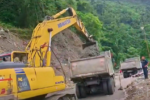
Monsoon rains and ongoing road expansion have disrupted freight transport along the Syabrubesi–Rasuwagadhi highway, Nepal’s busiest overland trade corridor with China. Muddy road conditions and construction work have made it difficult for cargo trucks carrying imports and exports to operate, slowing cross-border trade. The Chinese-funded upgrade, launched after last year’s floods damaged the highway, aims to widen the route into a safer two-lane road with improved retaining walls and landslide protection. Authorities expect the project to reduce transport costs, strengthen supply chains and support trade and tourism once completed.
Banana waste business creates income through rural innovation
A Makwanpur entrepreneur has turned discarded banana stems into handmade Nepali paper, converting agricultural waste into a profitable rural enterprise. After investing around Rs 800,000, Prem Prasad Timalsina now earns about Rs 500,000 annually by supplying eco-friendly paper to local governments and the incense industry. The business, established after his return from foreign employment, also seeks to generate local jobs and reduce waste. Despite challenges such as poor road access and unreliable electricity, Timalsina plans to expand production and supply more government offices, demonstrating the potential of value-added processing to strengthen rural livelihoods.
Tour de Lamjung to promote tourism and local businesses
Lamjung is set to host the inaugural Tour de Lamjung 2026 from September 4 to 6, with around 400 cyclists expected to participate in the three-day event aimed at promoting tourism and stimulating the local economy. Organized by the Lamjung Cycling Association, the event will highlight the district’s natural and cultural attractions while benefiting homestays, hotels, restaurants and small businesses along the route. With an estimated budget of Rs 2.8 million, organizers hope the cycling festival will boost adventure tourism and develop into a nationally and internationally recognized sporting event.
Shivapuri-Nagarjun National Park to introduce e-ticketing
Shivapuri-Nagarjun National Park will begin operating an e-ticketing system next week at its Panimuhan and Nagarjun entry gates following a successful trial, marking another step toward digitizing public services. The new system is expected to simplify visitor entry, improve transparency and speed up ticketing through QR code scanners, thermal printers and computerized processing. Park officials plan to extend the service to other entry points with internet and electricity access, while the government aims to introduce e-ticketing across all national parks and wildlife reserves within six months.
Madhesh Province unveils strategy to expand economic contribution
The Madhesh Province government has announced plans to increase its current 13 percent contribution to Nepal’s gross domestic product (GDP) by accelerating investment, industrialization and private sector-led growth. Key priorities include organizing an investment summit, promoting agro-based industries, expanding irrigation, establishing industrial villages, strengthening cross-border trade and boosting tourism. Officials said attracting greater investment and introducing business-friendly reforms will be essential to unlocking the province’s economic potential and enhancing its role as one of Nepal’s major economic hubs.
NMB Bank integrates Nagarik App into digital banking services
NMB Bank has partnered with the Department of Information Technology to integrate the Nagarik App into its digital banking platform, allowing customers to complete online banking forms more efficiently and securely. With users’ consent, the system automatically fills in customer information, reducing paperwork and eliminating repeated manual data entry. The bank said it cannot access personal information without explicit approval through the Nagarik App and will use the data only for authorized purposes. The integration is expected to improve convenience, strengthen data privacy and support Nepal’s digital banking transformation.
Fertilizer supply expected to support agricultural production
The Lahan office of Krishi Samagari Company Limited has assured farmers of an adequate supply of chemical fertilizers ahead of the planting season, easing concerns over shortages. The office distributed 16,840.37 metric tons of fertilizer during the last fiscal year and currently maintains stocks of urea, DAP, potash and agricultural lime. Officials said uninterrupted fertilizer availability will help improve crop productivity, increase agricultural output and strengthen food production during the current farming season.




Comment