




The election of Balen Shah represents a defining turning point in contemporary South Asian politics. Driven by the energetic participation of Gen-Z, this shift reflects a profound desire for clean governance, administrative efficiency, and a clear break from traditional political structures.
Yet beneath the enthusiasm lies a resonant historical echo—one that carries a cautionary message from Jayaprakash Narayan’s “Total Revolution” movement, the rise and fall of the Janata Party government, and the period following India’s Emergency (1975–1977).
Today’s Gen-Z movement, much like the 1970s call for “Sampoorna Kranti,” has emerged from widespread discontent with the established political elite. It promises not merely a change in leadership but a fundamental transformation of the governance system itself.
Social media has replaced street protests as the primary arena of mobilisation, while merit, transparency, and accountability have become its core slogans. The message is unmistakable: the old order must yield to a new, responsive system.
However, history always issues a warning.
When Jayaprakash Narayan issued the call for Total Revolution, it ignited a massive popular movement that led to the defeat of the Indian National Congress in 1977. The emergence of the Janata Party was widely celebrated as a victory for democracy.
Ultimately, the long-term success of the Gen-Z movement depends not only on leadership but also on sustained citizen engagement. Democracy is not a one-time vote; it is a continuous process of oversight, participation, and accountability. An active citizenry can keep leadership on the right path.
Yet the expected systemic change never materialised. Internal divisions, leadership rivalries, and, most critically, an unreformed bureaucracy undermined the government’s effectiveness. The experiment collapsed within a few years, eroding public hope along with it.
Striking parallels are visible in today’s context.
Balen Shah’s current administration faces similar structural challenges. While political leadership has changed, the administrative machinery remains largely intact. Bureaucratic inertia, procedural rigidity, and institutional resistance threaten to weaken reformist efforts. Governance is not sustained by popularity or good intentions alone; it depends on the ability to transform deeply entrenched institutional structures.
This is where the real test begins.
If the new leadership fails to convert its mandate into tangible, visible results, the consequences will extend far beyond electoral outcomes. A generation that has become optimistic about democratic change may begin to question its very efficacy.
The disillusionment that could follow among young people is far more dangerous than mere apathy. It risks undermining faith in democratic institutions themselves.
Yet this is not a moment without opportunity.
Unlike the 1970s, today’s political landscape is shaped by technological access and heightened public awareness. Citizens are more informed, engaged, and capable of demanding real-time accountability. This creates the possibility for course correction if leadership remains responsive.
The path ahead for Balen Shah is clear but demanding. He must move beyond symbolic politics and focus on systemic reform. Short-term visible achievements can help sustain public trust, but long-term success will hinge on institutional transformation—particularly the reform of the bureaucracy. Building a competent team, ensuring policy continuity, and institutionalising transparency are essential.
History’s lessons are unambiguous: winning an election does not guarantee successful governance. The failure of the Janata Party stands as a cautionary tale—if a revolution is not anchored in institutional foundations, it risks remaining a fleeting surge of enthusiasm.
In this light, it is crucial to understand the Gen-Z resurgence more deeply. It is not merely an emotional rebellion; it is a demand for results-oriented governance.
This generation seeks not just slogans but measurable outcomes: clean streets, efficient services, transparent budgets, and accountable leadership. They believe in “results” more than “promises.” Political leadership must therefore shift from the politics of rhetoric to the politics of performance.
To achieve this, five priorities stand out:
First, institutional restructuring. Decentralising power to local governments is insufficient without simultaneously strengthening administrative capacity, technical competence, and accountability mechanisms. If decision-making remains slow, opaque, and centralised, the momentum of change will stall.
Second, a shift in leadership style. Charisma and popularity may serve as effective starting points, but sustained governance requires inclusive, consultative, and institutional leadership. Without developing collective decision-making processes, governance risks reverting to a personality-driven model, which is inherently unstable in the long run.
If the answer is yes, this will not be merely Balen Shah’s success—it will mark a renaissance of democratic practice. If not, the impact will extend far beyond one term or one city, potentially eroding future generations’ trust in democracy itself.
Third, effective use of transparency and technology. Digital governance systems can play a transformative role in reducing corruption, accelerating service delivery, and enhancing citizen participation. However, technology alone is not a solution; it demands strong political will for proper implementation.
Fourth, expectation management. Gen-Z’s expectations are intense and immediate. If these are not addressed realistically, initial support can quickly turn into discontent. Leadership must communicate clearly about what is possible and what will take time.
Fifth, policy continuity. In Nepal’s volatile political environment, the tendency of every new administration to abandon previous programs weakens reform. If Balen Shah’s leadership fails to establish long-term policy foundations, change will remain confined to individuals rather than becoming systemic.
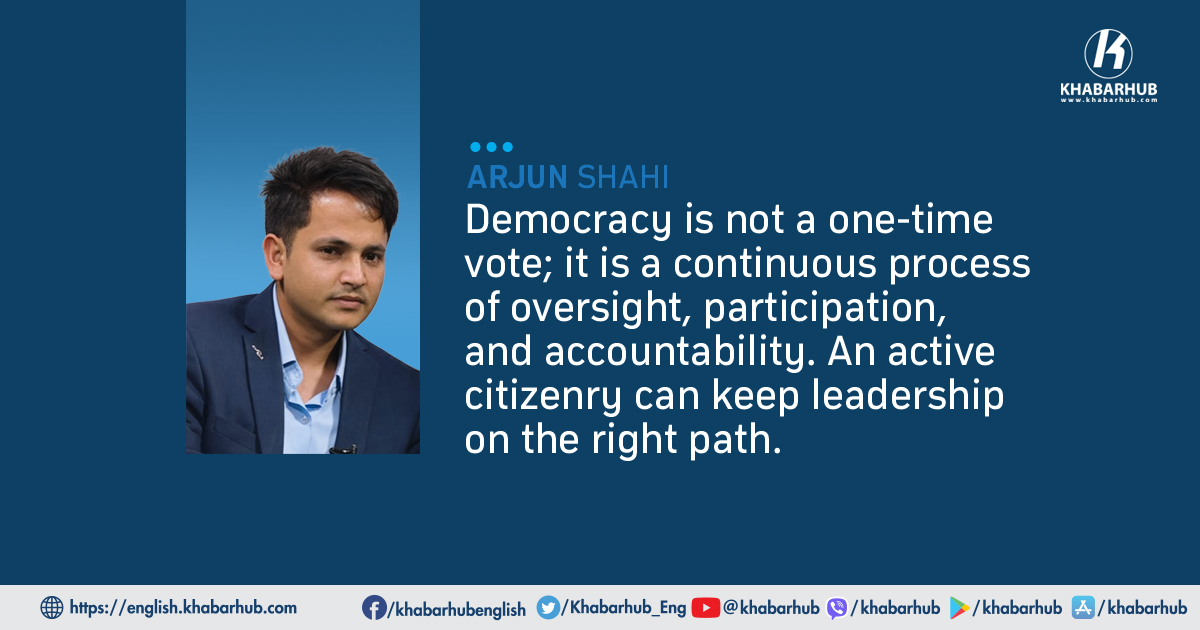
Ultimately, the long-term success of the Gen-Z movement depends not only on leadership but also on sustained citizen engagement. Democracy is not a one-time vote; it is a continuous process of oversight, participation, and accountability. An active citizenry can keep leadership on the right path.
This moment, therefore, is more than a political change—it is a test. Can the new generation convert its surge into institutional stability? Can today’s leaders learn from history and avoid repeating past mistakes?
If the answer is yes, this will not be merely Balen Shah’s success—it will mark a renaissance of democratic practice. If not, the impact will extend far beyond one term or one city, potentially eroding future generations’ trust in democracy itself.
The fundamental question remains: Is this moment the beginning of lasting transformation, or merely another recurring chapter in history?






Comment