




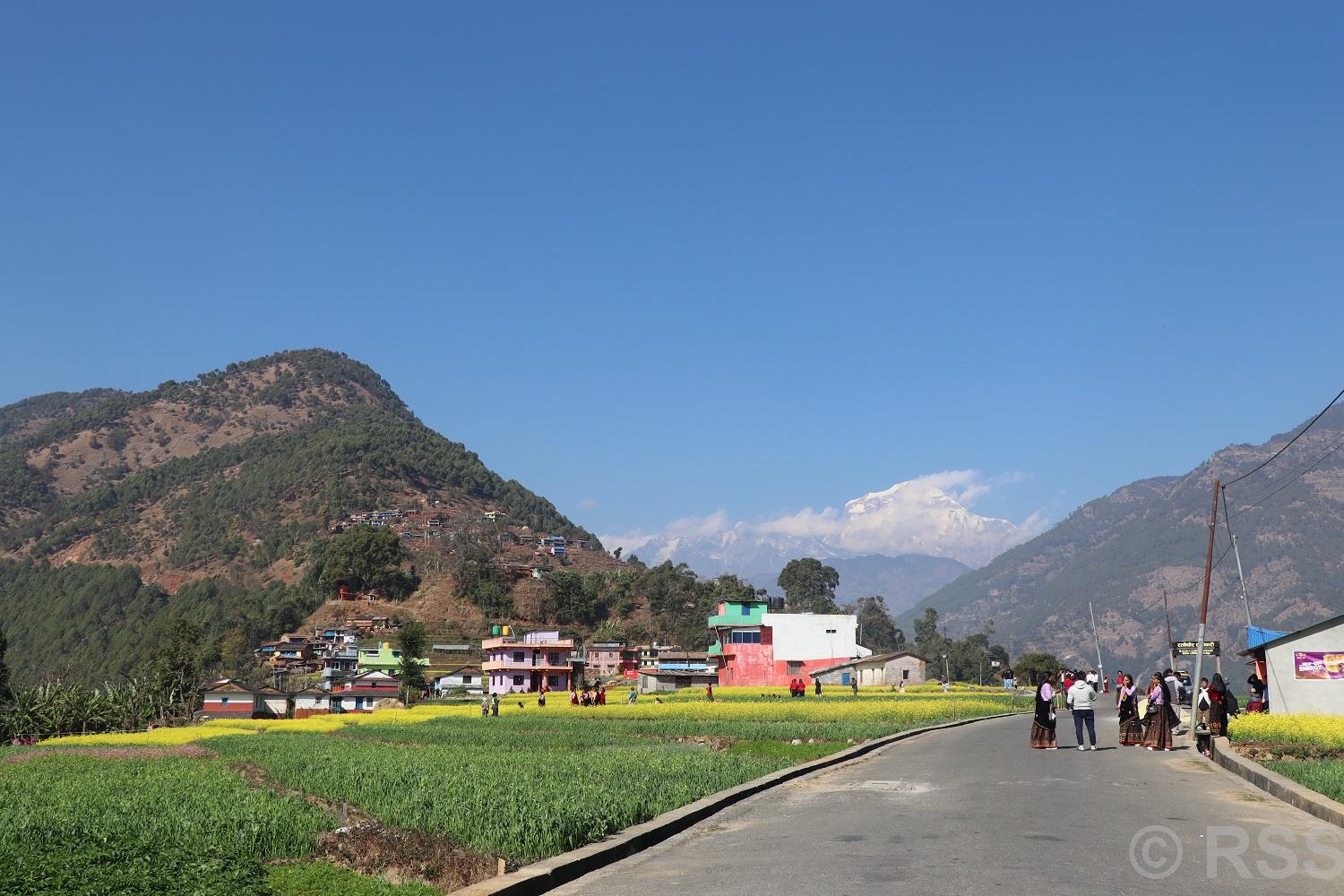
MYAGDI: Ratnechaur in Beni Municipality-1 has recently become a popular spot for domestic tourists. Once dependent on red soil and agriculture, the village is now attracting visitors for its scenic beauty, especially between November to February.
From November to December, tourists enjoy panoramic views of the Dhaulagiri Himal, Myagdi, Baglung, and Parbat districts, alongside the village’s rice fields and blooming mustard flowers. During January-February, visitors also flock here for picnic.
Local resident Shankar Mahat said that up to 2,000 tourists now visit the area daily, compared to near-deserted conditions four years ago. “Tourism has boosted local business and economic activity,” he noted.
The village offers picturesque sights, including the silvery Dhaulagiri mountain range to the north, mustard fields blooming in yellow to the east, and blacktop roads winding neatly between fields. The yellow mustard fields, in particular, have become a striking attraction. Tourists capture videos and TikToks amid the wheat and mustard crops, while bees and bumblebees add to the vibrant scene.
Ward Chairman Tek Bahadur Thapa highlighted that the 388-meter suspension bridge connecting Ratnechaur and Kudule (Fedi) in Baglung has become another draw for visitors. The combination of natural beauty and cultural appeal has also helped local businesses flourish.
A large-scale cultural program was organized recently to promote Ratnechaur and preserve local traditions. Tourists wear traditional Magar, Chhetri, Thakali, and Brahmin attire, which can be rented from local shops, women’s cooperatives, and restaurants. Rental charges range from Rs 20 for photos to Rs 350 for an hour of costume use.
Visitors such as Rashmi Rana from Baglung said the experience of wearing ethnic dresses against the backdrop of mustard fields, wheat, and the Dhaulagiri mountains created unforgettable memories.



Comment