




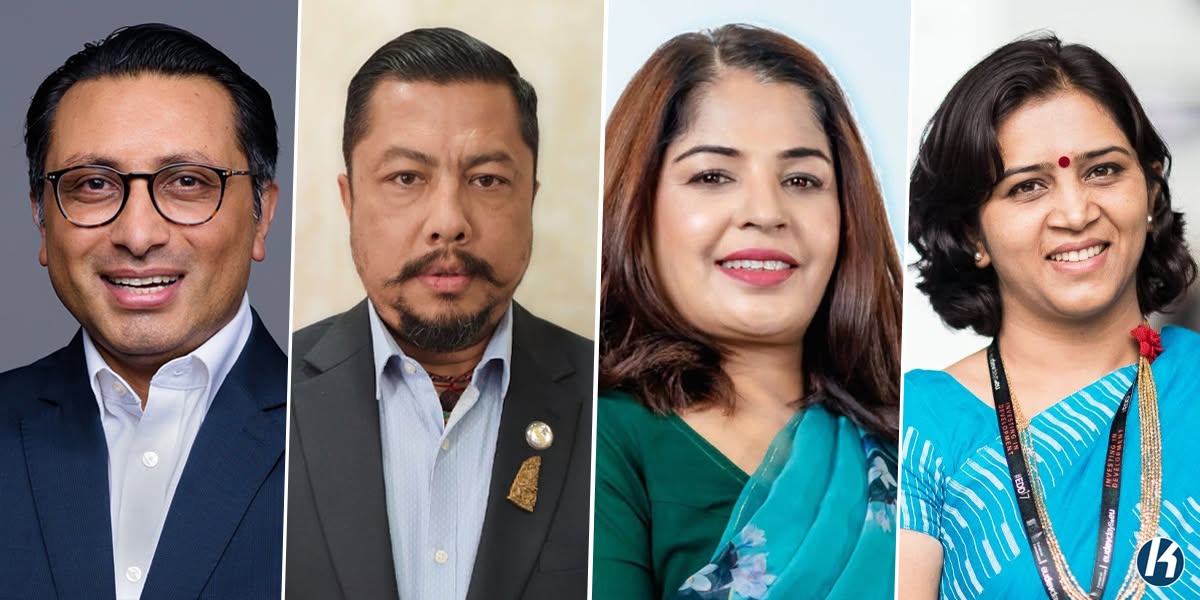
KATHMANDU: The Rastriya Swatantra Party (RSP), which secured 182 seats in the March 5 elections and now leads the government, rose to power on a promise of replacing Nepal’s traditional political establishment.
Capitalizing on the momentum created by the Gen-Z movement, the party campaigned on the belief that only new leadership could transform the country, ultimately securing a majority mandate.
Yet, despite its rhetoric against “old politics,” many of the party’s leaders and lawmakers have political roots in the very parties they now criticize, including the Nepali Congress, CPN-UML and CPN (Maoist Centre).
The contrast has fueled questions about whether the party’s repeated attacks on the “35 years of misrule” accurately reflect its own political makeup.
RSP lawmakers frequently argue that Nepal’s current problems are the result of decades of failures by successive governments. However, critics point out that several of the party’s prominent figures either built their political careers within established parties or come from influential political families.
Samiksha Baskota and the ‘35 years of disorder’
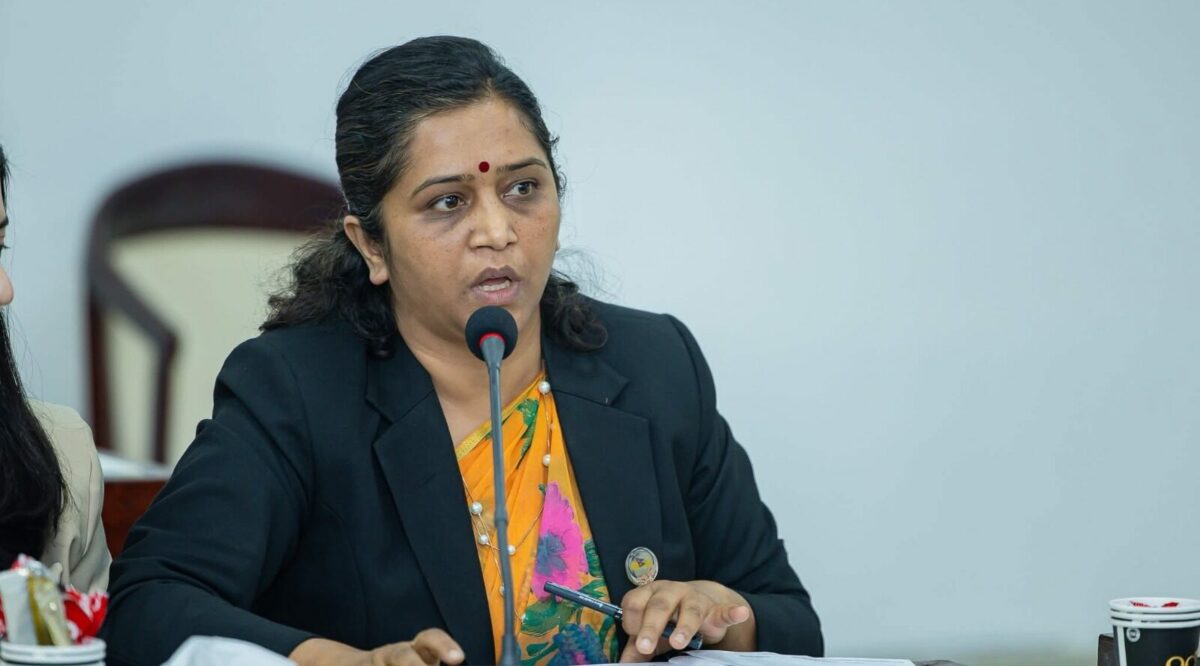
RSP lawmaker Samiksha Baskota recently reignited the debate while objecting to remarks made by Nepali Congress parliamentary party leader Bhishmaraj Angdembe during a parliamentary session on June 10.
While invoking parliamentary procedures, Baskota argued that RSP lawmakers had not entered Parliament “to become silent spectators,” but rather to address decades of governance failures.
She maintained that her party had entered politics to correct the disorder that had burdened citizens for the past 35 years and claimed that political leaders since the late 1990s had failed to establish good governance.
Baskota had made similar remarks in Parliament earlier, alleging that democratic institutions had been weakened over the past three and a half decades.
However, Baskota herself is not a newcomer to politics. Her political journey dates back to 2012 through the Bibeksheel Sajha movement, one of Nepal’s earliest alternative political platforms.
She later rose to the party’s leadership and became one of the first women to lead a national political party in Nepal. She has contested elections for the Bagmati Provincial Assembly and Kathmandu Metropolitan City mayoralty.
Her political background also extends to her family. Baskota is the daughter of former minister Deepak Prakash Baskota, a longtime Nepali Congress leader who remained active in politics for decades and was also a prominent figure in Nepal’s cooperative movement.
Swarnim Wagle’s transition from Congress to RSP
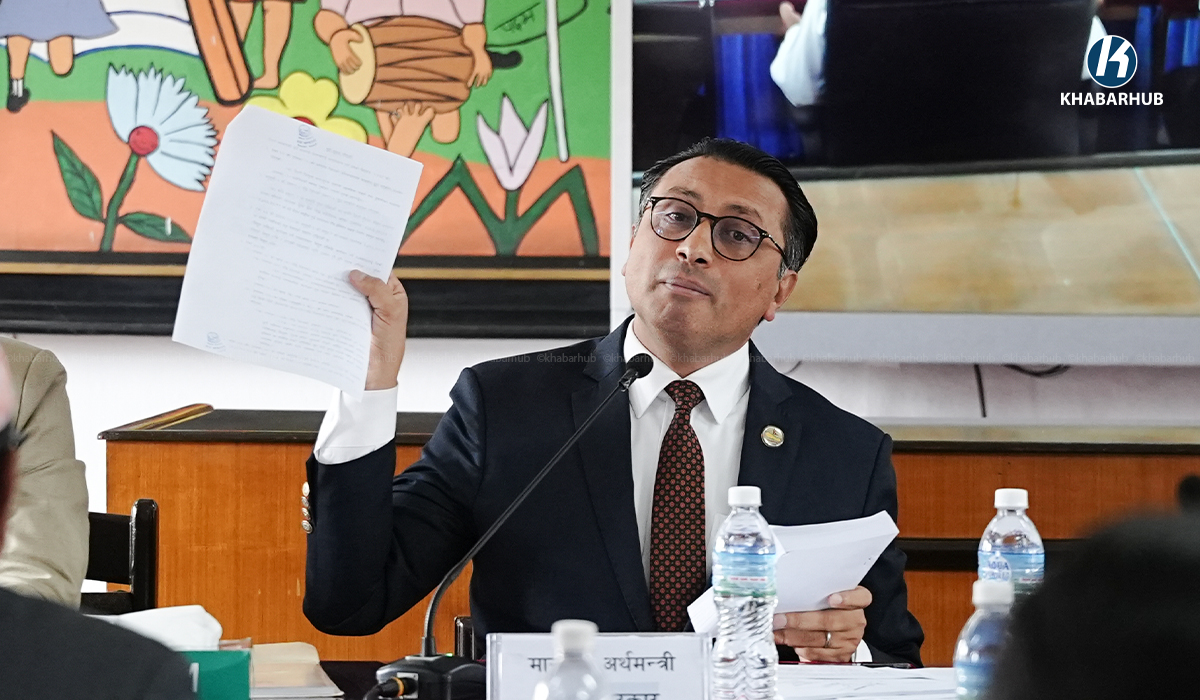
Finance Minister Dr. Swarnim Wagle has also emerged as one of the strongest critics of traditional political parties despite spending much of his career within the Nepali Congress.
Educated at prestigious institutions including Harvard University, the Australian National University and the London School of Economics, Wagle joined the Congress following the restoration of democracy in 1990.
During his long association with the party, he served in several national and international roles, including as a senior economist at the World Bank, a member of Kathmandu University’s Senate, chair of the Institute for Integrated Development Studies (IIDS), and an advisor connected with the National Planning Commission and the United Nations Development Programme (UNDP).
After more than three decades with Congress, Wagle left the party following disagreements over candidate selection. He later joined RSP and won the Tanahun-1 by-election in 2023 after the seat became vacant following Ram Chandra Paudel’s election as President.
He was re-elected from the same constituency in the March 5 election.
Speaking at a public event on June 14, Wagle criticized the governance record of previous administrations, saying the government had launched a campaign to “clean up the mess” in the economy and public administration.
He argued that state institutions had remained under the influence of vested interest groups for the past 15 years and said the government was working to end that trend.
Lima Adhikari’s political inheritance
RSP lawmaker Lima Adhikari has similarly argued that Nepal’s economy has been trapped by decades of conventional politics and status quo thinking.
While speaking on revenue and expenditure policies in Parliament, she described the government’s budget as a historic departure capable of addressing structural economic challenges.
Yet Adhikari’s own political consciousness was shaped within one of Nepal’s most influential communist families.
She is the daughter of former finance minister Bharat Mohan Adhikari and the niece of former Prime Minister Manmohan Adhikari, both towering figures in Nepal’s communist movement.
Adhikari has often acknowledged that her understanding of political values, public accountability and ideological commitment was shaped by observing the struggles and sacrifices of previous generations of communist leaders.
She has also distinguished between earlier leaders and contemporary politicians, arguing that many present-day communist leaders have abandoned the ideals of integrity and public service that once defined the movement.
Biraj Bhakta Shrestha faces scrutiny over political connections
Energy and Water Resources Minister Biraj Bhakta Shrestha has also faced criticism as debates over political lineage intensify.
Shrestha, who is married into the family of former minister Sharad Singh Bhandari, has been targeted on social media by critics who question the party’s claim of representing an entirely new political force.
Some commentators argue that despite RSP’s anti-establishment messaging, several of its prominent leaders remain closely connected to Nepal’s traditional political networks.
Debate over ‘new’ versus ‘old’ politics continues
The discussion has prompted broader questions about political change in Nepal.
Critics ask whether labeling older parties as failures automatically makes new parties more capable, or whether decades of political experience and contributions by previous leaders should be dismissed entirely.
Supporters of RSP argue that the party represents a break from entrenched political practices regardless of the backgrounds of individual leaders. Opponents, however, contend that many of the party’s leading figures were themselves shaped by the institutions and political traditions they now criticize.
As RSP continues to frame itself as the alternative to Nepal’s traditional parties, the debate over whether it represents genuine political renewal or a rebranding of familiar faces is likely to remain at the center of the country’s political discourse.





Comment