




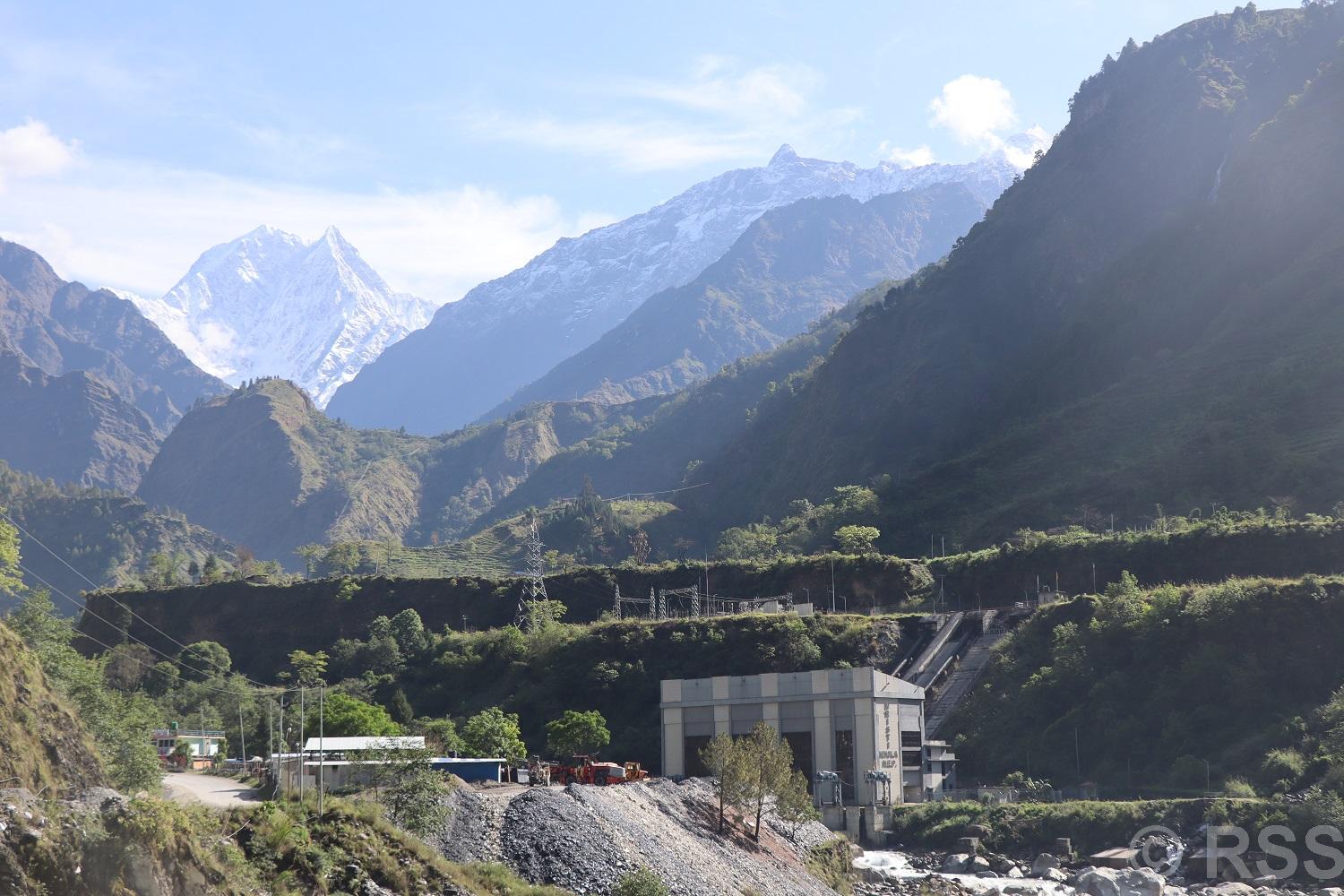
MYAGDI: Over the past decade, Annapurna Rural Municipality in Myagdi has emerged as one of Nepal’s fastest-growing hydropower centers, transforming rivers such as the Kaligandaki, Mistri, Nilgiri, Rele, Ghalemdi, and Gharkhola into major sources of electricity generation.
The rapid expansion of hydropower projects has accelerated economic growth, improved infrastructure, and created employment opportunities across the region.
At the same time, however, concerns are growing over the environmental consequences of large-scale hydropower development, including its impact on biodiversity, river ecosystems, and the long-term sustainability of natural hot springs.
According to Rural Municipality Chairperson Bharat Kumar Pun, six hydropower projects with a combined capacity of 176 megawatts (MW) are currently in operation in Annapurna, while three additional projects with a total capacity of 255.5 MW are under construction.
The operational projects include the 5 MW Ghalemdikhola, 42 MW Mistrikhola, 38 MW Nilgiri-1, 71 MW Nilgiri-2, and 6 MW Relekhola hydropower projects in the Narchyang area. The 14 MW Gharkhola Hydropower Project, located along the border of Wards 5 and 6, has also recently come into operation.
Meanwhile, construction has begun on the 180 MW Kaligandaki Gorge Hydropower Project in the Bhalebas area of Narchyang. The 9.14 MW Super Ghalemdi and 66.5 MW Madhya Kaligandaki projects are also under development. In addition, the IME Group is preparing to launch the 66 MW Tiplyang Kaligandaki Hydropower Project.
Annapurna becomes a center of energy production
Hydropower development in the Annapurna region is believed to have begun with the two-megawatt Tatopani Small Hydropower Project built by the Nepal Electricity Authority in 2045 BS. After years of limited activity, investment in the sector surged over the past decade, largely driven by private developers.
The commissioning of the 5 MW Ghalemdikhola Hydropower Project in 2076 BS marked a turning point. It was followed by the operation of the Mistrikhola, Nilgiri-1, Nilgiri-2, Gharkhola, and Relekhola projects, significantly increasing the area’s energy output.
According to Pramod Shrestha, operator of Ghalemdi Hydro, the construction of the Dana substation and transmission infrastructure played a crucial role in attracting investors to the region.
Narchyang transformed by hydropower
Narchyang, located in Annapurna Rural Municipality–4, has become the focal point of hydropower development in the district. The projects operating and under construction there have dramatically altered the village’s landscape and economy.
Ward Chairperson Lok Bahadur Phagami said the area, which once lacked even basic road connectivity, has witnessed remarkable infrastructure development as a result of hydropower investment.
“Roads have been carved through steep cliffs that people once thought impossible to cross,” he said. “Hydropower projects have brought roads, bridges, employment opportunities, and new sources of income to the community.”
The transformation has improved access to markets, public services, and transportation, making Narchyang one of the most rapidly developing rural areas in Myagdi. Yet, as hydropower expansion continues, local communities and environmental advocates are increasingly calling for a balanced approach that ensures economic progress while safeguarding the region’s fragile natural resources and ecological heritage.
Growing population and changing livelihoods
In Narchyang, a village of around 450 households and 1,600 residents, the number of workers arriving from outside the area for hydropower projects now exceeds the local population.
Land prices have surged to between Rs 30 million and Rs 35 million per ropani, while many residents who had migrated to cities or gone abroad for employment have begun returning home.
Tek Bahadur Pun, who returned from Pokhara and now operates a hotel in the village, said the projects have created enough opportunities to eliminate the need to seek work elsewhere.
Local residents are generating income through land compensation, hospitality businesses, agriculture, livestock farming, transportation services, construction material supply, equipment leasing, and investments in hydropower shares.
Rural municipality revenues on the rise
Hydropower royalties have significantly boosted the financial resources of Annapurna Rural Municipality. According to Chief Administrative Officer Kapil Pandey, the municipality received Rs 7 million in royalties through the National Natural Resources and Fiscal Commission in the previous fiscal year. That amount has increased to Rs 17 million in the current fiscal year.
Hydropower developers have also been implementing social responsibility programs focused on education, healthcare, skills development, tourism promotion, and environmental conservation. One notable outcome has been the introduction of hydropower engineering studies at Prabha Secondary School, where the program has been running for the past five years.
Long-term benefits remain uncertain
Despite increased economic activity, local leaders say communities are not yet fully prepared to maximize the long-term benefits of hydropower development.
While compensation payments, wages, and construction-related opportunities have generated immediate gains, there has been limited planning for sustainable economic participation once projects become operational.
Local representatives argue that greater investment is needed in agriculture, tourism, entrepreneurship, and service industries, as employment opportunities are expected to decline after construction work ends.
Residents in project-affected areas have also invested in hydropower companies. In the Mistrikhola Hydropower Project alone, locals subscribed to more than 1.7 million shares, while several other projects are preparing to issue shares to local communities.
Environmental concerns gaining attention
Alongside economic benefits, concerns about the environmental impact of hydropower development are becoming increasingly prominent. Residents report that reduced river flows have affected the habitat of fish, frogs, and other aquatic species.
Abin Chochangi of Narchyang said the Mistri Khola once supported abundant fish populations. However, since water began being diverted through tunnels for hydropower generation, aquatic life has become increasingly scarce.
Ward Chair Lok Bahadur Phagami acknowledged that while hydropower projects have brought significant economic and physical infrastructure improvements, they have also contributed to the decline of aquatic biodiversity, the drying up of traditional water sources, and reduced wildlife movement in the area.
Local residents say that although projects are required to maintain minimum environmental flows in rivers, the natural ecosystem is still being affected. They have called for stronger monitoring and more regular environmental impact assessments.
Fears over the future of natural hot springs
Another growing concern is the potential impact of hydropower development on the region’s renowned natural hot springs. Residents of Bhurung Tatopani, Pauddar, Ratopani, and Sekarku fear that diverting river water through tunnels could affect underground water systems that feed the springs.
Anil Hirachan of Bhurung Tatopani said changes in the flow of the Kaligandaki River could threaten the long-term sustainability of the area’s famous hot spring. Local communities have sought stronger assurances regarding the environmental consequences of ongoing and planned projects.
The Tatopani hot spring is one of Annapurna Rural Municipality’s most important tourism assets and a significant source of local revenue, making its protection a growing priority for residents and local authorities.
Balancing development and sustainability
Experts and local leaders agree that hydropower should become a foundation for long-term economic transformation rather than a source of short-term compensation and employment alone.
They recommend linking local agricultural production to project demand, promoting energy-based industries, integrating tourism with hydropower development, and providing technical training to local youth.
Chairman Bharat Kumar Pun said the rural municipality is preparing a long-term policy framework to ensure hydropower development contributes to broader economic transformation.
He emphasized that royalty revenues should be invested in productive sectors that generate sustainable growth rather than being directed primarily toward consumption.




Comment