




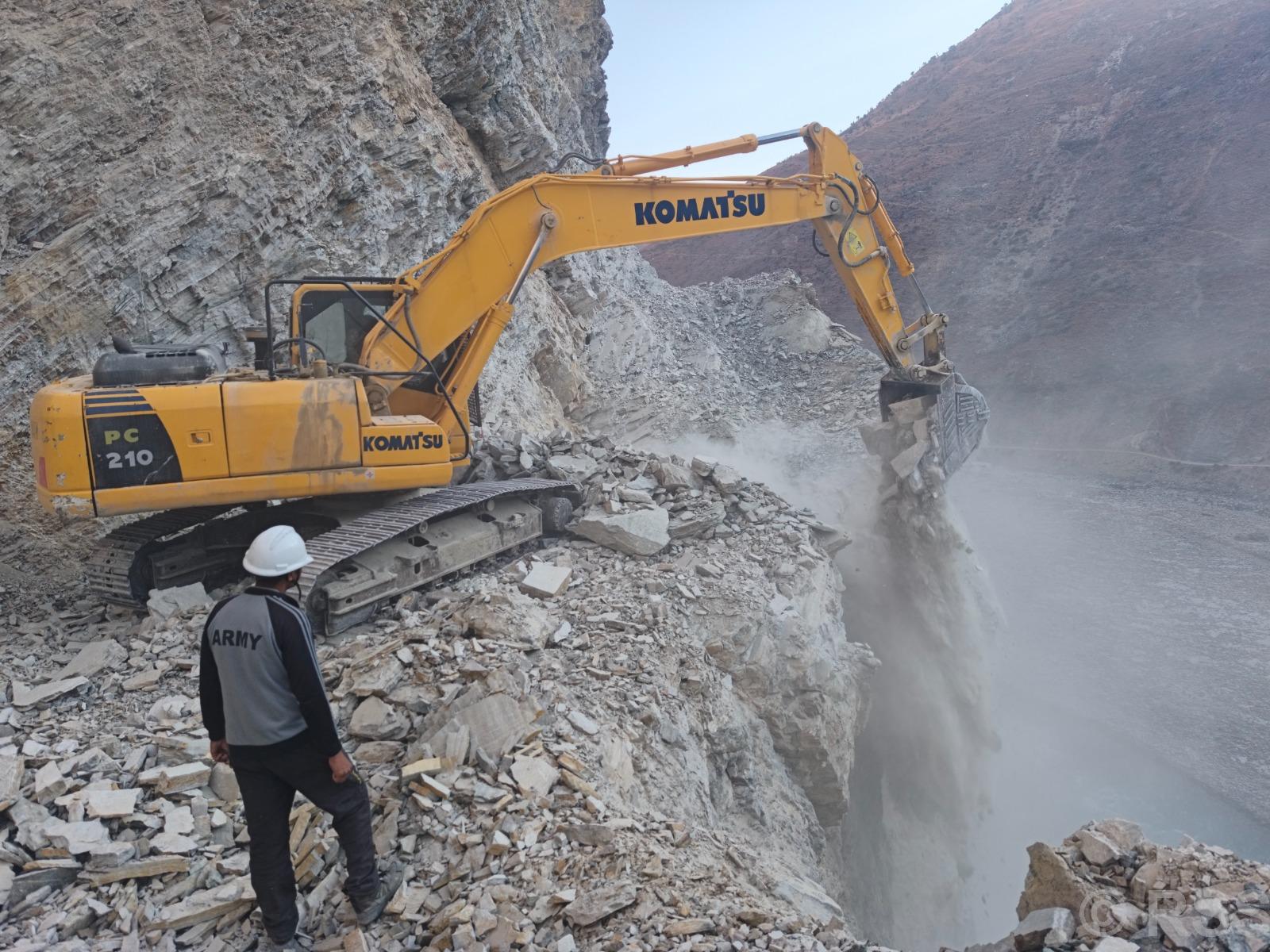
KATHMANDU: The Nepali Army has completed 32 road projects in difficult terrain and constructed a total of 1,411.54 kilometers of roads across the country.
According to the Nepali Army, major projects completed under its management include the Kanti Lokpath, Karnali Highway, Jajarkot–Dolpa road, Besisahar–Chame road, Kaligandaki Corridor, and Karnali Corridor.
The government has been assigning the Nepali Army responsibility for road sections considered technically challenging due to rugged geography, rocky cliffs, and other difficult conditions, with the objective of connecting remote areas to the national road network.
Nepali Army spokesperson Assistant Lieutenant Colonel Rajaram Basnet said that despite limited resources, adverse weather, and complex terrain, the Army has successfully implemented several nationally important and priority road projects and has completed its annual physical targets in full.
In eastern Nepal, the Army completed construction of 10.51 kilometers of road under the strategically important Khandbari–Kimathanka (Chyamtang–Ghonghappa) road project and has already handed it over to the Department of Roads. The project is expected to contribute to local development and future commercial activities in the Kimathanka area.
At present, the Army is mainly working on three road projects: the Karnali Corridor, Darchula–Tinker road, and Benighat–Arughat–Larkebhanjyang road.
Under the Mahakali Corridor, construction is underway on 79 kilometers of the Darchula–Tinker (Tusharpani–Tinker) section. The Army said that despite extremely difficult mountain terrain, hard rocky slopes, and adverse weather, it completed 19.80 kilometers of road construction during fiscal year 2082/83, achieving 100 percent of the annual target. Overall physical progress of the project has reached 25.06 percent.
Under the Benighat–Arughat–Larkebhanjyang project, the Army has completed and handed over the 18-kilometer Hawadanda–Dobhan section within the Manaslu Conservation Area to the Department of Roads. As of fiscal year 2082/83, physical progress of the 92-kilometer project has reached 40.8 kilometers, or 44.35 percent.
The Karnali Corridor, a national pride project, remains the Army’s largest ongoing road project. The Nepali Army is constructing 22.05 kilometers of road, including the Lalibagar–Dullikunna and Ghatparichaur–Badrigaun–Bhukkakhola sections, under the 682-kilometer corridor extending from Hilsa in Humla to Jamunaha in Banke.
Track opening of the Lalibagar–Dullikunna section has been completed and handed over to the Department of Roads, while construction is continuing on the Ghatparichaur–Badrigaun–Bhukkakhola section. During fiscal year 2082/83, the Army completed 19 kilometers of road construction under this project, meeting the full annual target.
Overall physical progress of the Karnali Corridor has reached 86.17 percent.
To strengthen Humla’s connection with the national road network, the Nepal Army also installed a Bailey bridge over Chuwakhola in Kharpunath Rural Municipality-5 on the Hilsa–Simkot road section.
The Nepali Army said that completion of these projects is expected to enhance connectivity, promote economic activity in remote regions, and strengthen the strategic importance of linking Karnali, including Humla, with the national road network.
The Nepali Army has been carrying out the construction of new road tracks, upgrading existing tracks, building necessary infrastructure, and handing over completed projects to the concerned authorities in accordance with prescribed standards. These efforts are focused on projects of national pride and priority that connect remote areas with the national road network.
The main objective of these projects is to expand the national road network by constructing road sections in remote and strategically important areas, while strengthening social and economic development and enhancing national security in the long term. The Nepali Army said that connecting remote regions to the national road network has generated long-term economic, social, strategic, and tactical benefits for the country.
The Nepali Army has also stated that it has been able to successfully fulfill its development-construction responsibilities even in difficult and challenging terrain by making optimum use of available resources.
According to the Nepali Army, roads of particular strategic importance will help connect the Himalayan, hilly, and Terai regions and create a foundation for promoting trade, tourism, disaster management, and local economic activities by expanding access. The road network is considered one of the key basic infrastructures supporting Nepal’s sustainable economic development, improving accessibility, and strengthening national security.






Comment