




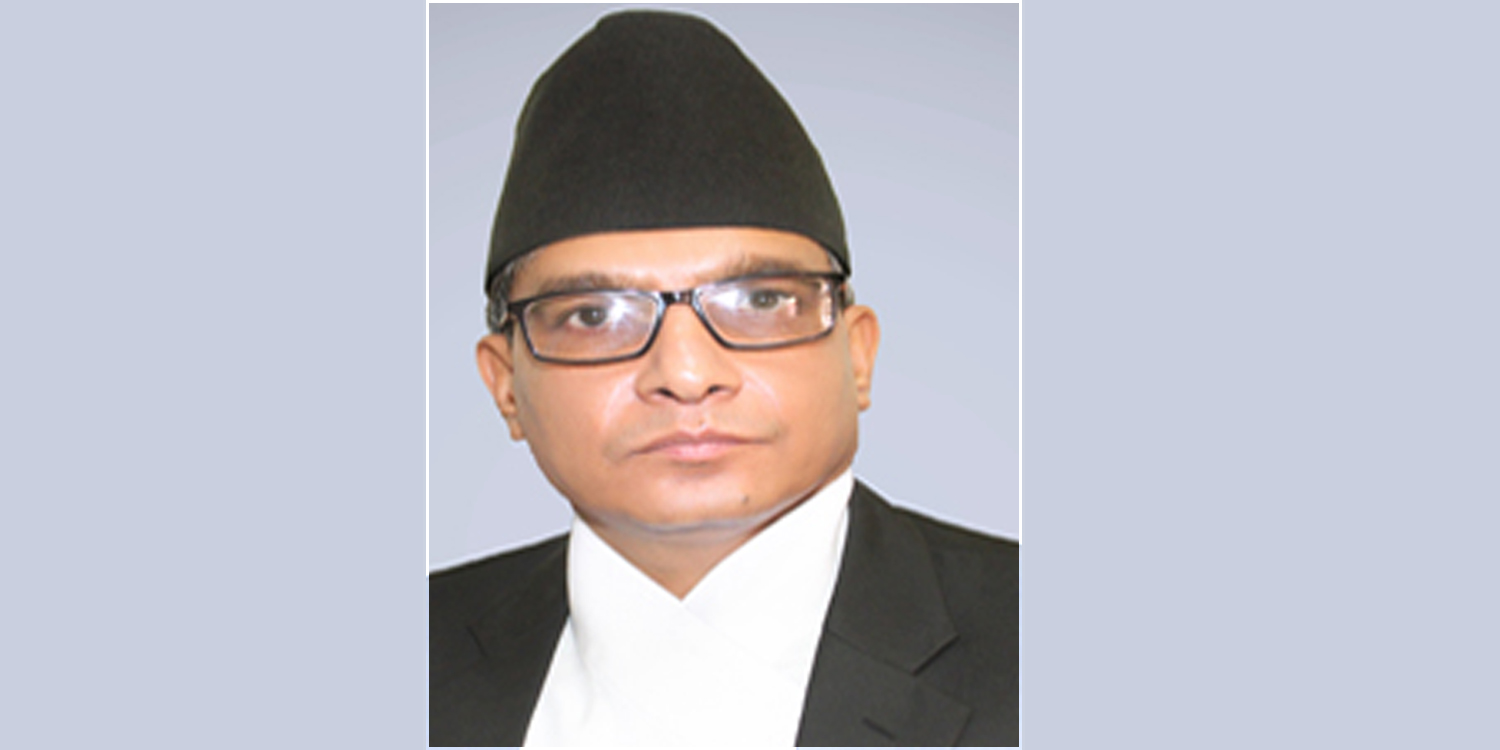
KATHMANDU: Proposed Chief Justice Dr Manoj Kumar Sharma has unveiled an ambitious action plan aiming to clear years of pending cases at the Supreme Court within 18 months.
Presenting his vision and work plan before the Parliamentary Hearing Committee on Tuesday, Sharma stressed a technology-driven judiciary and corruption-free court administration as key priorities for reform.
He proposed the effective implementation of a “Differential Case Management (DCM)” system, under which cases would be categorized and resolved within a maximum of 18 months depending on their nature.
Acknowledging delays in judicial proceedings, Sharma said slow case disposal had eroded public trust in the justice system and pledged to establish a faster, more efficient and predictable judiciary.
Push for digital and AI-based judiciary
Sharma also outlined plans to fully digitize the judicial system. He proposed exploring the use of artificial intelligence in courts, conducting hearings and recording statements through virtual platforms, and integrating case files into a fully electronic system.
His plan includes introducing technologies to livestream court proceedings and convert audio from hearings into text, enhancing transparency and accessibility.
Zero tolerance on corruption
Sharma pledged a “zero tolerance” policy against corruption and the influence of intermediaries in the judiciary. He said oversight mechanisms within the Judicial Council and Supreme Court would be strengthened, with strict action against judges and staff violating the code of conduct.
“Ending the influence of intermediaries in the judiciary will be my top priority to restore public trust,” he said.
Access to justice and institutional reforms
Sharma also proposed strengthening free legal aid for poor and marginalized communities and updating records of lawyers providing such services.
He stressed on promoting mediation to reduce case backlogs and encouraging community-level resolution of minor disputes.
He further suggested that Supreme Court judges should focus solely on judicial work, while administrative responsibilities be handled by a separate mechanism.
Sharma added that he would publish progress reports every four months and work in coordination with Parliament and the government on budgetary and human resource management for the judiciary.






Comment