




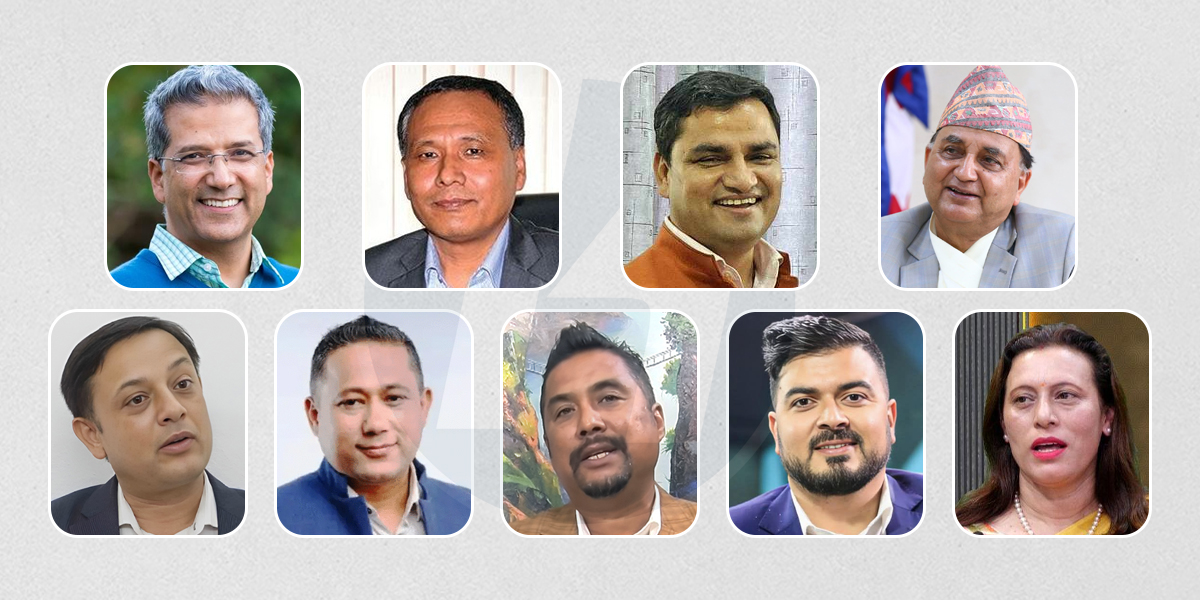
KATHMANDU: As the district with the highest number of constituencies in the country, Kathmandu has increasingly shown a preference for new political alternatives in recent elections. Analysts argue that, as in previous polls, educated and change-seeking urban voters may once again produce unexpected results.
In the federal capital, Kathmandu, which has 10 constituencies, the election atmosphere is intensifying. Candidates are actively campaigning door to door, visiting neighborhoods and public spaces to seek votes. Due to high population density, reaching every settlement has become challenging. Meanwhile, hotels, tea shops and restaurants are filled with political discussions as campaigning gathers momentum.
In 2074 BS, voters in Kathmandu experimented with the Bibeksheel Sajha Party to some extent. By 2079 BS (2022), public dissatisfaction with both traditional and “alternative” parties shifted toward the Rastriya Swatantra Party (RSP).
Looking at the 2079 BS elections, the Nepali Congress secured five out of the 10 constituencies in Kathmandu. The RSP, which had been formed only six months earlier, won four seats, while the CPN-UML managed to secure just one. Notably, some of the seats won by the RSP were previously held by the UML in 2074 BS.
UML’s shrinking base
In 2074 BS, following the electoral alliance and later merger between CPN-UML and the Maoist Centre, the left alliance performed strongly in the Kathmandu Valley. Across the Valley’s 15 constituencies, UML won nine seats with Maoist support. Nepali Congress secured six seats.
However, by 2079 BS (2022), that dominance had significantly eroded. UML’s representation in the Valley fell sharply to just two seats. The split within the communist bloc, particularly involving Madhav Kumar Nepal and Pushpa Kamal Dahal ‘Prachanda’, weakened the party’s electoral strength.
For example, in Kathmandu-5, Congress candidate Pradeep Paudel defeated a seat previously won by UML in 2074. Similarly, constituencies once considered UML strongholds shifted toward Nepali Congress or RSP.
Over the past two elections, UML’s presence in Kathmandu has steadily declined. Observers suggest that the RSP has absorbed much of the urban vote base that once supported UML. Meanwhile, Congress is attempting to consolidate support by repositioning its leadership and strategy.
Aryal faces strong competition from UML’s Ajay Kranti Shakya, a locally rooted and well-regarded leader known for his intellectual background and organizational strength. Given that Kathmandu-9 has historically leaned toward UML, the party has fielded Shakya as a strategic candidate to reclaim the seat.
The Maoist Centre, despite alliances, has not independently won a constituency in Kathmandu in recent elections under its own election symbol.
Changing voter mood in the Valley
The 2079 BS local elections marked a turning point when independent candidate Balen Shah won the Kathmandu Metropolitan City mayoral race with 61,767 votes. His victory energized new political forces and inspired figures like RSP chairman Rabi Lamichhane to enter formal politics.
In the 2079 BS (2022) federal elections, the RSP emerged as a major force in the Valley. Of the seven RSP leaders elected directly nationwide, four were from Kathmandu, one from Lalitpur and two from Chitwan. This shift reflects a broader urban trend favoring new leadership over traditional party structures.
Electoral strategies this time
The RSP is aiming to win up to eight constituencies in Kathmandu in the upcoming election. Nepali Congress, which increased its tally from four seats in 2074 BS to five in 2079 BS, is reportedly targeting seven or eight seats this time. UML, on the other hand, is seeking to regain ground and hopes to secure four or five constituencies.
However, some voters remain skeptical of UML’s prospects. “It seems easier for Congress and RSP to win here than UML,” says Santosh Fago, a voter from Anamnagar.
Smaller parties are also trying to make inroads. The Rastriya Prajatantra Party (RPP) is optimistic about its prospects in Kathmandu-1 and Kathmandu-3, where prominent candidates are contesting. Meanwhile, other emerging political groups are also attempting to capitalize on voter dissatisfaction.
Nepali Congress (NC) President Gagan Thapa’s focus on Madhesh rather than Kathmandu has led some observers to speculate that Congress may face challenges in maintaining its current strength in the capital.
A volatile battleground
Kathmandu remains a politically dynamic battleground. Urban voters appear less loyal to traditional party lines and more inclined toward performance, personality and perceived credibility. With established parties struggling to retain their traditional bases and newer forces gaining traction, the capital may once again deliver surprising results.
Voters are dynamic
Voters in the Kathmandu Valley are widely regarded as active and politically dynamic rather than passive or silent. Many observers believe that this characteristic could once again favor newer political forces in the upcoming election.
Chinakaji Shrestha, a businessman operating in Dilli Bazaar, expects emerging parties to secure significant support in Kathmandu this time. According to him, voters who previously supported CPN-UML, Nepali Congress, Maoist Centre, and Nepal Workers and Peasants Party (NWPP) are now gravitating toward the Rastriya Swatantra Party (RSP) and Kulman Ghising’s Ujyalo Nepal Party.
Shrestha also suspects that the royalist Rastriya Prajatantra Party could attract a notable share of votes. “Kathmandu voters are not permanently aligned with any party,” he says. “They tend to feel that the old leadership should step aside to make room for new faces. That’s why they embraced the RSP earlier. Even within traditional parties, Gagan Thapa appears more popular than UML leaders. Many of us are still undecided.”
Similarly, Namrata BK, a businesswoman in Thamel, believes that among older parties, the Nepali Congress retains some optimism among voters, particularly because of leaders like Gagan Thapa. However, she notes growing dissatisfaction with established parties.
“Most customers who visit my shop say they want to vote for a person, not just a party,” BK says. “There’s a clear attraction toward newer figures like Kulman Ghising and Rabi Lamichhane.”
An analysis of Kathmandu’s 10 constituencies
Kathmandu-1: Rabindra Mishra sees opportunity: Kathmandu Constituency-1 has traditionally been a Nepali Congress stronghold. In 2074 BS, Nepali Congress leader Prakash Man Singh won the seat with 10,926 votes. However, in the 2079 BS election, he secured victory by a much narrower margin, receiving 7,143 votes against Rabindra Mishra of the Rastriya Prajatantra Party (RPP), who garnered 7,018 votes.
Mishra, who had previously contested from this constituency in 2074 under the Bibeksheel Sajha banner and finished second with 10,018 votes, is now making his third attempt. With Prakash Man Singh no longer in the race after being denied a ticket, the Congress vote base appears less consolidated.
This time, the Nepali Congress has nominated entrepreneur Prabal Thapa, though his candidacy has not generated significant momentum. Meanwhile, the Rastriya Swatantra Party has fielded Ranju Darshana, who was the runner-up in the 2074 Kathmandu Metropolitan City mayoral election.
Darshana, who is currently pregnant, has drawn public attention and sympathy. Observers believe she could benefit both from the broader RSP wave and from personal goodwill, as she remains largely uncontroversial.
In the 2074 BS proportional vote count, Nepali Congress emerged as the largest party in Kathmandu-1, while Bibeksheel Sajha finished second with 6,911 votes. By 2079 BS, the Rastriya Swatantra Party secured second place proportionally with 5,618 votes, signaling a shift in urban voter preference. Although UML and Maoist Centre have also fielded candidates, they have generated comparatively little discussion in this constituency.
A squatter settlement along the Dhobikhola riverbank remains a significant voting bloc in the area. Since the last election, Mishra has actively engaged with residents there. However, some local voters remain skeptical. Ramnath Adhikari, a voter from Anamnagar, argues that Mishra may still struggle because local grievances have not been fully addressed.
Despite this, many believe Mishra has a strong chance in his third attempt, largely due to name recognition built over multiple elections. The RPP is confident about securing Kathmandu-1 this time, especially given Mishra’s position as the party’s Senior Vice President.
Kathmandu-2: A clear three-way contest
Kathmandu Constituency-2 is shaping up to be one of the most competitive battlegrounds in the capital.
Some voters have expressed dissatisfaction over the departure of Sobita Gautam, who won the seat in 2079 BS. Her exit has created mixed reactions among constituents. Sunil KC, the Rastriya Swatantra Party (RSP) candidate, faces questions from voters on this issue. KC was previously elected as a provincial assembly member from the Rastriya Prajatantra Party (RPP) but resigned from that position to join RSP and secure a federal ticket.
From the CPN-UML, Mani Ram Phuyal is a prominent contender, while Kabir Sharma represents the Nepali Congress. Both Phuyal and Sharma are well-known locally and enjoy strong grassroots networks. Although Sunil KC is relatively new in comparison, he does not carry a negative public image.
Observers widely predict a three-way race among CPN-UML, Nepali Congress and RSP.
Historically, this constituency has witnessed dramatic shifts. In 2074 BS, CPN-UML leader Madhav Kumar Nepal won the seat with 27,366 votes. However, in 2079, Sobita Gautam of RSP secured victory with 15,238 votes, reflecting the electorate’s willingness to experiment with new alternatives.
Proportional vote trends also indicate volatility. In 2074 BS, UML led with 20,996 votes, while in 2079, RSP emerged as the largest party proportionally with 11,879 votes. This shift suggests that Kathmandu-2 voters remain open to change, making the outcome difficult to predict.
Kathmandu-3: New faces versus established parties
Kathmandu-3 appears to be leaning toward fresh alternatives once again.
In 2079 BS, Nepali Congress candidate Santosh Chalise won with 15,158 votes. However, some locals express disappointment, claiming his parliamentary presence and development efforts have not met expectations.
In 2074 BS, CPN-UML had secured this constituency with 11,159 votes. But this time, voter sentiment appears to favor newer faces.
Kulman Ghising, president of the Bright Nepal Party and known for his strong connection with indigenous communities, is contesting from this constituency. He is campaigning aggressively and appears confident of victory.
Parbati Kuikel, a resident of Kageshwari Manohara Municipality-1, reflects a common sentiment: “Kathmandu-3 has seen many old leaders. Let’s give a chance to someone new this time.” According to her, Ghising’s campaign has gained noticeable traction.
At the same time, Rajunath Pandey, former chief of the Kathmandu Metropolitan Police, has also emerged as a significant contender. Pandey is closely associated with former Kathmandu Metropolitan City Mayor Balendra (Balen) Shah. For the RSP, this seat carries symbolic importance. If Pandey fails to win, it may be seen as a setback for Balen’s influence in the capital.
CPN-UML has nominated Rameswar Phuyal, while Nepali Congress has fielded Ramesh Aryal. However, according to local resident Santabir Tamang of Gokarneshwar Municipality, both traditional party candidates appear overshadowed by the newer contenders.
Looking at proportional results
In 2074 BS, UML led with 14,501 votes, followed by Congress and Bibeksheel Sajha.
In 2079 BS, Nepali Congress became the largest party proportionally with 10,619 votes, CPN-UML followed with 9,439, and RSP came close behind with 9,218 votes. The numbers indicate a fragmented electorate and a highly competitive race.
Kathmandu-4: Rajan’s third attempt
Kathmandu-4 is witnessing another high-profile contest. Rajan Bhattarai of CPN-UML, who has twice been defeated by Nepali Congress leader Gagan Thapa, is contesting again. In 2074 BS, Thapa secured 21,558 votes, defeating Bhattarai, who received 18,240 votes. In 2079 BS, Thapa won again with 21,302 votes, while Bhattarai garnered 13,855 votes.
This time, however, Gagan Thapa has shifted his focus to Sarlahi, handing over the constituency to young Congress leader Sachin Timalsina. While Timalsina represents generational change within Congress, many voters in Kathmandu-4 are more familiar with Rajan Bhattarai.
Adding to the competition is Pukar Bam of the Rashtriya Swatantra Party, another youthful and popular figure. The contest is widely expected to revolve around three young leaders: Rajan Bhattarai, Sachin Timalsina, and Pukar Bam.
Given his persistence and established voter base, Rajan Bhattarai appears determined to secure victory on his third attempt. UML also considers him one of its strongest prospects in the capital.
Proportional trends and tight margins
Looking at proportional representation results from 2074 BS, CPN-UML emerged as the largest party in the constituency with 15,622 votes. However, in the 2079 BS election, Nepali Congress overtook UML by securing 11,808 votes proportionally.
In 2074 BS, Bibeksheel Sajha had received 6,830 votes. By 2079, its support base shifted significantly, with 9,412 votes moving toward newer political alternatives, particularly the Rastriya Swatantra Party (RSP). The RSP has since projected Pukar Bam as a strong and winnable candidate in this area.
Local voters widely predict a three-way contest among the major contenders, with the possibility of a narrow margin deciding the winner. From outside observation, the race appears highly competitive, with only slight vote differences likely separating the top candidates.
Additionally, Surendra Bhandari of the Rastriya Prajatantra Party (RPP) and Indra Kumar Rai from the CPN have also entered the race, though the primary contest is expected to center around the three leading figures.
Kathmandu-5: Pradeep vs Ishwor again
Kathmandu Constituency No. 5 is once again shaping up to be one of the most closely watched battlegrounds.
In the 2079 BS election, Nepali Congress youth leader Pradeep Paudel defeated CPN-UML’s senior leader Ishwor Pokharel with 15,259 votes. Paudel has since risen within the party and now serves as a General Secretary of Nepali Congress.
However, in 2074 BS, the situation was reversed. UML Vice Chair Ishwor Pokharel had secured victory with 23,029 votes. This history makes the renewed rivalry between Pradeep and Ishwor particularly significant.
This time, the competition has expanded beyond the two major figures. Kamal Thapa of Rastriya Prajatantra Party (RPP), Sashmit Pokharel of the Rastriya Swatantra Party (RSP), and actress Nisha Adhikari from the Gatisheel Loktantrik Party have also joined the race.
Kamal Thapa, who shifted from Makwanpur to contest in Kathmandu, has not generated strong enthusiasm among local voters. Historically, RPP has ranked fourth in this constituency. While Thapa may attract a segment of monarchist and traditional RPP voters, his path to victory appears challenging.
Sashmit Pokharel, originally from Kathmandu and formerly associated with Bibeksheel Sajha until 2079 BS, represents the RSP’s urban reformist appeal. Meanwhile, Nisha Adhikari is positioning herself as a fresh alternative, arguing that voters are ready to embrace new leadership and new agendas. However, analysts suggest that strong social media campaigning does not always translate into grassroots electoral strength.
Vote pattern analysis
In 2074 BS, UML led proportionally with 15,622 votes.
In 2079 BS, Nepali Congress became the largest party proportionally with 11,808 votes.
Bibeksheel Sajha’s vote base in 2074 BS largely shifted toward RSP in 2079 BS, strengthening the new party’s position.
This indicates that Kathmandu-5 voters are not rigidly loyal and are open to shifting their support.
Who has the edge?
Ishwor Pokharel may benefit from sympathy and his long-standing political presence. However, Pradeep Paudel currently appears to hold a slight advantage due to incumbency and organizational backing from Nepali Congress.
That said, Paudel has also faced criticism. During the Gen-Z protests, he was accused of not resigning from his ministerial position, which created some controversy.
While Ishwor is aggressively trying to reclaim the seat, Sashmit, Nisha, and Kamal Thapa claim they can divide votes from both major parties. Despite these challenges, many observers believe Pradeep Paudel currently maintains the upper hand.
Nevertheless, with five prominent candidates competing, Kathmandu-5 remains one of the most unpredictable constituencies in the capital.
Kathmandu-6: No clear alternative to Shishir yet
Kathmandu Constituency No. 6 does not appear ready to move away from its incumbent.
In the 2079 BS election, Rastriya Swatantra Party (RSP) candidate Shishir Khanal won the seat with 14,221 votes. CPN-UML’s Sarbendra Khanal finished second with 8,917 votes. Notably, Sarbendra is no longer with UML, further reshaping the political landscape of the constituency.
Proportionally in 2079 BS, RSP emerged as the largest party here with 11,916 votes, while UML came second. This marked a significant shift from 2074, when UML had led proportionally with 14,031 votes. In that same 2074 election, Nepali Congress candidate Bhimsen Das Pradhan had won the seat with 16,708 votes.
Shishir Khanal has cultivated an image of being composed, fact-based and dignified in Parliament. His public reputation remains largely untarnished, and he is widely regarded as an honest and capable leader within RSP. Unlike in some other constituencies, there is little visible anti-incumbency sentiment against him.
This time, UML has nominated Aman Kumar Maske, while Nepali Congress has fielded Krishna Baniya. However, local observers suggest that neither candidate currently appears strong enough to decisively challenge Khanal.
In 2079 BS, Khanal benefited from dissatisfaction among traditional Congress and UML voters. He is now betting that his performance and image will help him expand that support base further. Many locals believe that both Baniya and Maske will struggle to overtake him.
At present, RSP appears relatively confident of retaining Kathmandu-6, as voters have yet to rally behind a compelling alternative to Shishir Khanal.
Kathmandu-7: UML and Congress mount challenge against Ganesh
Kathmandu Constituency No. 7 presents a more competitive and uncertain scenario.
Ganesh Parajuli of the Rastriya Swatantra Party won the seat in 2079 BS. However, protecting it this time may prove more difficult, especially given the demographic composition of the constituency, which includes a significant indigenous community population.
In 2074 BS, Rambir Manandhar of CPN-UML won the seat with 18,002 votes. By contrast, in 2079 BS, Parajuli secured victory with 8,743 votes, reflecting the broader shift toward new political alternatives.
Proportional trends also show fluctuation
In 2074 BS, UML led proportionally with 12,391 votes. In 2079 BS, RSP became the largest party proportionally with 10,978 votes. UML finished second in 2079 BS with around 6,800 votes.
The Maoist Centre’s influence appears to have weakened in this constituency. Even when Manushi Yami Bhattarai contested under the five-party Democratic-Left alliance, she managed only 6,063 votes.
This time, both UML and CPN candidates are seen as mounting a serious challenge. Additionally, Nepali Congress has nominated Pramod Hari Guragai, further intensifying the contest.
UML and CPN currently hold provincial assembly seats in this area, strengthening their local networks. Given the strong community ties within the constituency, traditional party structures may have greater influence here compared to more urbanized constituencies.
Despite this, RSP remains confident that Ganesh Parajuli can retain his seat. Party supporters argue that Kathmandu-7 voters have already demonstrated a willingness to embrace new leadership, and there is no immediate indication of mass disillusionment with Parajuli.
However, with stronger organizational backing from established parties and demographic factors at play, Kathmandu-7 is likely to witness a tough and closely fought battle.
Kathmandu-8: Can Suman challenge Biraj?
Kathmandu Constituency No. 8 is once again shaping up to be an intriguing contest.
Biraj Bhakta Shrestha, who began his political journey with Bibeksheel Sajha and later joined the Rastriya Swatantra Party (RSP), won the seat in 2079 BS. Known for his ideological clarity and clean public image, Viraj has established himself as a principled and reform-oriented leader.
Kathmandu-8 has historically shown a willingness to support new forces, both proportionally and directly. In 2079 BS, RSP became the largest party here in proportional representation with 11,993 votes. By contrast, in 2074 BS, CPN-UML had led proportionally with 14,031 votes.
Biraj’s main challenger this time is Suman Sayami, who recently joined the CPN under the Maoist Centre’s symbol. Sayami is known for his activism during the Guthi movement and his opposition to certain urban development policies, including the so-called “Dozer movement” associated with former Kathmandu Mayor Balen Shah.
In the 2079 BS election, Biraj defeated UML’s Jiwanram Shrestha, who had previously won the seat in 2074 with 13,397 votes. Suman had finished second in 2079 BS but with a significantly smaller vote margin compared to Biraj.
While Suman is considered an energetic activist with strong grassroots credentials, critics argue that his frequent party shifts have raised questions about political stability. He joined CPN only about a month before candidate nominations, leading some voters to view his candidacy as opportunistic rather than ideological.
Businessman Kajiman Maharjan from New Road believes Viraj will retain strong support, particularly among indigenous communities in the constituency. However, others argue that Suman’s activism could mobilize a segment of voters dissatisfied with mainstream parties.
Nepali Congress has fielded Sapnaraj Bhandari, a respected figure within the indigenous community, while UML has nominated Rajesh Shakya. Despite multiple candidates, political observers largely see this as a two-horse race between Biraj and Suman.
Although some claim Suman could pull off an upset, Biraj’s established reputation and parliamentary presence make him a formidable opponent. For Suman, the challenge is not just electoral victory but also proving that his recent party shift reflects long-term political commitment.
Kathmandu-9: Ajay Kranti and Nanumaiya challenge RSP’s DP Aryal
Kathmandu Constituency No. 9 presents a complex and competitive scenario.
In 2079 BS, Rastriya Swatantra Party candidate Tek Bahadur Pokharel secured victory with 10,961 votes. Proportionally, RSP also led the constituency with 11,502 votes.
However, historically, this has been a CPN-UML stronghold. In 2074 BS, Krishnagopal Shrestha of UML won decisively with 22,852 votes and later secured 11,956 votes in 2079. He is not contesting this time.
The RSP has now nominated Dol Prasad Aryal (DP), a senior party leader and close associate of party Chair Rabi Lamichhane. Aryal is widely recognized within party circles and gained visibility during the Gen-Z movement, where he was seen as a key figure supporting Lamichhane during legal controversies.
Initially, there was speculation that Ashika Tamang would contest from this constituency under RSP. However, she was fielded in Dhading instead, paving the way for DP Aryal to run in Kathmandu-9.
While Nepali Congress still considers Kathmandu-10 a relatively safe constituency, the narrowing margins and rising alternative forces suggest that it can no longer be taken for granted. The contest among Himal Karki, Binod Shrestha, and Pradeep Bista may ultimately hinge on turnout and the division of anti-Congress votes.
Aryal faces strong competition from UML’s Ajay Kranti Shakya, a locally rooted and well-regarded leader known for his intellectual background and organizational strength. Given that Kathmandu-9 has historically leaned toward UML, the party has fielded Shakya as a strategic candidate to reclaim the seat.
Nepali Congress has nominated Nanumaiya Bastola, who also enjoys considerable goodwill among voters. Her presence further complicates the race.
Some observers argue that DP Aryal, despite his senior party status, may struggle to fully connect with local indigenous communities, who may prefer candidates with deeper roots in the constituency. UML’s Ajay Kranti appears to be attempting to capitalize on this perception.
For UML, this seat carries symbolic importance. Failure to reclaim Kathmandu-9 could weaken its broader narrative of revival in the capital. As a result, the party has invested significant organizational energy in Shakya’s candidacy.
With three strong contenders, DP Aryal, Ajay Kranti Shakya, and Nanumaiya Bastola, Kathmandu-9 is expected to witness a tight and unpredictable contest.
Kathmandu-10: NC fortress faces RSP and UML challenge
Kathmandu Constituency No. 10 has long been considered a traditional stronghold of the Nepali Congress.
In the 2074 BS federal election, Nepali Congress leader Rajendra Kumar KC secured a decisive victory with 24,190 votes, defeating Hitman Shakya of the then Maoist Centre. At the time, even Pushpa Kamal Dahal “Prachanda,” the Maoist Centre chairman, had contested from nearby Kirtipur, highlighting the constituency’s political significance.
However, by the 2079 BS election, the vote margins had narrowed considerably. Rajendra KC’s tally dropped to 11,956 votes. UML candidate Himesh KC followed closely with 10,961 votes, indicating that Congress dominance was no longer overwhelming.
In proportional representation during 2079 BS, Nepali Congress narrowly led with 11,614 votes, while the Rastriya Swatantra Party (RSP) came a close second with 11,556 votes. Even in 2074 BS, Nepali Congress had led proportionally, reinforcing the perception that Kathmandu-10 remains an old Congress base.
This time, Nepali Congress has fielded Himal Karki, a young and emerging leader seen as a strategic choice backed by senior Congress figure Gagan Thapa. Former MP Rajendra KC is also reportedly supporting Karki’s candidacy, strengthening internal party unity in the constituency.
CPN-UML has nominated Binod Shrestha, while RSP has once again given a ticket to Pradeep Bista, who also contested in the previous election.
At present, much of the public discussion in Kathmandu-10 revolves around Himal Karki. However, UML’s Binod Shrestha is also gaining attention as a competitive challenger. Local businessman Uttam Bista from Kirtipur argues that UML is unlikely to dismantle Congress’s long-standing base in the area. Yet he acknowledges that the growing presence of RSP has made voters more indecisive.
While Nepali Congress still considers Kathmandu-10 a relatively safe constituency, the narrowing margins and rising alternative forces suggest that it can no longer be taken for granted. The contest among Himal Karki, Binod Shrestha, and Pradeep Bista may ultimately hinge on turnout and the division of anti-Congress votes.



Comment