




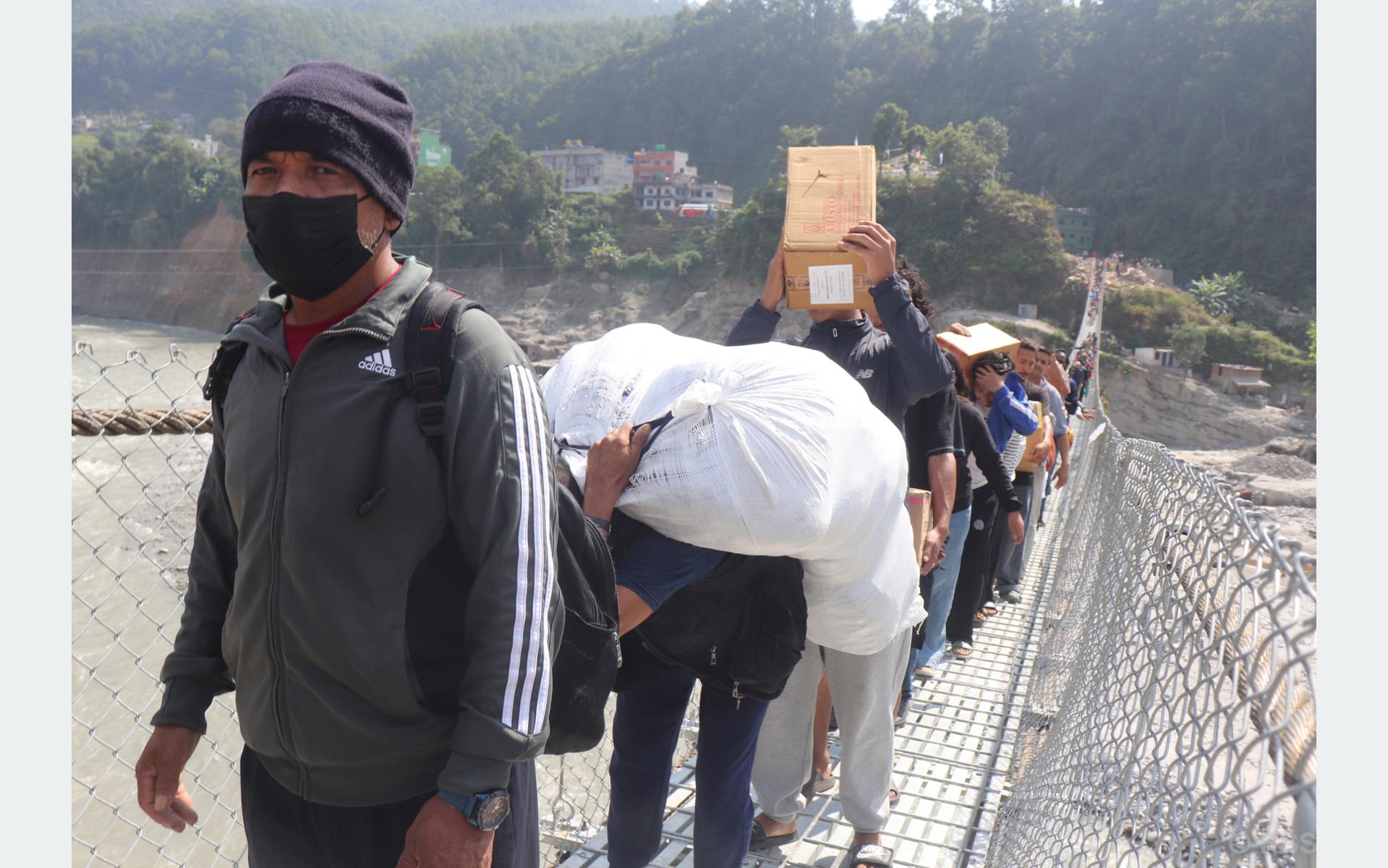
TRISHULI: Movement between Dhunge and Trishuli Bazaar in Nuwakot has become easier with the opening of a newly constructed suspension bridge over the Trishuli River.
The bridge, built to reconnect communities after floods destroyed two concrete bridges, has been opened to the public despite some construction work remaining unfinished.
The Bhotekoshi flood on August 26 swept away two concrete bridges in Bidur Municipality–1, disrupting transportation and movement between settlements on either side of the river. In the absence of a bridge, residents had to rely on tuk-tuks, ropeways and zip lines to cross the river, making daily travel particularly difficult for people living in flood-affected areas, including Trishuli Bazaar.
The suspension bridge has now eased the movement of residents and the transportation of relief supplies, while also supporting ongoing recovery and reconstruction efforts.
Shailendra Raj Pyakurel, chairperson of the Nuwakot Construction Entrepreneurs Association, said the bridge was opened after the main crossing structure was completed and the poles were installed to address the immediate needs of local residents.
However, some work remains, including the installation and fastening of auxiliary poles at four locations on both sides of the bridge.
“This is the first bridge constructed to restore river crossings after the Bhotekoshi flood damaged bridges and other structures along the Trishuli River and its tributaries,” Pyakurel said. He added that the remaining work would be completed gradually.
“We decided to open the bridge before completing all the work to reduce the hardships faced by residents of flood-affected areas, particularly during the festive season, when many people have been forced to cross the river using ropeways,” he said.
As some structural work remains incomplete, the bridge reportedly shakes when people cross it. However, the construction team, citing technical assessments, has said that a large number of people can cross the bridge at a time.
Bidur Municipality Mayor Rajan Shrestha said residents had been compelled to use risky alternatives after the floods destroyed the concrete structures previously used to cross the Trishuli River. The new suspension bridge has made travel easier, although ropeways and zip lines remain available for limited crossings.
The bridge was initially estimated to cost Rs 31.8 million. According to the construction team, Rs 16.8 million has been spent so far, with an additional Rs 1 million in expenditure still required for the ongoing work.
Nicholas Pandey, president of the Federation of Nepal Construction Entrepreneurs, said the federation had pledged Rs 15 million for the project through its Construction Entrepreneurs Fund. Any funding shortfall will be covered by the Nuwakot Construction Entrepreneurs Association, he added.
The bridge has restored a more convenient connection between Dhunge in Bidur Municipality–1 and settlements in wards 7, 8, 9 and 12 via flood-affected Trishuli Bazaar.
It has also improved access for residents travelling to other parts of Bidur Municipality, Kispang and Myagang rural municipalities, as well as settlements in Rasuwa and Dhading districts.
The bridge is particularly important for people travelling to Trishuli Hospital, the Nepal Electricity Authority’s Nuwakot Distribution Centre and schools located across the river. With road connections available on both sides, passengers can continue their journeys by vehicle after crossing the bridge on foot.
The absence of a bridge had also hampered efforts to clear flood debris from Trishuli Bazaar, locate buried structures and transport essential supplies, including food, across the river.
With the suspension bridge now in operation, authorities and local residents expect relief distribution, rescue operations and rehabilitation work in the flood-affected settlements to become more efficient.





Comment