




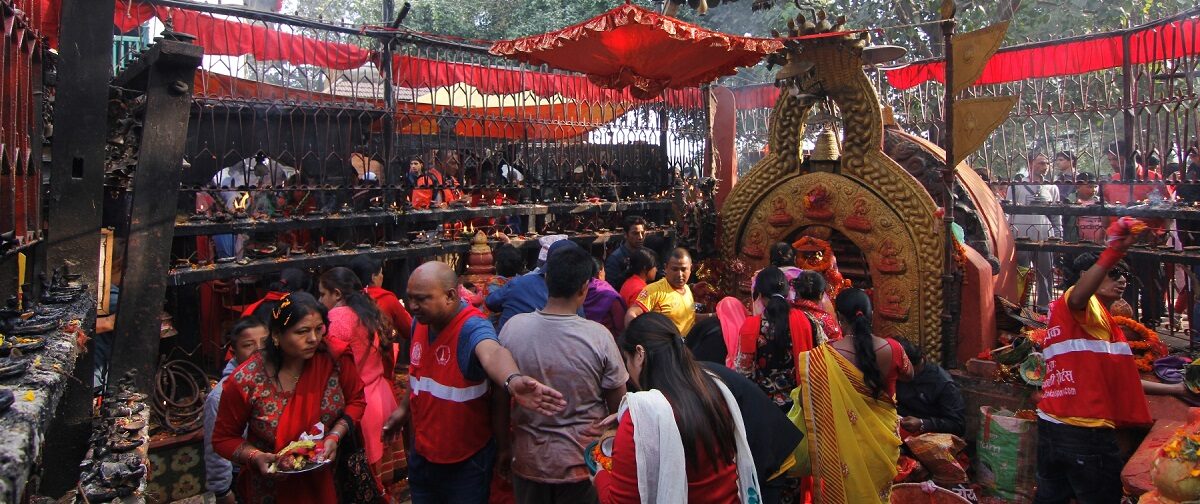
KATHMANDU: Hindus across Nepal are observing Maha Astami today, the eighth day of the 10-day Bada Dashain festival, with special prayers, religious rituals and offerings dedicated to Goddess Durga and her various manifestations.
On this auspicious occasion, devotees worship Mahakali, Mahalaxmi and Mahasaraswati, seeking blessings for strength, prosperity and wisdom. According to Hindu religious beliefs, Maha Astami marks a significant stage in Goddess Durga’s battle against evil and symbolises the triumph of divine power over demonic forces.
Special rituals are being performed at Dashain Ghar, homes and temples across the country. Devotees also visit shrines dedicated to various manifestations of the Goddess, offering prayers and animal sacrifices as part of traditional observances. Goats, ducks and roosters are sacrificed at several temples, while those who do not offer animal sacrifices present fruits and vegetables instead.
In the Kathmandu Valley, devotees have been visiting major Goddess temples since early morning to offer prayers and perform religious rituals. Special Durgapuja ceremonies are also being held at Dashain Ghars, where devotees recite sacred texts and hymns, including the Durga Saptashati, Shrimad Devi Bhagwat and Devi Stotra.
Maha Astami is also associated with the worship of weapons, vehicles and machinery, reflecting traditional beliefs in protection, strength and prosperity. At the Dashain Ghar in Hanumandhoka, Kathmandu, a special Kalaratri worship is performed at midnight as part of the festival’s religious observances.
According to Hindu tradition, worshipping the nine manifestations of Goddess Durga during Navaratri is believed to bring strength, wealth, wisdom and spiritual well-being.
The nine forms of Goddess Durga worshipped during Navaratri are Shailaputri, Brahmacharini, Chandraghanta, Kushmanda, Skandamata, Katyayani, Kalaratri, Mahagauri and Siddhidhatri.




Comment