




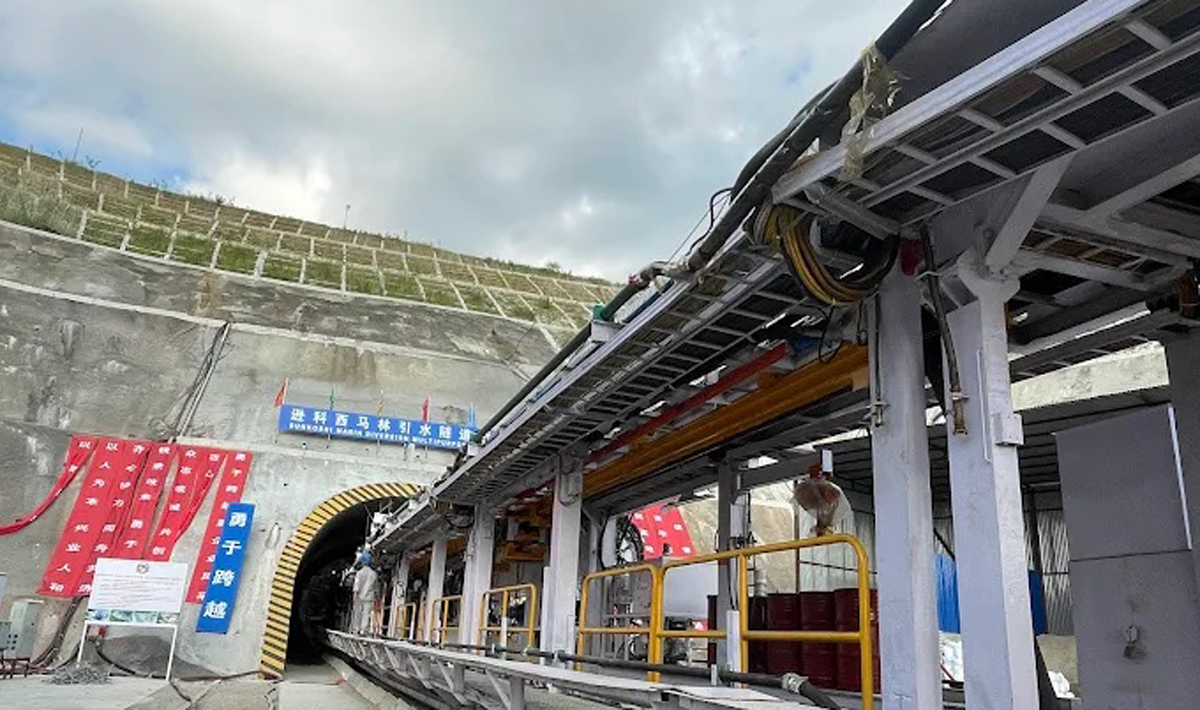
KATHMANDU: The Sunkoshi–Marin Diversion Multipurpose Project has remained largely stalled for the past six months, with construction work at the site currently halted.
The project, which had been under discussion since 2016, was officially inaugurated on February 14, 2021 by then prime minister K. P. Sharma Oli. Now caught in a dispute between the government and contractors, the responsibility of moving the project forward lies with Prime Minister Balen Shah in his capacity as chair of the National Planning Commission.
The project, which began in the fiscal year 2020/21, aims to provide year-round irrigation to five Tarai districts. Once completed, it is expected to irrigate around 120,000 hectares of farmland in Bara District, Rautahat District, Sarlahi District, Dhanusha District and Mahottari District—areas considered major paddy production zones.
Officials expect the contribution of these districts to Nepal’s total paddy production to rise from the current 16 percent to about 25 percent after the project becomes operational. The project also aims to generate 31.07 megawatts of electricity.
Initially estimated to cost Rs 46.19 billion, the project was designed to provide both irrigation and hydropower benefits. The first phase involved constructing a 13.3-kilometre tunnel, which was completed within 2024 by China Overseas Engineering Group.
While the tunnel construction was underway, the project awarded another contract on January 1, 2023, for building the dam and power-related structures at Selegahat in Manthali Municipality.
The contract was awarded to a joint venture of Patel Engineering Limited and Raman Construction for Rs 14.07 billion, with a target to complete the work by 2027.
However, the contractors had quoted nearly 32 percent less than the estimated cost, and the project failed to progress as expected. After slow progress, the government issued a 15-day notice on November 11, 2025, to terminate the contract under the category of a “sick contract”.
At the time, Kulman Ghising was serving as the minister for physical infrastructure and transport.
According to project information officer Ashok Raj Gautam, the contractor had completed only about 11 percent of the work despite 60 percent of the contract period having elapsed.
“According to Clause 15.1 of the contract agreement, a notice is issued if the contractor abandons the work or fails to maintain progress. If the situation does not improve afterward, the contract can be terminated,” Gautam said earlier.
The contract was formally terminated on November 24 after the government decided to replace the contractor rather than extend the deadline. Following the termination, the government also initiated a process to confiscate bank guarantees deposited for performance and advance payments under the Public Procurement Act.
The total amount subject to confiscation includes Rs 2.40 billion in performance guarantees and Rs 1.20 billion in advance payments, amounting to Rs 3.60 billion.
The contractors, however, challenged the government’s decision in court. On November 26, the Supreme Court of Nepal issued a short-term interim order instructing the government not to immediately implement the decision.
Later, a joint bench of justices Hari Prasad Phuyal and Nityananda Pandey refused to issue a longer interim order on February 9. The dispute is currently under consideration in both the Supreme Court and the High Court.
Gautam said the government has already written to banks to proceed with the confiscation of the guarantees and plans to deposit the amount into the government’s revenue account.
Meanwhile, both sides have also agreed to mediation in an attempt to resolve the dispute.
The project office has already sent a revised cost estimate to the Department of Irrigation as part of preparations for a fresh tender process.
According to Gautam, while the earlier estimate for the contract was around Rs 24 billion including contingencies, the new estimate for a fresh contract is around Rs 18 billion, even though about 11 percent of the work has already been completed.
So far, the overall physical progress of the project stands at around 36 percent.
Contractor Raman Mahato said the company has sought resolution through mediation and hopes the dispute will be settled soon. He argued that the contract was terminated without adequate study and warned that replacing the contractor could further delay the project.
Mahato also claimed that investigations are ongoing at the Commission for the Investigation of Abuse of Authority regarding alleged unethical decisions by former ministers including Dipak Khadka and Kulman Ghising.
The construction company has already received around Rs 2.14 billion in payments from the project so far.
Meanwhile, Biraj Bhakta Shrestha said during the 73rd Irrigation Day programme on Wednesday that completing stalled irrigation projects is one of the ministry’s priorities.
He said preparations are underway to complete the procurement process for the Sunkoshi–Marin project within 90 days. Officials plan to start the tender process by mid-May and award the contract within the current fiscal year.
The project, which has been divided into four phases, aims to divert around 67 cubic metres per second of water from the Sunkoshi River through a tunnel and discharge it into the Marin Khola at Kusumtar in Kamalamai Municipality.
The diverted water will then be used through infrastructure under the Bagmati Irrigation Project to irrigate about 122,000 hectares of farmland in the Tarai region.




Comment