




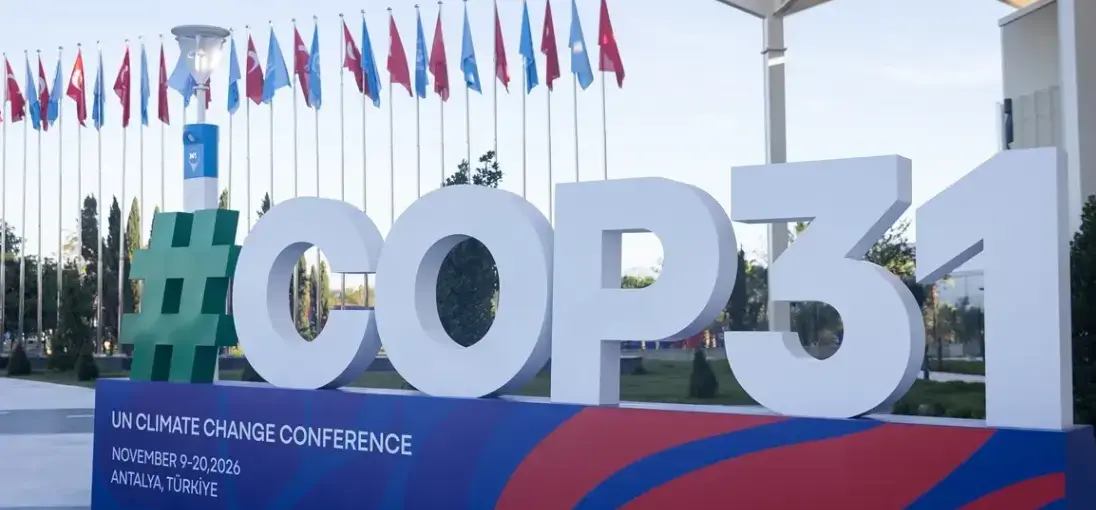
ANTALYA, TÜRKİYE: The government has initiated legal and policy reforms to ensure the safe and systematic reconstruction of settlements affected by floods in the Bhotekoshi-Trishuli river system and the rehabilitation of displaced communities in ways that respect their local cultural identities.
Executive Chief of the National Disaster Risk Reduction and Management Authority (NDRRMA), Dr Dharma Raj Upreti, said the process of amending relevant laws, regulations and working procedures had begun to facilitate reconstruction and rehabilitation while preserving the cultural identities of affected communities.
Speaking at a discussion titled “Climate Change and Human Mobility: Managing Disaster-Induced Displacement and Planned Relocation” at the Nepal Pavilion on Monday, during the ongoing United Nations Climate Change Conference in Antalya, Türkiye, Upreti said the government was committed to ensuring safe and culturally sensitive resettlement.
He said the government had adopted a policy of prohibiting settlement development in areas exposed to floodwaters. Such vulnerable locations will be protected as forest land, while procedures for acquiring land in safer areas have begun to facilitate the relocation of affected communities.
Reconstructing settlements in areas devastated by floods could expose residents to further disaster risks, he warned.
Upreti explained that, following the 2015 earthquake, resettlement had generally been possible within the same geographical areas, except in certain exceptional cases. However, post-flood recovery and rehabilitation involve different and more complex challenges.
Rebuilding settlements in flood-prone areas could increase communities’ vulnerability to future disasters, while acquiring land in safer locations also presents considerable difficulties. These challenges have made amendments to existing laws, policies and procedures necessary, he added.
He emphasized that post-disaster rehabilitation should not be viewed merely as the reconstruction of physical infrastructure. Rather, it must also address the social and cultural identities of affected communities, their livelihood requirements and their need for safe and sustainable settlements.
The discussion focused on rising disaster risks associated with climate change, disaster-induced displacement and the importance of planned relocation as part of disaster risk management.





Comment