




KATHMANDU: The Rastriya Swatantra Party’s (RSP) electoral breakthrough in Madhesh was widely unexpected, particularly given the party’s lack of an organizational base in the province.
Long regarded as a political stronghold of the Nepali Congress, CPN-UML, the Maoists, and various Madhesh-based parties, the region was never expected to rally so decisively behind a new political force.
In many constituencies, voters were driven more by a desire for political change than by the individual candidates representing the party. As the long-standing dominance of leaders backed by political power, family legacy, and financial influence began to erode, a new question emerged: who would become the new political force in Madhesh?
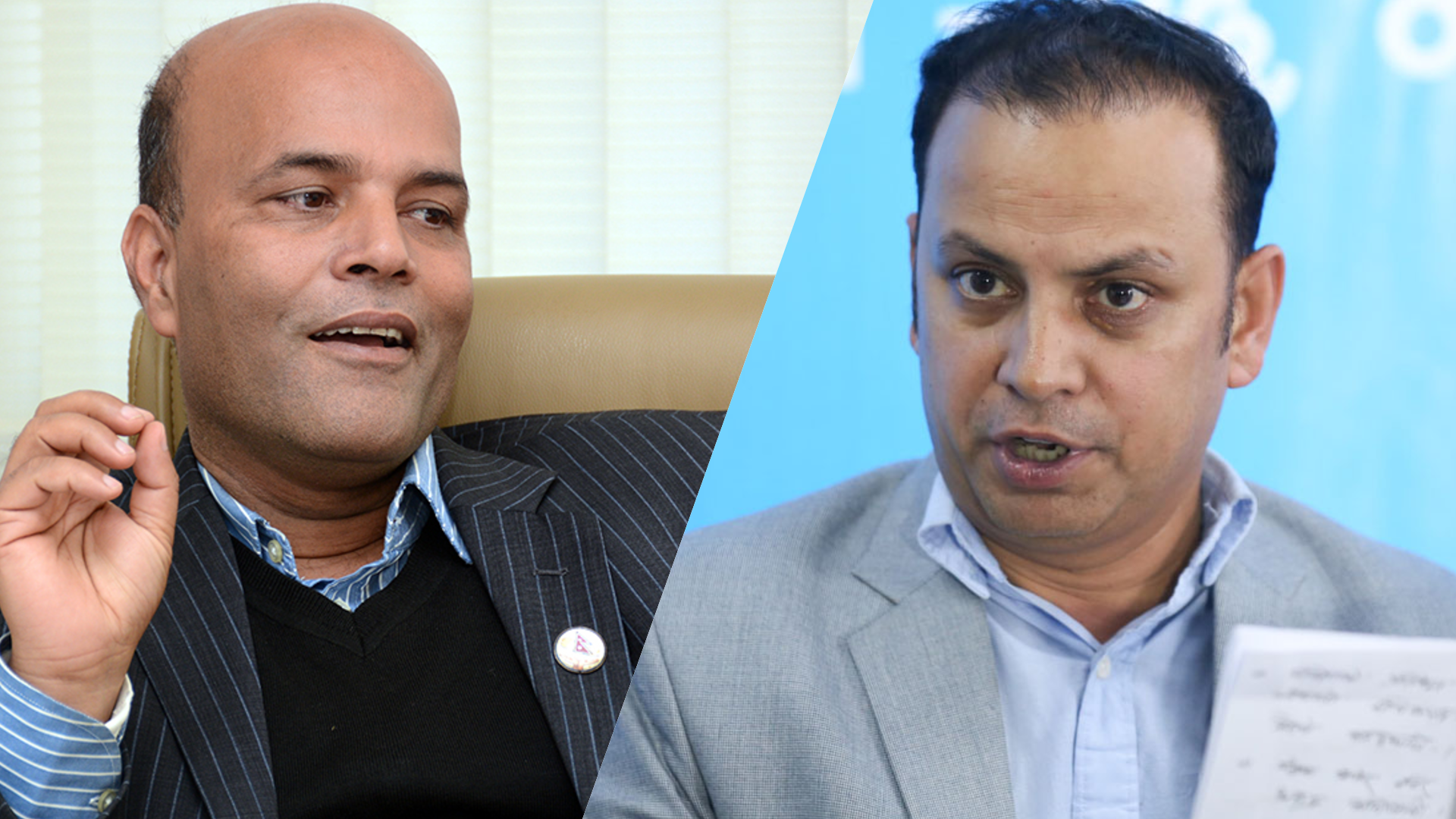
Much of the credit for the RSP’s unprecedented success in the province went to two former Congress leaders, Amaresh Kumar Singh and Manish Jha, who joined the party after becoming disillusioned with the Nepali Congress. Their stature within the RSP rose significantly after they helped the party defeat prominent Congress figures, including party president Gagan Thapa and veteran Madhesh leader Bimalendra Nidhi.
Both Singh and Jha were widely viewed as leaders capable of shaping the RSP’s long-term future in Madhesh. However, as their political ambitions encountered obstacles within the party, questions about the balance of power in the province have become increasingly prominent. Neither leader is considered part of the inner circle of Prime Minister Balendra Shah or RSP Chair Rabi Lamichhane, raising concerns over how their growing distance from the party leadership could affect the RSP’s standing in Madhesh.
Jha has also demanded a clear government position on the suspicious vehicles found near the residences of media houses and political leaders, calling for a proper investigation. He has criticized what he described as an immature approach to governance and warned that the state should not create fear among citizens through such actions.
Following his unexpected defeat in the race for general secretary, Jha has become increasingly critical of the party leadership, while Singh chose not to participate in the party’s general convention. Despite this, leaders close to both insist they remain committed to the party and have not withdrawn from active politics.
Madhesh comprises 32 constituencies across eight districts—Saptari, Dhanusha, Siraha, Mahottari, Sarlahi, Rautahat, Bara, and Parsa. The Rastriya Swatantra Party secured victory in 30 of those constituencies, an extraordinary turnaround for a party that had virtually no presence in the province just a few years earlier.
Although Madhesh is Nepal’s agricultural heartland, the region continues to face chronic challenges, with farmers struggling to obtain fertilizers, quality seeds, irrigation, and other essential agricultural inputs on time. As a result, the living standards of many residents have seen little improvement.
The RSP made these issues the centerpiece of its campaign during the March 5 election. According to MP Pramod Kumar, the party has consistently pressed the government to address longstanding concerns related to education, healthcare, employment, agriculture, irrigation, and land ownership, including the distribution of land ownership certificates to landless families.
MP Purushottam Yadav and several other lawmakers share the same view. Many within the party also acknowledge the role played by Madhesh leaders Amaresh Kumar Singh and Manish Jha, who have consistently advocated for these issues and helped shape the party’s agenda in the province.
When the Rastriya Swatantra Party, which had failed to win any seats in Madhesh in the 2079 BS election, secured victory in 30 constituencies in the 2026 election, the role of its Madhesh leaders Manish Jha and Amaresh Kumar Singh came into the spotlight. Although Singh joined the RSP only shortly before the election, his political activism and outreach played a significant role in helping the party establish a foothold in Madhesh.
After Jha was elected as a proportional representative under the RSP in 2079 BS, he remained actively involved in expanding the party’s activities in Madhesh. The party also received strong support from voters when Balendra Shah, a Madhesh-origin leader, emerged as its prime ministerial candidate in the March 5, 2026 election. During that period, Jha and Singh played an influential role in Madhesh, from candidate selection to ticket distribution.
Singh had developed a strong political base in the region, while the contribution of Gen Z leader Pushpatam Yadav was also notable. However, the two leaders who helped establish the RSP’s foundation in Madhesh and strengthen its grassroots network now appear increasingly dissatisfied with the government’s performance. Singh, in particular, has maintained a critical stance toward the government from the beginning.
He has repeatedly argued that the government should act as a guardian of marginalized communities and that the party needs a clear policy framework on federalism and provincial governance.
Although he remains an RSP lawmaker, his frequent criticism of the government appears to have widened the distance between him and Prime Minister Balendra Shah. Observers also believe that relations between Singh and party president Rabi Lamichhane have become strained.
When Prime Minister Shah assumed office, Singh was offered the Ministry of Industry. However, as he had been seeking the Ministry of Foreign Affairs, he declined the position. Since then, Singh has increasingly voiced criticism of the party leadership and government decisions.
At the RSP’s first general convention held in Chitwan, another key Madhesh leader, Manish Jha, also expressed dissatisfaction over what he described as preferential treatment given to certain leaders close to party president Rabi Lamichhane. Jha’s position weakened after his colleagues, including Ganesh Parajuli, Pramod Neupane, and Ranju Darshana, withdrew their candidacies for the general secretary position and supported Rabi’s preferred candidate, Bipin Kumar Acharya, in the name of maintaining unity within the party establishment.
Since the formation of the government, Jha has consistently called for greater accountability, transparency, and adherence to legal procedures. Many political observers now believe that the growing differences between these two influential Madhesh leaders and the party leadership could weaken the RSP’s organizational strength and political influence in Madhesh.
Is the RSP divided because of Amaresh and Manish?
Amaresh Kumar Singh and Manish Jha have built a strong political base in Madhesh, with even some leaders from traditional parties appearing to acknowledge their influence and leadership. Around 18 to 19 lawmakers elected from Madhesh have reportedly expressed concerns that the government’s working style has failed to adequately address the needs of marginalized communities and resolve issues related to squatters.
Although many Madhesh leaders have refrained from openly criticizing the government, some privately argue that ordinary citizens should not be made to suffer because of disagreements involving Prime Minister Balendra Shah and RSP President Rabi Lamichhane. Leaders including MP Rahbar Ansari and former ministers Deepak Kumar Shah, Arbindra Sah, and Narendra Sah Kalwar have also emphasized that the government should be pressured to focus on public concerns rather than internal party alignments.
Meanwhile, RSP leaders appear to be making efforts to reconnect with voters and address grievances from their constituencies. Singh says he has remained in constant contact with people in his constituency, Sarlahi-4, since winning the election.
While Amresh and Manish have openly criticized certain aspects of the government’s working style, several other party leaders appear sympathetic to their views, though many remain hesitant to speak publicly.
“We have suggested that the government should focus on serving the people and addressing their concerns rather than deciding who supports whom,” Singh says. “The government should not move in any direction that goes against the interests of the people.”
He argues that the government should prioritize uplifting marginalized communities and resolving the problems of squatters. “We have been saying both inside and outside the party that the government should not move toward harassing people or taking action against those who are trying to support us. We are not opposing the government; we are urging it to work better,” he says.
Singh claims that he has already conveyed his views to Prime Minister Balendra Shah, party chair Rabi Lamichhane, and other senior leaders through parliamentary discussions. According to him, the government cannot afford to fail under any circumstances and he has continued to raise the concerns of Madhesh on behalf of the people.
“I am not concerned about which lawmakers are with me and which are not. We are representatives of the people. I have entered politics to speak for citizens, not to serve leaders,” Singh says. “We have not come here to play political games. As elected representatives, we have clearly presented the people’s concerns in Parliament.”
Singh also maintains his opposition to any attempt to weaken democracy, federalism, and inclusion. He skipped the RSP’s first general convention after the party passed a document proposing the abolition of provincial assemblies, arguing that any interference with the country’s federal structure would be unacceptable.
At the time, Singh had stated from Janakpurdham, the birthplace associated with Sita, that any attempt to undermine Nepal’s democracy, federalism, and inclusiveness would face strong resistance from the people. He said citizens had voted for good governance and prosperity and that he would stand with them at every stage.
In an interview with Khabarhub, Singh said he has remained committed to that position and made it clear that he would not accept any attempt by the party to undermine those principles.
While speaking in the House of Representatives, Singh also argued that the government should create an environment where all political forces can work together on issues of national importance, especially at a time when the country is facing challenges. “The state is in crisis. Let all parties come together and make decisions on national issues. I am here with a heavy and saddened heart,” he said.
Alongside Singh, Gen Z leader Purushottam Yadav has also emerged as a critic of the government’s performance. As a leader who rose to prominence after the September 8 and 9, 2025 protests, Yadav has argued that the government must ensure justice for the protesters and marginalized communities. He has also called for the party to adopt a clear position on federalism, secularism, and the provincial structure.
Gupta says the government should continue working in the same direction because it has assured citizens that it will deliver. “We had promised the people that we would work with full commitment. The government also appears to be moving toward good governance and taking action accordingly,” he says.
Manish Jha, too, had been questioning the government’s working style from the beginning. As the party’s former spokesperson, Jha had repeatedly expressed frustration with party president Rabi Lamichhane before the general convention, saying that he was unable to effectively respond to media questions about government performance because the party leadership had not provided adequate space for accountability.
Jha reportedly remains disappointed after Lamichhane chose Bipin Kumar Acharya for the general secretary position during the convention instead of supporting Jha, despite Jha’s role as one of the party’s founding and ideological figures. Since then, Jha has continued to be seen as one of the strongest internal critics of Prime Minister Balendra Shah’s controversial decisions and government working style.
Jha has also demanded a clear government position on the suspicious vehicles found near the residences of media houses and political leaders, calling for a proper investigation. He has criticized what he described as an immature approach to governance and warned that the state should not create fear among citizens through such actions.
“The act of blocking media houses and other locations by placing vehicles is wrong. Those involved should be investigated and appropriate action should be taken. The state must address citizens’ concerns rather than create additional fear,” Jha said. “Can political affairs be handled through such immature actions? Is this what the Gen Z movement stood for? Such activities are strongly objectionable.”
Observers argue that questions over the government’s performance have intensified because of differences with two leaders who played a crucial role in helping the RSP secure a historic victory in Madhesh and who continue to raise issues affecting the region’s people.
Analysts have warned that dissatisfaction could deepen if the concerns of Madhesh communities remain unaddressed, particularly under a government led by a leader from the same region.
Other RSP leaders have also maintained that their primary responsibility is to represent the people rather than merely follow party positions, emphasizing that public interest remains their foremost priority.
‘We are optimistic about the government; there is no room for failure’
Former Sports Minister and RSP lawmaker Bablu Gupta says Madhesh’s people are more hopeful than dissatisfied with the government. According to him, the government is making efforts to deliver results, while lawmakers are also providing suggestions and fulfilling their responsibilities.
“The government is working to improve the situation, and we are also offering suggestions from our side. As lawmakers, we also have many responsibilities. Not every task can be completed with 100 percent success, but we are making the best possible efforts,” Gupta says.
Differences within the RSP in Madhesh appear to extend beyond Amaresh Kumar Singh and Manish Jha, with some leaders also raising concerns over the working style of Prime Minister Balen Shah and the leadership approach of Lamichhane.
He argues that many citizens still believe the government will address their concerns and fulfill its commitments. “People are expecting this government to respond to their demands. Many also believe that there should be national consensus on restructuring the provincial system. We remain optimistic because efforts are being made to simplify the process of bringing laws closer to the people,” he says.
Gupta says the government should continue working in the same direction because it has assured citizens that it will deliver. “We had promised the people that we would work with full commitment. The government also appears to be moving toward good governance and taking action accordingly,” he says.
He rejects the idea that there is a crisis within the RSP in Madhesh, arguing that internal criticism is a healthy feature of democracy. “The party remains united in Madhesh, and every leader has the freedom to express criticism. The beauty of democracy is that leaders can present their views openly,” Gupta says.
“We entered politics to serve the people, not merely to defend the party. Instead of criticizing each other, we should work together with a common purpose. Everyone’s concerns should be heard, and policies should focus on uplifting marginalized communities and ensuring justice,” he adds.
RSP lawmaker Pramod Kumar Mahato also believes the government should not disappoint people who have placed their trust in it. He says lawmakers should maintain a critical perspective while ensuring that internal disagreements do not weaken the government’s performance.
“People voted for this government with the expectation that it would work for five years. Since initiatives toward good governance have begun, citizens are not expecting everything to be completed within three months. They are also advising us to remain patient,” Mahato says.
He expresses confidence that the government will respond positively when public concerns are raised in Parliament. “Our leaders have not raised personal issues. They have spoken about matters of public interest. Everyone should remain united on issues concerning citizens,” he says.
Mahato argues that the government cannot afford to fail under any circumstances. “There is no question of abandoning provinces. The priority should be proper management of squatters, support for marginalized communities, and ensuring that the state acts as a guardian for vulnerable citizens,” he says.
He also views criticism from lawmakers as a positive aspect of democracy. “The government should accept constructive suggestions positively because we are representatives who have made commitments to the people. Even within a party, elected representatives have the responsibility to point out weaknesses,” he says.
“I am not saying that everything is perfect. The government must follow the law and ensure that people are not intimidated. But it should be allowed time to work,” the lawmaker says.
“Just as all five fingers are not equal, differences of opinion among lawmakers are natural. When representatives suggest that the government may be making mistakes or moving too slowly, it should be considered constructive criticism,” Mahato adds.
Differences between the Balen and Ravi factions?
Differences within the RSP in Madhesh appear to extend beyond Amaresh Kumar Singh and Manish Jha, with some leaders also raising concerns over the working style of Prime Minister Balen Shah and the leadership approach of Lamichhane.
Some RSP leaders who spoke informally suggested that questions have been raised about the government’s functioning under Shah. Leaders aligned with the Lamichhane faction argue that the prime minister must remain accountable to Parliament and that all leaders must follow the party’s policies, rules, and procedures.
“We have told the party president that the same policies and rules should apply to everyone because people are closely watching our actions. We have not criticized the prime minister personally, but we have expressed concerns about improving the working style,” one leader says.
The leader adds that the party is not seeking a change in prime minister but believes alternatives should be considered if the government fails to address national issues. “Whether someone is the prime minister or an ordinary citizen, everyone deserves a dignified life. The state should act as a guardian and ensure that people do not live in fear,” the leader says.
Meanwhile, another Madhesh-based lawmaker supportive of Prime Minister Shah argues that the government should be given more time to work.
“I am not saying that everything is perfect. The government must follow the law and ensure that people are not intimidated. But it should be allowed time to work,” the lawmaker says.
He acknowledges that governments may face difficulties while implementing reforms. “The prime minister has also witnessed the struggles and suffering of poor citizens. However, it is not appropriate to compare those hardships directly with the responsibilities of the prime minister,” he says.
According to him, all sides agree that the state must become a guardian for citizens. However, rebuilding institutions that remained weak for decades will require time. “A state that has failed to protect its citizens for 30 to 35 years cannot be transformed overnight. It may take a year or even longer to strengthen its role,” he adds.





Comment