




International labor migration is typically explained through economic push and pull factors: poverty, unemployment, and instability in sending countries contrasted with higher wages and labor shortages in receiving countries. While these explanations remain valid, they provide only a partial account of contemporary migration patterns.
In the context of globalization, labor migration increasingly operates within a complex international system shaped not solely by state policies, but by diplomacy, global labor markets, recruitment industries, international organizations, and transnational economic structures.
By presenting the example of Nepal–Malaysia migration corridor, international labor migration has been analyzed beyond traditional state-centric frameworks. While states remain central to migration governance, they no longer govern mobility in isolation. Migration is instead co-produced through interactions among multiple actors whose interests and capacities extend beyond national boundaries. Understanding this multi-layered reality is essential for developing effective and ethical migration governance.
From Colonial Systems to Contemporary Mobility
Labor migration from Nepal has deep historical roots. Formal international mobility began with the Sugauli Treaty of 1816, which enabled recruitment of Nepali youth into British Gurkha regiments. Throughout the colonial period, Nepali workers were employed across British territories in plantations, security services, and infrastructure projects. This migration was driven primarily by colonial labor demand rather than individual economic choice, establishing patterns of dependency that would persist long after decolonization.
International labor migration from Nepal to Malaysia demonstrates the limitations of state-centric and push–pull explanations.
In the post-colonial era, labor migration evolved in response to domestic political and economic transformations. Declining industries, limited employment opportunities, and prolonged political instability including the Maoist conflict from 1996 to 2006 accelerated outward migration. Institutional developments such as the Foreign Employment Act of 1985, expanded passport access following the restoration of democracy in 1990, and rising labor demand in East Asian and Gulf economies further institutionalized foreign employment. Over time, remittances emerged as a critical pillar of household survival and national economic stability, transforming migration from a temporary coping strategy into a structural feature of Nepal’s political economy.
The Nepal–Malaysia Corridor: A Structured Flow
Malaysia has emerged as one of the most significant destinations for Nepali migrant workers, particularly low-skilled male laborers. Although Nepal officially permitted labor migration to Malaysia in 1997, large-scale legal recruitment expanded only after 2001 when Malaysia introduced formal work permits for Nepali workers. In fiscal year 2022–23, 213,047 male and 6,307 female Nepali workers received labor permits for Malaysia. Despite temporary disruptions from the COVID-19 pandemic and periodic recruitment suspensions, migration to Malaysia remains substantial, with 79,415 males and 1,967 females receiving permits in 2023–24.
This corridor illustrates that migration is neither spontaneous nor unregulated. Rather, it is structured through bilateral negotiations, recruitment systems, and regulatory frameworks involving both state and non-state actors. The flow of workers reflects not simply individual decisions or market forces, but negotiated arrangements that serve the economic interests of both countries, albeit in fundamentally unequal ways.
Structural Interdependence and Shared Drivers
While economic hardship and political instability in Nepal contribute to migration, these factors alone cannot explain the sustained and patterned flow to Malaysia. Chronic underemployment, limited industrial growth, and the dominance of informal labor markets continue to constrain livelihood opportunities in Nepal. Weak governance, frequent political transitions, and inconsistent policy implementation further undermine confidence in domestic employment prospects.
Simultaneously, Malaysia’s economic transformation has generated structural demand for migrant labor. Rapid industrialization, infrastructure expansion, and growth in manufacturing and services have increased reliance on foreign workers. Rising education levels among Malaysian citizens, persistent labor shortages in low-wage sectors, and the cost-effectiveness of migrant labor have reinforced this dependence. These dynamics point to a shared political-economic relationship rather than isolated national conditions. Migration emerges as a mutually reinforcing system connecting labor-surplus and labor-deficit economies in ways that transcend state borders.
Diplomacy, Governance, and Human Security
Labor migration between Nepal and Malaysia is closely tied to diplomatic engagement. Formal diplomatic relations were established in 1960, and migration governance has increasingly relied on Memoranda of Understanding as diplomatic instruments. Nepal’s legal framework—anchored in the Constitution of 2015, the Foreign Employment Act of 2007, and subsequent policies—emphasizes safe, dignified, and managed foreign employment.
The Nepal–Malaysia MoU gained particular significance following revelations of corruption and exploitation in recruitment processes. Nepal’s decision to temporarily suspend labor migration to Malaysia demonstrated that sending states, despite asymmetrical power relations, can exercise agency through diplomatic channels. The 2018 MoU, automatically renewed every five years, introduced provisions requiring employers to bear recruitment-related costs including airfare, visas, health checks, accommodation, and recruitment fees.
However, significant implementation gaps persist. Many Nepali workers continue to pay excessive recruitment fees, violating Nepal’s Free Visa Free Ticket policy. Weak enforcement, limited access to information, language barriers, and dependence on intermediaries expose workers to deception and exploitation. Fear of deportation and unfamiliarity with legal systems further restrict access to justice. These conditions highlight the human security costs embedded within contemporary labor migration systems and reveal the limits of bilateral agreements without robust enforcement mechanisms.
Diplomatic missions play crucial intermediary roles by promoting safe migration, providing legal and translation services, coordinating with employers and host authorities, and supporting reintegration of returnee workers. Yet their capacity remains constrained by structural and political limitations inherent in the broader migration system.
Beyond the State: Multiple Actors and Overlapping Authority
Labor migration governance operates across multiple intersecting levels. While national laws and bilateral agreements remain important, they are insufficient to address migration’s fundamentally transnational nature. International organizations such as the International Labor Organization shape norms around decent work and migrant rights, while global human rights frameworks provide legal standards for protection. These supranational institutions influence state behavior and create accountability mechanisms that operate independently of national sovereignty.
Simultaneously, private recruitment agencies, employers, informal brokers, and transnational networks exert significant influence over migration outcomes. These actors often operate beyond effective state oversight, creating parallel systems of control that limit governmental capacity to fully regulate labor mobility. Recruitment agencies, for instance, function as intermediaries with substantial power to determine who migrates, under what conditions, and at what cost. Their profit-driven logic frequently conflicts with state commitments to worker protection, creating systematic tensions within the migration system.
Only through such comprehensive, multi-actor approaches can the structural inequalities and human security deficits inherent in current migration systems be meaningfully addressed, transforming migration from a source of vulnerability into a genuine development opportunity for workers and their communities.
Migration governance thus emerges as a fragmented and overlapping system of power, regulation, and economic interest. States establish formal rules and bilateral frameworks, international organizations set normative standards, and private actors shape practical implementation. None of these entities holds complete authority, yet each influences migration outcomes in consequential ways. This complex architecture reveals why state-centric analyses fail to capture the full dynamics of contemporary labor migration.
Conclusion: Toward Shared Governance
International labor migration from Nepal to Malaysia demonstrates the limitations of state-centric and push–pull explanations. Migration is produced through complex interactions among domestic vulnerabilities, global labor demand, diplomatic relations, recruitment systems, and international institutional frameworks. While states continue to play a critical role in establishing legal structures and negotiating bilateral agreements, they no longer govern migration in isolation.
As labor migration continues to underpin the economies of both sending and receiving countries, the challenge lies not in restricting mobility but in governing it more effectively and ethically. Recognizing migration as a shared, negotiated, and strategic process, one that extends beyond the traditional state apparatus, is essential for promoting safe, dignified, and mutually beneficial labor migration in an increasingly interconnected global order.
Effective governance requires coordinated action among states, international organizations, private sector actors, and civil society to create systems that protect workers while serving legitimate economic needs. This means strengthening bilateral agreements with robust enforcement mechanisms, enhancing transparency in recruitment processes, and holding both sending and receiving countries accountable for worker protection. International labor standards must be translated into enforceable national regulations, with diplomatic missions equipped with adequate resources and authority to intervene on behalf of migrant workers.
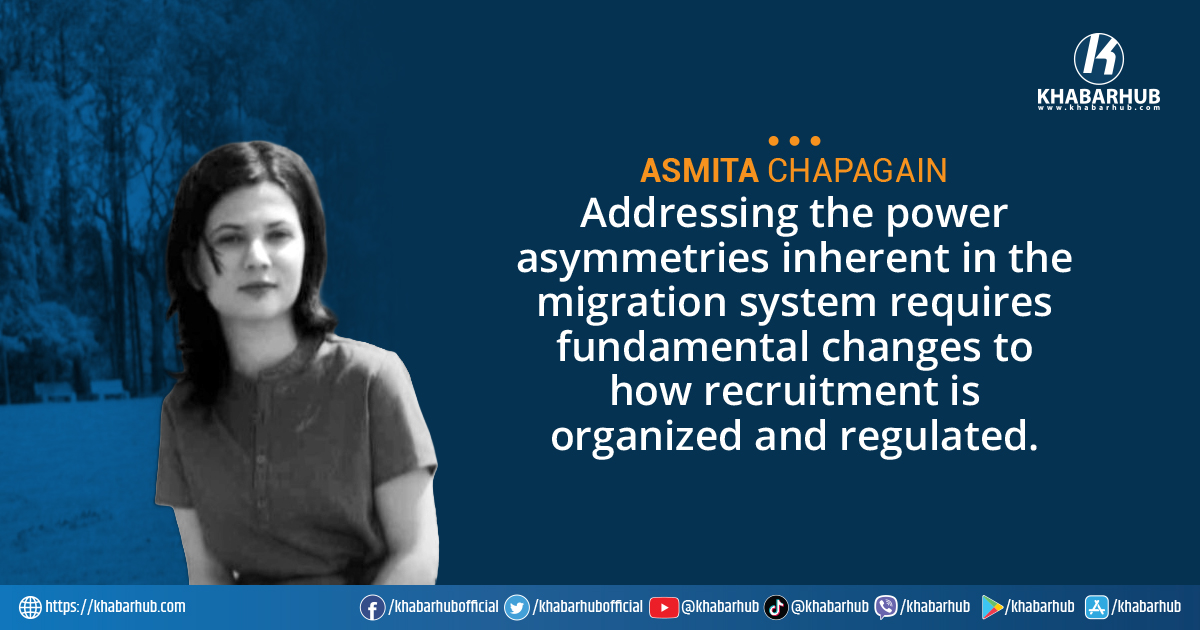
Moreover, addressing the power asymmetries inherent in the migration system requires fundamental changes to how recruitment is organized and regulated. The dominance of private agencies operating across multiple jurisdictions creates spaces where exploitation flourishes beyond state reach. Reforms must consider alternative recruitment models, including government-to-government arrangements and ethical recruitment certifications that shift costs away from workers toward employers. Only through such comprehensive, multi-actor approaches can the structural inequalities and human security deficits inherent in current migration systems be meaningfully addressed, transforming migration from a source of vulnerability into a genuine development opportunity for workers and their communities.
(Source: This article draws on a synthesis of publicly available texts, relevant academic and policy literatures)





Comment