




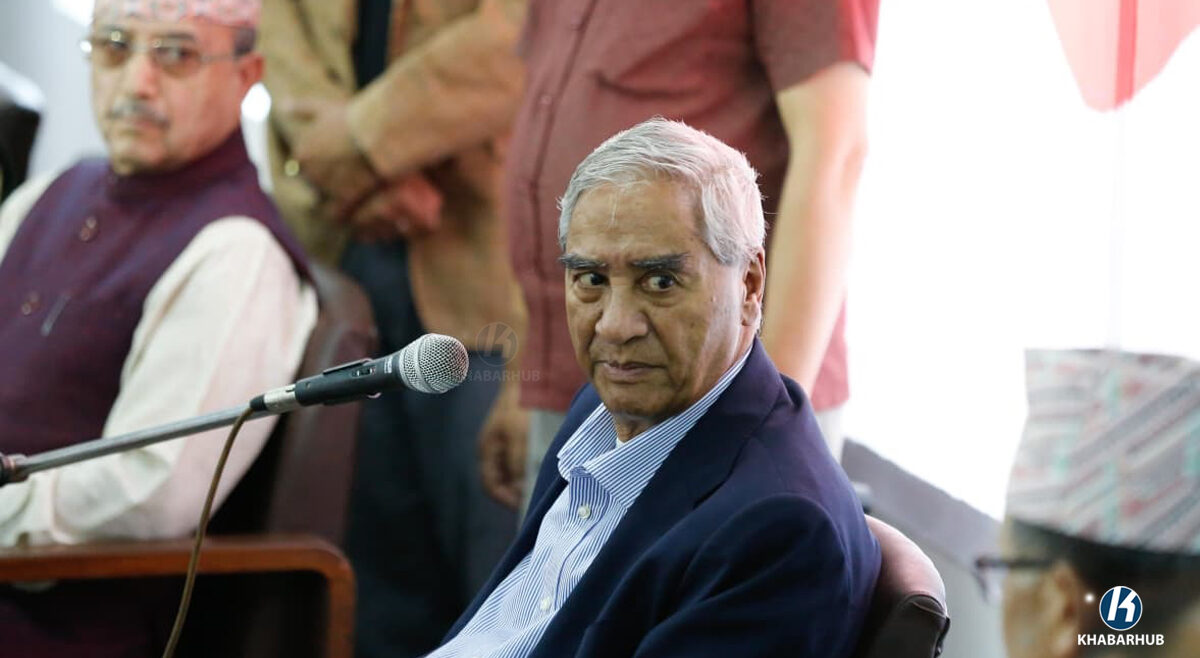
KATHMANDU: Sher Bahadur Deuba is no longer the president of the Nepali Congress. Nearly two decades after he split the party in 2002, Deuba now finds himself pushed out of both power and organizational control, raising questions about his next political move following the rise of Gagan Thapa.
The special general convention that elected Thapa as party president has effectively ended Deuba’s long dominance over the Nepali Congress. While Deuba once shaped the party’s trajectory from the center of power, the current situation is markedly different. This time, he is confronting a challenge from within his own party rather than leading it.
In 2002, as internal disputes escalated, Deuba chose to split the Nepali Congress and form a separate political force. Although that decision was defended at the time as a situational necessity, it was later widely viewed as having weakened the party, eventually prompting reunification. Today, however, the political equation has reversed. Deuba is no longer at the helm of either the government or the party organization.
With Gagan Thapa’s ascent through the special general convention, the Nepali Congress has entered a phase of generational transition. Strong backing from younger leaders, control over organizational structures, and a shift in the mood of party cadres toward Thapa have made any prospect of another split extremely difficult for Deuba. Age, health, and the changed political environment also make a repeat of the assertive 2002-style decision unlikely.
There has been speculation that Deuba may challenge the legitimacy of the special general convention through legal or constitutional routes, including appeals to the Election Commission or the courts. However, despite such efforts, the broader message within the party, that change in leadership is inevitable, has gained momentum, limiting Deuba’s leverage.
According to party insiders, Deuba’s most viable option now may be a negotiated role as a senior guardian figure within the Nepali Congress. By formally accepting defeat and repositioning himself as an experienced statesman, he could retain some influence while avoiding complete political marginalization.
Still, observers do not rule out the possibility of a silent resistance. Deuba’s traditional style, remaining publicly restrained while quietly activating supporters at provincial, district, and sister-organization levels, could re-emerge. Yet, if the Thapa-led leadership consolidates its position and delivers results, Deuba’s influence is likely to diminish over time.
Deuba now stands at a decisive historical juncture. The leader who once chose to split the party faces a stark choice: repeat history or help reshape it. The Election Commission’s decision to grant official recognition to the Thapa-led Congress has further deepened dissatisfaction among Deuba-aligned leaders, including Purna Bahadur Khadka and Prakash Sharan Mahat.
What Deuba himself says, or chooses not to say, in the aftermath of this decision is now keenly awaited within the Nepali Congress and across Nepal’s political landscape.




Comment