





KATHMANDU: Chairperson of the House of Representatives’ Infrastructure Development Committee Ashish Gajurel has said that existing traffic fines in Nepal are too low to ensure compliance and should be significantly increased, proposing penalties ranging from Rs 5,000 to Rs 50,000 for traffic rule violations.
Speaking at a committee meeting on infrastructure issues, Gajurel argued that current fines of Rs 500 and Rs 1,000 do not create sufficient deterrence and stressed the need for stricter legal provisions to enforce traffic discipline.
At the start of the meeting, Senior Superintendent of Police (SSP) at the Kathmandu Valley Traffic Police Office Suresh Prasad Kafle presented a briefing on public transport management and urgent reforms needed to improve traffic operations.
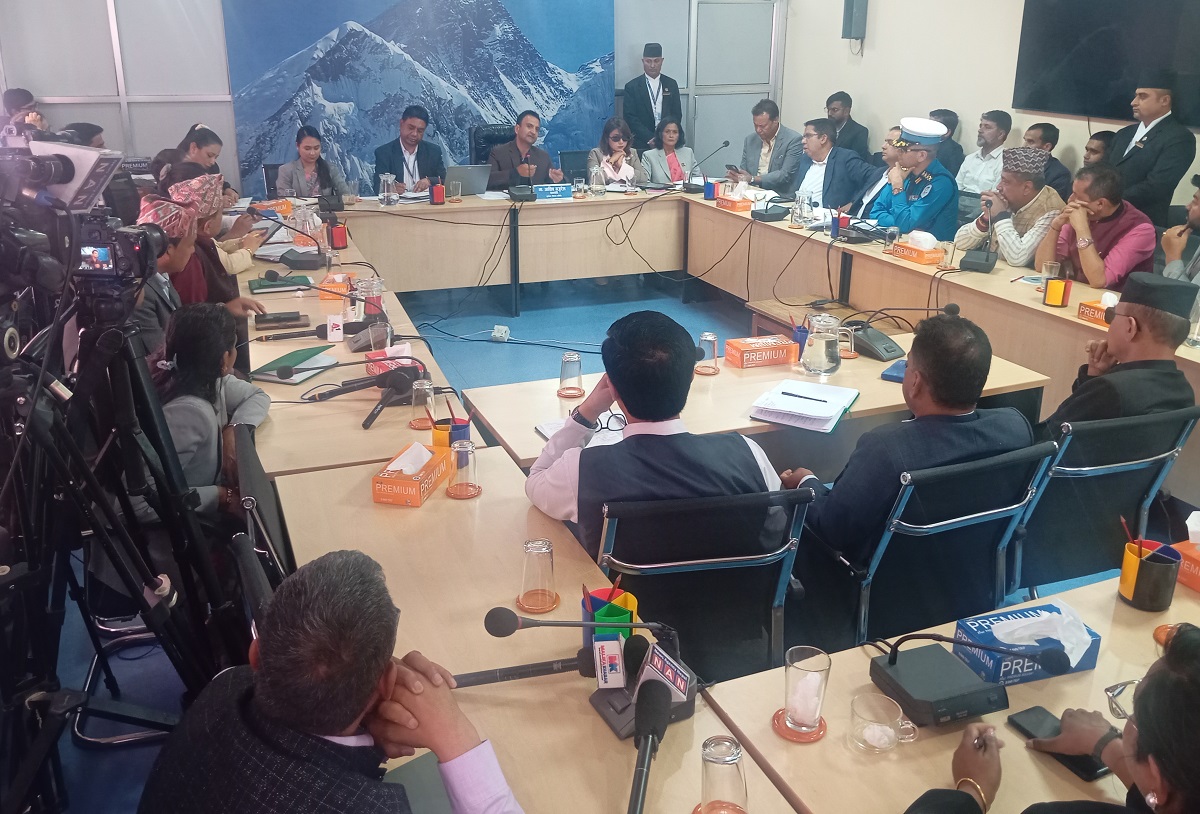
According to SSP Kafle, Nepal currently has around 6.5 million registered vehicles, while limited manpower has made traffic management increasingly challenging. He said approximately 2,500 to 2,600 traffic police personnel are deployed nationwide, while nearly 2 million vehicles operate daily in the Kathmandu Valley alone.
He emphasized the need to modernize traffic management through technology, including synchronizing traffic light systems, introducing AI-based integrated traffic systems, and increasing infrastructure investment. He estimated that implementing such systems could cost around Rs 15 to 20 billion.
Kafle also recommended mandatory dashboard cameras in both public and private vehicles to collect accurate accident evidence, establishment of integrated digital border check posts, installation of weighbridges for cargo monitoring, and introduction of a scrappage policy to remove old and expired vehicles.
Other suggestions included incorporating traffic education into school curricula, expanding the use of drones and robotic surveillance for monitoring, and tightening enforcement on overloaded Indian vehicles entering Nepal through border points.
The committee has indicated that it is moving towards a conclusion that traffic management reforms must be pursued simultaneously across legal, technical, and institutional fronts.






Comment