




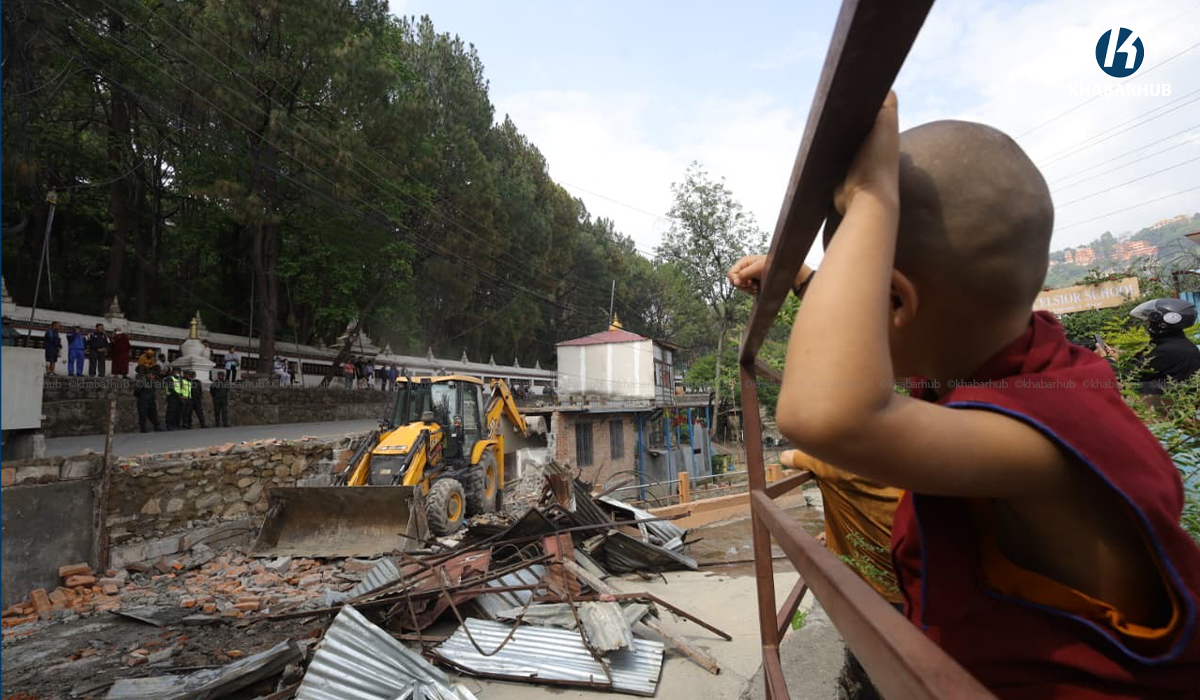
KATHMANDU: The government is facing mounting criticism after failing to rehabilitate thousands of squatters displaced from settlements in Kathmandu despite earlier assurances that proper arrangements would be made within 10 to 15 days.
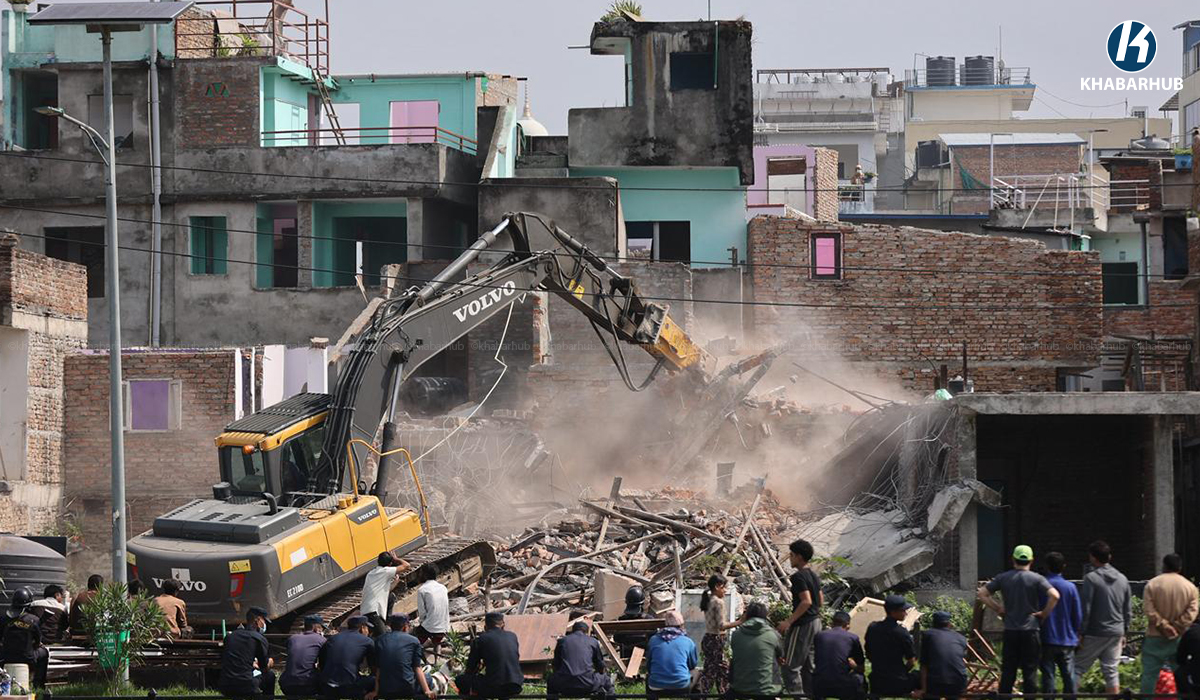
The government had begun demolishing shanties in squatter settlements at Thapathali, Gairigaun and other areas of Kathmandu on April 24. Most residents had vacated their shelters voluntarily and cooperated with authorities without resistance after the administration pledged temporary rehabilitation measures.
A notice issued by the administration had assured that verified landless squatters would be provided proper settlement arrangements within 10 to 15 days.
The sixth point of the notice stated: “Preparations are underway to make proper living arrangements for genuine landless people within the next 10 to 15 days. We request your cooperation in this process.”
However, weeks after the demolitions, the government has failed to present any concrete rehabilitation plan, drawing criticism from various quarters for displacing vulnerable communities without adequate preparation.
Amid growing pressure, the government is now preparing to provide displaced squatters with Rs 15,000 per month as house rent support.
Chair of the House of Representatives State Affairs and Good Governance Committee Hari Dhakal said the government was preparing to provide monthly rent assistance to landless people until land ownership certificates could be distributed to genuine squatters.
“We will provide Rs 15,000 as temporary house rent support until genuine squatters are identified and land ownership certificates are distributed,” Dhakal said.
The proposed support targets displaced residents from settlements in Thapathali, Gairigaun, Manohara and other parts of Kathmandu.
The government has also said screening work is underway to identify landless people and unmanaged settlers currently staying in holding shelters across Kathmandu.
According to the Kathmandu District Administration Office, authorities have so far cleared 19 squatter settlements, displacing 15,316 people from 2,687 houses and shanties.
Among them are 6,858 men, 5,325 women, 1,437 boys and 1,696 girls.
Complaints grow inside holding shelters
Displaced residents staying in holding shelters have complained of poor living conditions and alleged that they are being treated “like prisoners.”
Several squatters said police restrictions on movement inside the shelters had made them feel as though they were living in jail.
Residents have also raised concerns about the lack of security arrangements for teenage girls, while pregnant women, children and elderly people are reportedly struggling to access proper food and accommodation.
Basic services remain inadequate in many shelters, according to displaced families.
For many, the main challenge is not only the lack of long-term rehabilitation but also the inability to find rental rooms in Kathmandu despite the government’s promise of rent assistance.
Kamala Gurung, displaced from Thapathali, said her six-member family had searched for rooms as far as Ekantakuna after receiving eviction orders but failed to secure accommodation.
“People do not want to rent rooms to squatters,” she said. “Even when rooms are vacant, landlords refuse after learning we are from squatter settlements.”
Another displaced resident, Ishwari Rai, said her family was forced to stay in a government-run holding shelter after failing to find a room.
Analysts say the government’s announcement of monthly rent support nearly three weeks after the demolitions shows authorities acted without a clear rehabilitation strategy.
Protests spread as criticism intensifies

The government’s handling of the eviction drive has triggered protests in several districts, with demonstrators accusing authorities of acting in an authoritarian manner without considering basic human rights.
Former chair of the now-dissolved Land Commission Hariprasad Rijal accused the government of serious negligence in managing landless squatters and unmanaged settlers.
“Displacing people without first verifying facts about squatters and unmanaged settlements was wrong,” Rijal told Khabarhub.
“No one is above the law, but the government should first manage squatters before clearing settlements,” he said. “Even unmanaged settlers should have been given at least three months’ notice. Instead, the government displaced people within days.”
Rijal said managing more than 15,000 displaced people was not a simple task and warned the government would not succeed by pushing poor citizens into hardship.
According to Land Commission data, Nepal has 99,000 landless Dalits, 182,000 landless squatters and around 934,000 unmanaged settlers.
The commission had also been preparing to distribute around 300,000 land ownership certificates before it was dissolved.
Rijal questioned how long the government could sustain a rent support scheme without a broader settlement strategy.
“Providing rent money is merely an attempt to silence squatters after failing to ensure proper rehabilitation,” he said. “Promising homes but announcing rent support instead is condemnable.”






Comment