




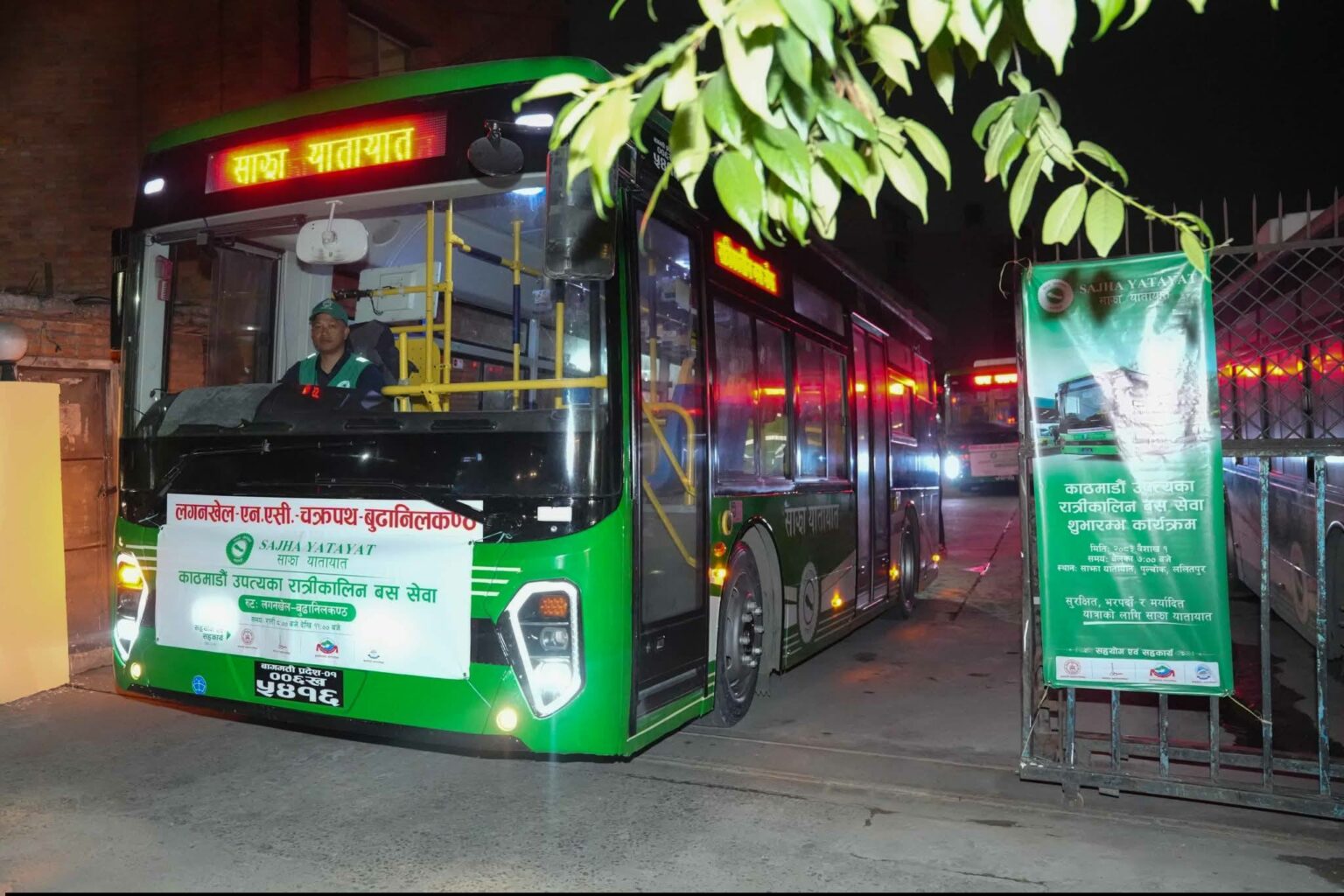
KATHMANDU: A night bus service has resumed in the Kathmandu Valley from Wednesday through a joint initiative of four local governments.
The service has been launched through cooperation between Kathmandu Metropolitan City, Lalitpur Metropolitan City, Budhanilkantha Municipality and Chandragiri Municipality.
The service operates from 8 pm to 11 pm, with four electric buses run by Sajha Yatayat on two different routes. The buses are equipped with modern facilities including CCTV cameras, WiFi and security personnel.
The routes have been designed to cover major commercial centres and hospitals where public movement is usually high. The service connects areas across the east–west and north–south corridors of the Kathmandu Valley, covering the geography of the four municipalities.
Earlier attempts at night bus services
The newly launched night bus service is not the first attempt to operate such a service in the valley. During the tenure of former Kathmandu mayor Bidya Sundar Shakya, a similar night bus service had been introduced by Kathmandu Metropolitan City. However, it was discontinued shortly afterward due to a lack of interest from transport operators.
Similarly, on July 11, 2019, Sajha Yatayat had independently started night bus services on three routes centered around New Road Gate. The service was shut down within a short time due to financial difficulties and low passenger numbers.
Other short-lived transport initiatives
The Ministry of Culture, Tourism and Civil Aviation Nepal also introduced a “Night Heritage Walk” plan aimed at promoting art, culture and heritage sites in Kathmandu, Bhaktapur, Patan and Kirtipur. The program was inaugurated on August 31, 2022, by then minister Jeevan Ram Shrestha. However, the initiative failed to continue due to poor planning, lack of coordination and financial constraints.
Rapid bus service that failed
The government had also launched a rapid bus service on Constitution Day, October 3, 2023, under the leadership of then Minister for Physical Infrastructure and Transport Prakash Jwala.
The project, planned for the 18.5-kilometre stretch from Ratnapark to Suryabinayak, aimed to operate 25 buses during peak traffic hours. Despite spending around Rs 25 million on road markings, traffic signals and minor infrastructure upgrades, the project failed within a month due to inadequate preparation and infrastructure.
“Hop-on Hop-off” heritage bus service
The government also introduced the “Hop-on Hop-off” heritage tour bus service on May 23, 2023, to connect tourists with heritage sites across the valley.
The program was launched by the tourism ministry in collaboration with the Nepal Tourism Board and Sajha Yatayat. Two electric buses were used for the service, allowing passengers to travel between heritage sites throughout the day with a single ticket costing Rs 500.
However, the service was discontinued within two months due to a lack of sustainable funding and low passenger turnout.
Shuttle bus services
Another initiative was the free airport shuttle bus service introduced by former tourism minister Prem Ale around the Tribhuvan International Airport area. The service, managed by the Nepal Tourism Board, is still in operation according to airport sources.
Meanwhile, Pokhara Metropolitan City has also launched a shuttle bus service from the Pokhara International Airport to Amarsingh Chowk from the start of the Nepali New Year. The service will remain free until the end of the fiscal year and then continue with a minimal fare.
Blue bus initiative
After being elected, Rabi Lamichhane launched a free “Blue Bus” service for women in Chitwan on August 2, 2023. The service was later suspended citing technical and legal complications, although the government had earlier announced plans to expand it to all seven provinces.
Plan to sustain the new night bus service
Chief Executive Officer of Sajha Yatayat, Bhupendra Aryal, said the current night bus service has been revived with the cooperation of local governments, which increases the chances of sustainability.
Aryal said the service has been launched as a pilot project using Sajha Yatayat’s internal funds. He added that operating night services costs an additional Rs 6,000 to Rs 7,000 for staff per shift.
According to him, the municipalities have expressed readiness to allocate budget from the next fiscal year and to support the service by covering operational losses and developing necessary infrastructure such as charging stations and parking facilities.






Comment