




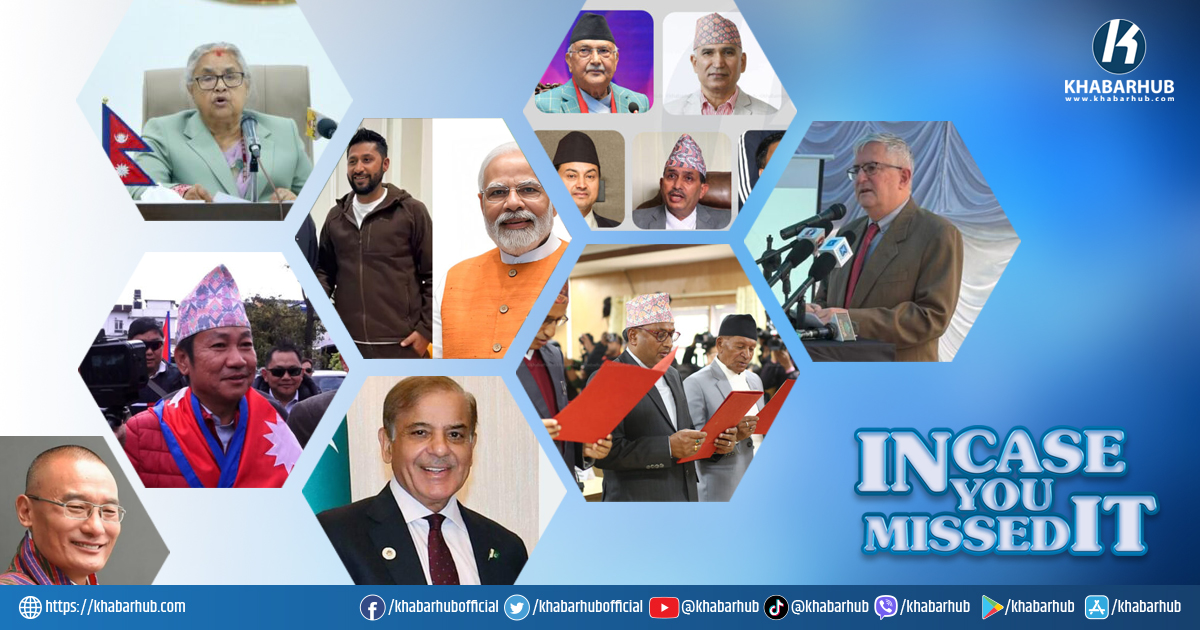
KATHMANDU: The successful completion of Nepal’s recent parliamentary elections (March 5, 2026) marks one of the most consequential moments in the country’s contemporary democratic journey.
When Prime Minister Sushila Karki described the peaceful conduct of the elections as a “victory for the Nepali people, the constitution, and the nation,” she was not merely celebrating a procedural democratic exercise.
Rather, her statement reflects a deeper political reality: Nepal’s evolving democratic system has demonstrated resilience despite intense political fragmentation, leadership crises, and widespread public dissatisfaction with traditional political parties.
The election has simultaneously reaffirmed the legitimacy of Nepal’s constitutional framework while producing a dramatic realignment of the country’s political landscape. The landslide victory of the Rastriya Swatantra Party (RSP), the historic defeat of leaders from the CPN-UML, and the emergence of new political forces collectively signal a transformative moment in Nepali politics.
This commentary examines the elections from five key perspectives: democratic consolidation, the collapse of established political elites, the rise of new political actors, regional and international implications, and the future challenges facing Nepal’s democratic institutions.
Democratic Legitimacy and Constitutional Consolidation
Nepal’s modern democratic journey has been marked by instability, constitutional transitions, and frequent political crises. Since the promulgation of the Constitution of Nepal 2015, the country has experienced repeated government changes, coalition instability, and disputes over constitutional interpretation. Against this backdrop, the peaceful completion of the latest elections carries significant symbolic and institutional importance.
Prime Minister Karki’s emphasis on the ballot as a “symbol of a citizen’s self-respect” highlights the philosophical foundation of democratic governance. In democracies, the legitimacy of political authority derives not merely from legal frameworks but from the voluntary consent of citizens expressed through elections.
The election, therefore, represents three interconnected achievements. First, it demonstrates institutional continuity. Conducting elections on schedule under constitutional procedures reinforces the credibility of the political system.
Second, it strengthens democratic participation. Voters exercised their right to choose representatives, thereby reaffirming the principle that sovereignty ultimately rests with the people.
Third, it reinforces constitutional legitimacy. In a country where the constitution itself has often been politically contested, the successful election serves as an implicit endorsement of the constitutional order.
However, Karki’s warning that a mandate is “not permanent” reflects a critical insight. Democratic legitimacy must be continuously renewed through performance, accountability, and responsiveness. Elections may provide legal authority for five years, but political legitimacy depends on sustained public trust.
Collapse of Traditional Political Dominance
Perhaps the most striking development of the election is the unprecedented defeat suffered by the Communist Party of Nepal (Unified Marxist–Leninist) and its senior leadership.
For decades, UML has been one of the most dominant political forces in Nepal. Its leaders—including KP Sharma Oli, Bishnu Prasad Paudel, and Shankar Pokhrel—have played central roles in shaping national politics. Their simultaneous defeat in direct elections represents an extraordinary reversal. Several factors explain this dramatic outcome.
Public frustration with established parties: Nepali voters have increasingly expressed frustration with traditional parties such as the UML and the Nepali Congress. Critics accuse these parties of perpetuating corruption, factionalism, and patronage politics while failing to deliver effective governance.
Leadership fatigue: Many of Nepal’s major political figures have dominated the political arena for decades. For younger voters especially, the continued dominance of aging political elites has created a perception of stagnation.
Governance failures: Economic challenges, unemployment, corruption scandals, and slow development have weakened public confidence in established parties. These governance failures have created fertile ground for political alternatives.
Fragmentation within parties: Internal disputes and factional rivalries have also weakened traditional parties. Leadership conflicts often undermine organizational cohesion and voter confidence.
The defeat of senior leaders in their traditional strongholds therefore reflects not merely electoral competition but a deeper structural shift in Nepali politics.
Rise of a New Political Force
The meteoric rise of the Rastriya Swatantra Party represents the most significant political development of the election. Led by Rabi Lamichhane and supported by prominent figures such as Balendra Shah, the party has successfully captured widespread public support.
Several factors explain the party’s success.
Anti-establishment appeal: RSP has positioned itself as a reformist alternative to traditional political elites. By emphasizing transparency, accountability, and anti-corruption measures, it has attracted voters frustrated with established parties.
Youth engagement: Nepal’s population is relatively young, and younger voters have shown increasing interest in new political movements that promise change.
Urban political mobilization: Figures such as Balen Shah have gained popularity among urban voters by promoting technocratic governance, innovation, and civic engagement.
Media influence: Lamichhane’s background in journalism has helped him build a strong public profile and communicate effectively with voters.
If RSP indeed forms the next government under Shah’s leadership, it would represent one of the most dramatic political transformations in Nepal’s democratic history.
However, the transition from opposition movement to governing party presents enormous challenges. Campaign rhetoric must now translate into practical governance.
Emergence of Alternative Political Actors
Beyond the success of RSP, the election has also produced other notable developments.
The Shram Sanskriti Party, led by Harka Sampang, has achieved national party status in its first election. This outcome illustrates the growing openness of Nepal’s political system to new actors.
Conversely, the Janamat Party led by CK Raut has suffered a dramatic collapse in electoral support. Raut’s defeat in Madhesh raises questions about the sustainability of regional political movements that fail to adapt to shifting voter expectations.
These developments highlight a broader trend: Nepali voters are increasingly willing to experiment with alternative political forces when traditional parties fail to meet expectations.
International Reactions and Regional Implications
The election has also attracted significant international attention.
Congratulatory messages from leaders such as Indian Prime Mnister Narendra Modi, Pakistani Prime Minister Shehbaz Sharif, and Bhutan Prime Minister Tshering Tobgay reflect the strategic importance of Nepal within South Asia.
Nepal occupies a unique geopolitical position between two major powers: India and China. Changes in Nepal’s political leadership often carry broader regional implications.
India’s swift congratulatory outreach suggests an interest in maintaining close diplomatic relations with the incoming leadership. Similarly, positive responses from regional actors indicate expectations of continued cooperation and stability.
Nepal’s future government will therefore need to carefully balance its foreign policy relationships while safeguarding national sovereignty.
Challenges for the Incoming Government
Despite the optimism surrounding the election, Nepal’s next government faces substantial challenges.
Governance expectations: The overwhelming mandate for political change creates high public expectations. Failure to deliver tangible improvements could quickly erode the new leadership’s credibility.
Economic recovery: Nepal’s economy faces multiple pressures, including unemployment, migration, and infrastructure deficits.
Institutional reform: Strengthening public institutions—particularly those responsible for governance, accountability, and service delivery—will be essential for long-term democratic stability.
Political stability: Even a strong electoral mandate does not guarantee stable governance. Nepal’s coalition politics and parliamentary dynamics can produce unexpected political crises.
Social inclusion: Ensuring meaningful participation for women, marginalized communities, and regional groups remains a central democratic challenge.
Prime Minister Karki’s remarks on women’s rights highlight the importance of continuing progress in gender equality and social inclusion.
Conclusion: A Turning Point in Nepal’s Democratic Evolution
The recent election represents both a celebration of democratic resilience and a signal of profound political transformation. By successfully conducting a peaceful electoral process, Nepal has reaffirmed its commitment to constitutional governance.
At the same time, the dramatic defeat of established political leaders and the rise of new political forces reveal a deeper shift in public expectations.
Nepali voters have delivered a clear message: political legitimacy must be earned through performance, integrity, and responsiveness to public needs.
Whether the new leadership can translate this historic mandate into effective governance will determine whether this election becomes merely a moment of political change—or a genuine turning point in Nepal’s democratic evolution.



Comment