





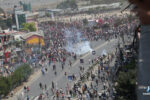
KATHMANDU: Last week in Nepal highlighted the interwoven nature of politics, governance, judicial accountability, economic management, and social dynamics, underscoring the complexities the country faces as it approaches a critical electoral period. One of the most significant developments was the government’s decision to extend the tenure of the commission investigating the Gen-Z movement by 25 days.
The Commission, tasked with conducting an impartial inquiry into the events of September 8 and 9, reflects ongoing concerns over political dissent, youth activism, and the government’s need to ensure public accountability. Extending the commission’s tenure not only underscores the complexity of the investigation but also signals the government’s recognition that thorough, evidence-based assessments are necessary to maintain public trust.
Home Minister and government spokesperson Om Prakash Aryal’s statement that the commission’s extension is aimed at a “complete and impartial investigation” highlights the state’s cautious approach to politically sensitive inquiries and the balancing act required between transparency and stability.
This episode also reveals the heightened political tensions among younger demographics, emphasizing the growing influence of Generation Z in shaping political discourse in Nepal. The government’s response, while procedural, reflects an acknowledgment that social movements among youth cannot be overlooked and must be addressed through institutional mechanisms rather than reactive measures.
In parallel with addressing civic unrest, the government and the presidency have placed strong emphasis on security and election preparedness ahead of the March 5 House of Representatives elections. President Ram Chandra Paudel, during a high-level meeting with the Home Minister and heads of all four security agencies, instructed authorities to ensure a clean, fair, and fear-free electoral environment. By stressing the need for “robust security preparedness,” President Paudel reinforced the constitutional importance of elections as a means to reflect the people’s will.
The presence of senior officials, including the Chief of Army Staff Ashok Raj Sigdel, Inspector General of Nepal Police Dan Bahadur Karki, Inspector General of Armed Police Force Raju Aryal, and Chief of the National Investigation Department Tekendra Karki, underscores the holistic approach being taken to secure both urban and rural constituencies.
While sporting setbacks are not uncommon, the scale of the defeat may prompt deeper reflection on training, talent identification, and resource allocation within national cricket development programs.
This move reflects a recognition that political stability in Nepal hinges on the credibility of its elections, and any lapse in security could exacerbate tensions, particularly in a politically fragmented environment. The directives to mobilize resources, logistics, and personnel also suggest proactive planning, with the state aiming to preempt disruptions and ensure that democratic processes proceed unhindered.
Judicial developments also dominated last week’s news, reflecting both the legal system’s oversight in high-profile criminal cases and its role in institutional accountability. The High Court in Morang delivered a pivotal verdict in the 33-kg gold smuggling-linked murder case, sentencing Chudamani Upreti, known as Gore, to an additional ten years in prison for abduction and unlawful confinement, supplementing his previous life sentence for culpable homicide.
This verdict partially overturned the earlier District Court ruling and adjusted sentences for co-accused, demonstrating the judiciary’s capacity to review and calibrate prior decisions in complex criminal matters. The case, which involved the smuggling of 38 quintals of gold into Nepal and the subsequent electrocution murder of Sanam Shakya while searching for the missing consignment, reflects the entanglement of organized crime, corruption, and institutional oversight failures.
Notably, several former police officials and businessmen were acquitted due to insufficient evidence, reaffirming the principle that prosecution must meet the burden of proof while also highlighting gaps in investigative practices during high-stakes criminal cases. The case remains a potent reminder of systemic vulnerabilities, particularly in matters involving high-value smuggling and cross-border criminal networks.
Furthermore, it underscores the judiciary’s role as a corrective institution capable of scrutinizing both state actors and private individuals, contributing to the broader discourse on accountability in Nepal.
Political developments intensified as parties geared up for the March 5 elections, with the Nepali Communist Party (NCP) and Janata Samajwadi Party Nepal (JSP-N) unveiling comprehensive manifestos outlining ambitious agendas for governance, economic reform, social inclusion, and development. The NCP, under Pushpa Kamal Dahal ‘Prachanda’, emphasized political stability, corruption control, and socio-economic transformation.
Its manifesto proposes revising the electoral system to reduce susceptibility to corruption, restructuring governance to ensure that parliamentarians focus exclusively on legislation, and implementing federalism effectively. Economic targets include achieving double-digit GDP growth within five years, generating 500,000 jobs annually, boosting domestic industrial capacity, and attaining self-reliance in major food grains.
Social and infrastructure initiatives are equally ambitious, covering health, education, sports, energy, tourism, and border diplomacy. These commitments reflect a strategic attempt to marry political reform with socio-economic development, projecting an image of a party capable of long-term nation-building while appealing to voters concerned about economic security and governance efficacy.
Similarly, JSP-N, led by Upendra Yadav, released a 28-page manifesto highlighting inclusive development, strong federalism, and citizen welfare. The manifesto promises free healthcare and education, anti-corruption measures via a “Jan Lokpal,” scientific agricultural modernization, and infrastructure development, including completion of highways, economic corridors, and urban transport projects.
The party’s emphasis on social inclusion, covering Dalits, women, indigenous groups, Muslims, Madhesis, and persons with disabilities, illustrates an understanding of Nepal’s diverse demographics and the need to align federal governance with the aspirations of marginalized groups.
By presenting clear quantitative targets, such as creating five million jobs within five years and ensuring free health and education, JSP-N aims to differentiate itself through tangible policy commitments rather than generic political slogans.
Both parties’ manifestos collectively indicate that economic development, social justice, and governance reform have emerged as central electoral themes, reflecting voters’ growing expectations for measurable outcomes from political leadership.
Economic developments were equally significant, as the government revised its fiscal projections amid ongoing structural challenges. The mid-year budget review reduced the FY allocation by 14 percent, from Rs 1.964 trillion to Rs 1.688 trillion, citing the need to prioritize election-related expenditures and institutional stability following the Gen-Z movement.
Capital expenditure was notably curtailed, highlighting persistent difficulties in executing infrastructure projects, while allocations for current expenditure and financial management remained robust. Finance Minister Rameshore Khanal emphasized the government’s dual focus on institutional stability and inflation control, signaling a pragmatic approach to fiscal management in a politically sensitive period. Concurrently, the economic growth projection was revised downward to 3.5 percent from the previously estimated six percent, reflecting declining paddy production, reduced agricultural productivity, sluggish construction activity, and a slowdown in real estate transactions.
Sectoral analysis revealed modest growth in agriculture (1.36 percent GVA), manufacturing (1.52 percent), and services (3.03 percent), suggesting that while economic activity continues, it is constrained by structural inefficiencies and limited capital investment. The average inflation rate of 1.7 percent during the first half of the fiscal year provides some relief to households, yet it underscores a broader challenge in stimulating robust economic expansion amidst fiscal tightening.
Public safety concerns were tragically highlighted with the Tamakoshi bus accident in Ramechhap, which claimed 12 lives and injured eight others. The accident, involving a bus en route from Kathmandu to Okhaldhunga plunging into the Tamakoshi River, reflects persistent challenges in road safety, particularly in hilly regions where infrastructure, vehicle regulation, and emergency response capacities remain constrained.
Combined with natural hazards and terrain-related risks, such incidents highlight the urgent need for comprehensive transportation safety strategies, including stricter enforcement of vehicle standards, driver training, and accident response mechanisms.
Meanwhile, diplomatic engagements and socio-cultural events, including the return of a former monarch, remind observers of Nepal’s historical complexities and the continuing interplay between symbolism and governance. Collectively, these events underscore the multi-dimensional challenges Nepal faces and the efforts underway to balance development, democracy, and social cohesion in the lead-up to critical elections.
Nepal’s performance in the ICC T20 World Cup, suffering a 10-wicket defeat to Italy, exposed weaknesses in both batting and bowling capabilities. The match, dominated by the Mosca brothers of Italy, illustrated the need for strengthening technical skills, match preparedness, and strategic planning in Nepal’s cricket infrastructure.
While sporting setbacks are not uncommon, the scale of the defeat may prompt deeper reflection on training, talent identification, and resource allocation within national cricket development programs.
On the diplomatic and symbolic fronts, Nepal witnessed notable developments. The arrival of China’s newly appointed ambassador, Zhang Maoming, at Tribhuvan International Airport marks continuity in bilateral engagement, with Maoming expected to strengthen diplomatic, economic, and cultural ties between the two neighboring nations.
Simultaneously, the return of former King Gyanendra from Jhapa and his reception by supporters, despite prohibitory orders, underscores the enduring cultural and political symbolism associated with the monarchy in Nepal. Such events reveal how historical legacies continue to shape public sentiment and political narratives, even as formal governance structures operate under democratic institutions.
Finally, judicial oversight manifested in the Supreme Court’s order preventing the government from enforcing English-embossed vehicle number plates, reiterating the legal system’s role in upholding public interest, cultural norms, and accessibility. This ruling, grounded in previous directives to use Nepali script for vehicle registration, highlights the judiciary’s capacity to check executive decisions and preserve linguistic and cultural identity while balancing modernization and standardization efforts.
In summary, last week in Nepal was a microcosm of the country’s current socio-political, economic, and institutional landscape. The government’s efforts to address civic unrest, ensure electoral security, and manage fiscal challenges reflect both resilience and the pressures inherent in a transitioning democracy.
Judicial interventions in high-profile criminal cases and public policy decisions underscore the importance of accountability and institutional checks. Political parties’ manifestos reveal a convergence around economic growth, social justice, and governance reform as key voter concerns, while infrastructure, road safety, and sports performance highlight areas needing long-term strategic planning.
Meanwhile, diplomatic engagements and socio-cultural events, including the return of a former monarch, remind observers of Nepal’s historical complexities and the continuing interplay between symbolism and governance. Collectively, these events underscore the multi-dimensional challenges Nepal faces and the efforts underway to balance development, democracy, and social cohesion in the lead-up to critical elections.




Comment