




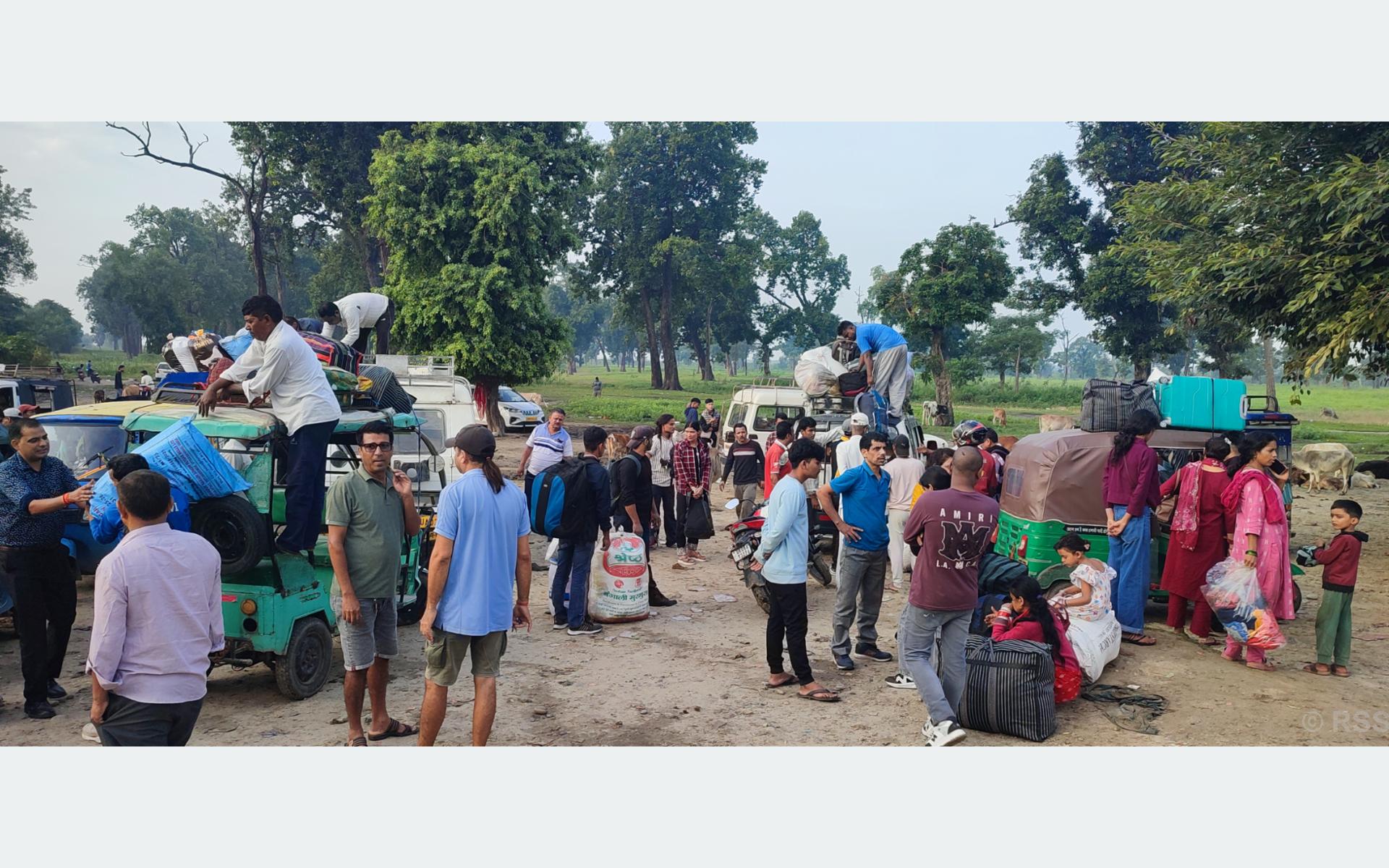
KANCHANPUR: Nepalis returning from India to celebrate Dashain and Tihar are undergoing health screenings at the Gaddachouki border checkpoint in Kanchanpur.
With cross-border passenger traffic increasing during the festive season, the government has established health screening stations to detect six diseases: malaria, tuberculosis, HIV, COVID-19, dengue and scrub typhus.
Siddharaj Bhatt, a public health officer at the District Health Office in Kanchanpur, said the screenings aim to identify potential health problems among returning Nepalis and prevent the spread of infectious diseases across the border.
“Individuals found to have infections are referred to health facilities and provided with free treatment,” Bhatt said.
Under the Health Office’s screening procedures, passengers arriving from Indian regions with a high prevalence of communicable diseases, including malaria and dengue, are tested based on their exposure risks and other relevant health factors.
Since mid-September, health workers have conducted 4,700 screenings at the Gaddachouki checkpoint. Of those tested, only two people were found to have tuberculosis, while no other infections were detected, according to the Health Office.
Police records show that approximately 2,000 people cross the Gaddachouki border from Nepal into India daily. However, the number of passengers returning to Nepal has increased as Nepali migrant workers from various Indian cities begin travelling home for the festivals.
To ensure the safety and convenience of travellers, the District Police Office in Kanchanpur has established citizen assistance desks at several locations across the district, including the border checkpoint.
Deputy Superintendent of Police Tek Bahadur Rawat said surveillance at the checkpoint had been intensified in response to the growing number of Nepalis returning from India. The measures aim to ensure passenger safety and provide assistance to travellers during the festive rush.




Comment