




Amid unprecedented transformations in global geopolitics, rapid technological advances and shifting balances of international power, Nepal needs to reassess its foreign policy through a fresh and pragmatic lens.
As international relations evolve, every country must adapt its foreign policy to changing realities. Unfortunately, Nepal’s constitutional framework has made its foreign policy so rigid that it has constrained both diplomatic flexibility and the pursuit of economic prosperity.
The guiding principle of any sovereign nation’s foreign policy should be ‘Nation First’. This has been a consistent position for the past two decades. However, the domestic political considerations that shaped the Constitution at the time of its promulgation no longer necessarily apply to the governments of today.
To place national interests at the centre of foreign policy, the ruling party and the main opposition, the Nepali Congress, should jointly initiate a review of the relevant constitutional provisions. If these provisions are obstructing economic prosperity and preventing a more dynamic foreign policy, their reconsideration should not be delayed.
Today, security and diplomacy extend far beyond territorial boundaries. A recent speech by American politician Marco Rubio underscored the growing importance of space in both offensive and defensive strategies. As weapons systems, communications networks and strategic infrastructure increasingly extend into space, traditional geopolitics is evolving into what is known as ‘astropolitics’ and ‘astrostrategy’.
The practice of exploiting sensitive and complex diplomatic issues for domestic electoral gains through media-driven populism should be abandoned. Such matters should instead be addressed through diplomatic channels and resolved through ‘quiet diplomacy’.
Meanwhile, cloud computing and the digital revolution are profoundly reshaping human society and international relations. In this rapidly changing environment, it would be a mistake for Nepal to continue viewing global politics through the conventional lens of the past five decades.
Nepal’s geopolitical reality is shaped by both China and India. However, when geographical constraints, economic accessibility and practical considerations are taken into account, Nepal’s immediate national interests are more closely connected to India. Our supply chains, geographical access, cultural ties, transit routes and access to seaports are deeply intertwined with our southern neighbour. Most importantly, India offers access to one of the world’s largest and most densely populated markets.
Yet, over the past 75 years, a misguided political narrative has taken root in Nepal: that demonstrating a confrontational attitude towards India is synonymous with nationalism. This has been one of the major strategic miscalculations in Nepal’s geopolitical history.
While the world’s leading economies compete aggressively to secure markets, Nepal has often maintained an unnecessarily distant and distrustful approach towards the vast market on its doorstep. It is time to abandon this self-defeating narrative and pursue the economic opportunities that geography offers.
Nepal’s tourism potential extends far beyond its natural beauty. One of its greatest strengths lies in religious and spiritual tourism. India has a vast Hindu population, while Nepal is home to sacred sites of profound significance to Hindu devotees. Despite this enormous opportunity, successive prime ministers have failed to effectively promote Nepal’s religious and cultural heritage to the Indian market. The current government should make religious tourism a central pillar of bilateral economic diplomacy, developing targeted strategies to attract Indian pilgrims and visitors.
Globally, energy geopolitics is undergoing a transformation as countries shift away from fossil fuels and compete for critical minerals and other strategic resources. For Nepal, however, water remains one of its most valuable natural assets. For decades, the construction of reservoir-based hydropower projects and high dams has faced criticism and political resistance.
Yet the devastating floods and landslides Nepal has experienced in recent years have underscored the urgent need for better water storage, flood control and integrated river-basin management. These disasters have strengthened the case for examining how appropriately designed reservoirs and high dams could contribute to disaster mitigation while generating electricity and supporting other economic activities.
There have also been efforts to explore inland waterways along the Ganges River system, including surveys extending to Kalughat, with the aim of improving Nepal’s access to maritime trade routes. However, maintaining sufficient navigable water depth during the dry season remains a major challenge along parts of the Bhagirathi-Hooghly river system.
Water allocation under the Farakka arrangements between India and Bangladesh adds another layer of complexity to the management of downstream water flows. India has constructed major reservoir projects, including the Tehri Dam on the Bhagirathi River, but Nepal’s potential to store monsoon water could also be significant in any broader regional strategy for water management and navigation.
In many parts of the world, the construction of dams by upstream countries has triggered disputes with downstream neighbours, sometimes escalating into serious geopolitical tensions. Nepal’s situation presents a potentially different opportunity: cooperation with downstream countries, particularly India, could create mutual benefits through reservoir development, flood regulation, hydropower generation and improved water management. It would be unwise for Nepal to dismiss this opportunity without serious consideration.
The present political climate could provide an opening for a more pragmatic, water-centred engagement with India. Such an approach should prioritise water storage and transfer where feasible, inland navigation, sediment management, flood forecasting and disaster mitigation. Any proposed projects, however, must be supported by sound technical assessments, environmental safeguards, equitable benefit-sharing arrangements and clear protections for affected communities.
A longstanding weakness in Nepal-India relations has been the tendency to allow contentious issues to dominate high-level diplomatic engagements. As a result, important visits have too often been overshadowed by disagreements before substantive economic cooperation can gain momentum. Nepal needs to move beyond this pattern and approach bilateral diplomacy with a clearer focus on practical outcomes.
Rather than treating engagement with India as a contest of national pride, Nepal should pursue a confident, interest-driven foreign policy that maximises its economic and strategic advantages. Constructive engagement does not mean compromising sovereignty; it means using diplomacy to secure tangible benefits for the country.
Water resources could provide the foundation for this new approach. By combining pragmatic diplomacy with sound planning and regional cooperation, Nepal can turn its geographical position and natural resources into engines of prosperity. The challenge is not simply to redefine nationalism, but to translate national interests into concrete economic gains.
Moving beyond emotional politics, questions of national prestige and electoral calculations, Nepal must prioritise economic diplomacy, peaceful dialogue and mutually beneficial water cooperation.
In the current context, the SAARC and Eminent Persons Group (EPG) reports have become contentious issues for India’s political establishment. Therefore, Nepal should prioritise border management and economic cooperation when initiating bilateral talks, rather than allowing longstanding disagreements over SAARC and the EPG to dominate the agenda.
The practice of exploiting sensitive and complex diplomatic issues for domestic electoral gains through media-driven populism should be abandoned. Such matters should instead be addressed through diplomatic channels and resolved through ‘quiet diplomacy’.
Article 10 of the 1950 Nepal-India Treaty of Peace and Friendship allows either country to terminate the treaty by giving one year’s notice to the other. However, the current international environment is far from normal. The war in Ukraine has accelerated geopolitical realignments, while the global order established by major powers after the Second World War has come under increasing strain. Meanwhile, the role of the United Nations has faced significant challenges, raising questions about its effectiveness in addressing major international conflicts.
Amid such global uncertainty, abruptly abandoning the 1950 treaty would not be a prudent diplomatic move. Calls for its revision or termination should not be driven by political impulses without a thorough assessment of Nepal’s national interests and the changing international balance of power.
Nepal’s foreign policy can no longer remain constrained by 75 years of inherited prejudices, narrow perspectives and superficial nationalism. The country needs a clear ‘Nation First’ roadmap that takes into account evolving global security dynamics, technological advances, the enormous markets of its neighbours and its abundant water resources.
Moving beyond emotional politics, questions of national prestige and electoral calculations, Nepal must prioritise economic diplomacy, peaceful dialogue and mutually beneficial water cooperation. This pragmatic approach offers a more sustainable path towards protecting the country’s long-term interests and advancing economic prosperity.
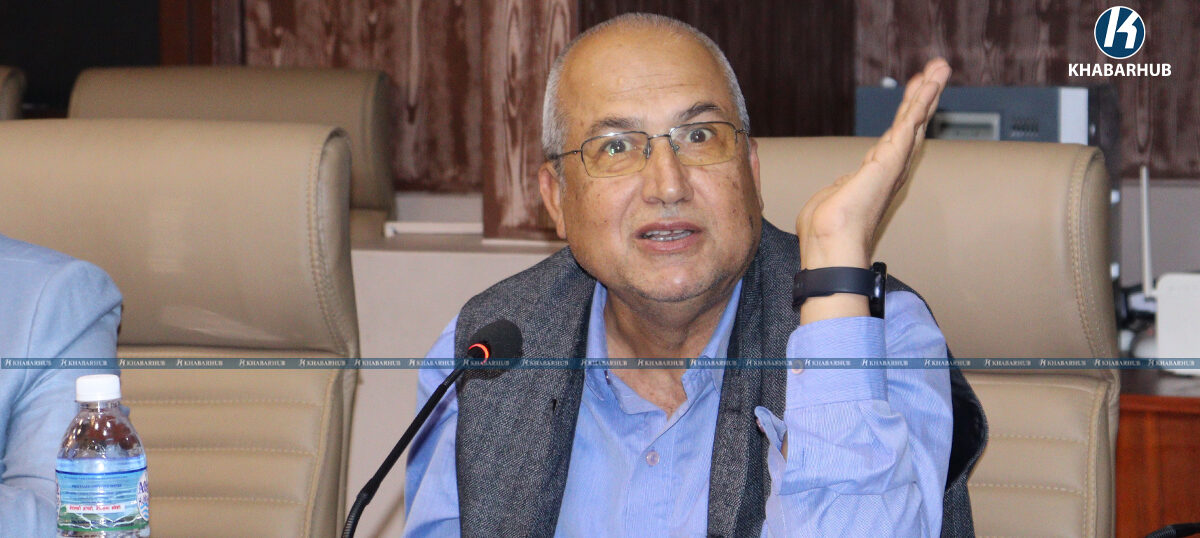
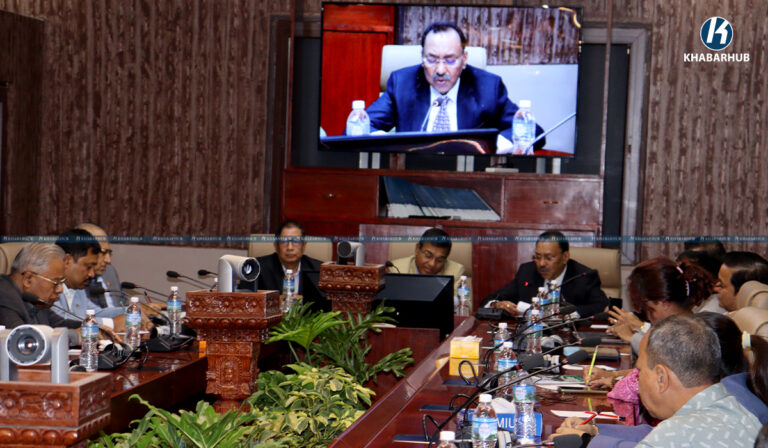
(Edited excerpt of remarks made by political and geopolitical analyst Arun Kumar Subedi at a programme organised by the Institute for Strategic and Socio-Economic Research Center)






Comment